Events of the Local Scene & Influencer Meetups Darmstadt
Events of the Local Scene & Influencer Meetups in Darmstadt: What Can Emerge in the Coming Months and Years
How Darmstadt can strengthen its creator and influencer scene in the future through meetups, workshops, and community events—with a focus on formats, trust, transparency, and practical implementation.
Context: Why New Creator Events Are Becoming Relevant Right Now
When you combine the creative corner of a Darmstadt café, an open meetup in a coworking space, and a larger festival for digital culture, a vision of the future emerges: a local scene that is not only visible online but also meets regularly in person. Exactly this mix can become a reliable rhythm in the coming months and years—with formats that connect community building, further education, and city culture.
There are three factors that particularly speak for Darmstadt and can be especially supportive in the future: short distances between neighborhoods, a high density of university and digital topics, and cultural venues that can serve as stages for new community formats. What is crucial is that events are not planned as a "hype" but as recurring, well-moderated meetups with clear rules on respect, data protection, and transparent labeling of advertising.
The Creator Community of the Future: More Than "Influencers"
In many cities, creator communities typically develop in waves: first, individual channels and projects emerge, then loose networks follow, and finally, recurring meetings with themed evenings, short impulse talks, and collaborative formats are established. For Darmstadt, it is particularly likely in the future that micro-creators will network more closely—that is, people who are locally rooted, regularly visit places, accompany events, or explain niche topics (e.g., culture, gastronomy, science communication, urban greenery, architecture).
The potential lies less in maximum reach and more in credibility and fit with the region: When local creators continuously document city life, a kind of "living city magazine" in social formats is created for residents, and for visitors, an orientation beyond classic tourism highlights.
To ensure this growth remains sustainable, the scene should set standards together in the future—for example, on advertising labeling, handling image rights, respectful communication, and the protection of private spaces. These guidelines strengthen trust and reduce conflicts before they arise.
Meetup Culture as a Driver: Formats That Can Work in Darmstadt in the Future
The most reliable community building is based on a simple principle: regular meetings with a low entry barrier. For Darmstadt, three levels can be combined in the future, which reinforce each other:
- Low-threshold city meetups (monthly or every 6 weeks): Exchange in a café, cultural venue, or coworking space. Focus: getting to know each other, "What do you do?", short roundtables (e.g., reels/shorts, podcast start, finding local topics, community management).
- Specialized sessions (quarterly): Practical formats such as photo walks, audio/podcast evenings, editing sprints, storytelling workshops, or "content critique" rounds with clear feedback rules.
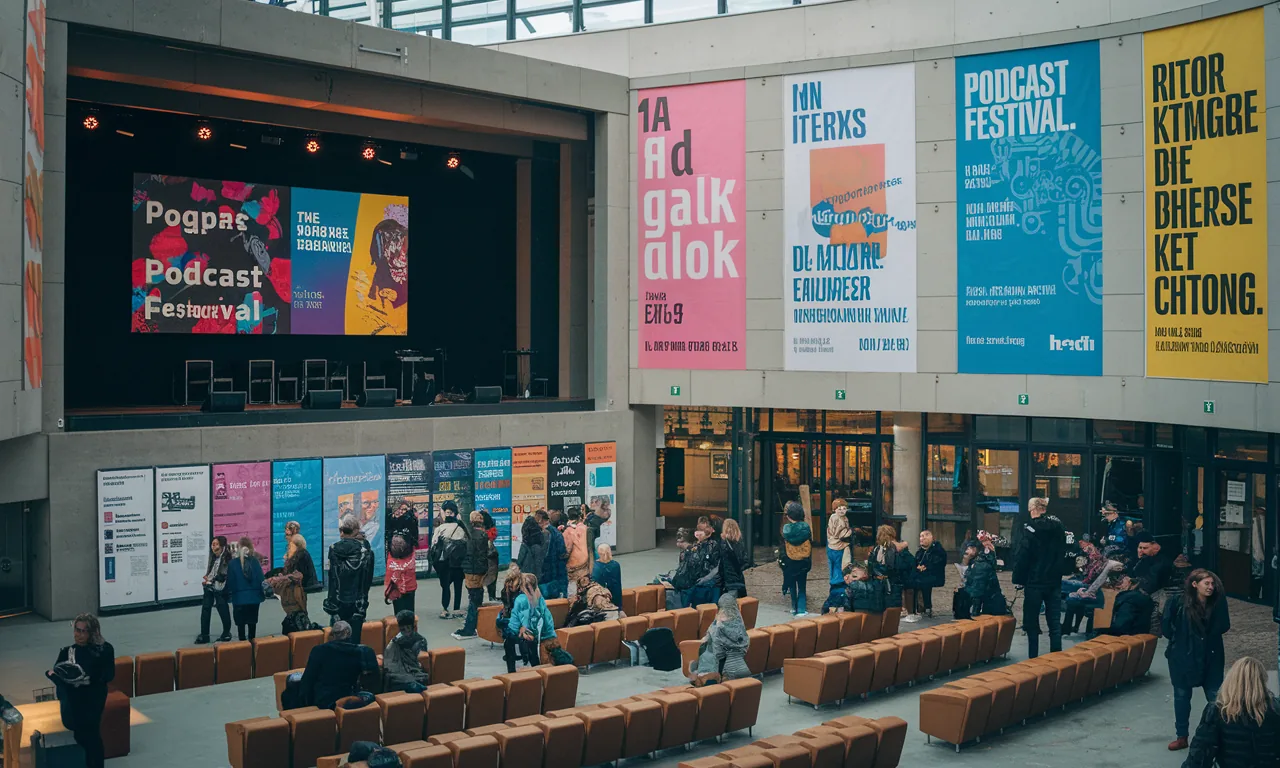
- Larger community events (once a year or every 18 months): A compact day with panels, case studies from the region, mini-workshops, and networking—including a code of conduct, clear moderation, and transparent sponsorship rules.
An important future factor is low barriers: understandable ticket structures, clear agenda, short distances on site, quiet zones, and the option to offer individual program points as a stream or recording. This way, the scene can grow without only addressing "insiders."
From Podcast Evening to Social Night: Concrete Event Ideas for the Future
For influencer and creator events in Darmstadt to develop their own profile in the future, it is worthwhile to choose formats that suit the city: close to science, creative, community-oriented, and regionally open (Rhine-Main). The following formats are designed to be repeatable and to work without star casts:
1) Podcast Evenings with Live Recording and Q&A
Local hosts can record episodes in front of an audience in the future—for example, on city history, campus life, science topics, subculture, or urban development. A clear process is important (intro, recording, questions, short closing) as well as consent and data protection rules for audio and photo recordings in the room.
2) Social Video Night: Screening + Feedback
Creators show short videos from the region (e.g., from parks, neighborhoods, cultural venues, or the surrounding area) and receive structured feedback: hook, story, sound, subtitles, visual language, context. This makes learning visible and lowers the threshold for sharing one's own drafts.
3) Creator Clinic for Local Businesses & Associations
An evening format where local shops, initiatives, or cultural organizers can present their communication goals in the future, and creators sketch ideas in small groups: content series, event support, interview formats, creator briefing. This can build bridges—without an aggressive "sales" feeling.
4) Photo Walk + Briefing on Rights and Ethics
A combined format of walk, photo practice, and a short input on personality rights, house rules, and respectful street photography. This strengthens quality and reduces misunderstandings when taking pictures in public spaces.
5) Mini-Conference "Local Creator Day" (annually)
A day with short talks (10–15 minutes), practical workshops (45–60 minutes), and moderated networking slots. Future topics can include: local story formats, community building, cooperation standards, analytics without "number fixation," content accessibility (subtitles, alt text, plain language).
What Impact Future Creator Events Can Have on the City, Economy, and Culture
Creator and influencer events will be particularly valuable in the future if they are measurably helpful—not just "nice." For Darmstadt, the impact can occur on several levels:
- For residents: new learning and meeting spaces where skills such as video, audio, moderation, writing style, or community management are practically trained—including for career changers, students, and volunteers.
- For visitors: more orientation through local perspectives and recurring event formats that show city life away from major standard routes.
- For the local economy: better cooperation with micro-creators through clear briefings, fair compensation, comprehensible goals, and transparent labeling of advertising.
- For culture: additional reach and documentation via reels, stories, newsletters, and podcasts—with the effect that new target groups can become aware of events.
For these effects to occur, future events should consistently focus on trust: clear sponsorship notices, a code of conduct, photo/film rules, low-barrier communication, and moderation that does not confuse "loudness" with quality.
Trends & Technology: What Can Shape Creator Meetups in Darmstadt in the Future
- Vertical video remains social-first: Events will increasingly be planned to be "experienceable on site" and at the same time "tellable in short clips"—with clear rules on where and how filming is allowed.
- AI-supported workflows in everyday life: Tools for idea generation, transcription, subtitles, editing preparation, or translations will be practiced in future workshops—with a focus on quality assurance, source checking, and labeling where necessary.
- Measurability with a sense of proportion: Creators and local partners will increasingly define together what success means (e.g., ticket clicks, store visits, newsletter sign-ups, qualitative feedback)—instead of just counting views.
- Hybrid, but not arbitrary: Individual program points can function as streams in the future; however, the core experience remains the meeting on site, because that is where trust is built.
- More focus on law & ethics: Data protection, personality rights, advertising labeling, and platform guidelines will play a greater role in future community standards.
A realistic outlook for the next few years: a stable series of open meetups, supplemented by thematic sessions and at least one larger community event that brings together actors from Darmstadt and the Rhine-Main region—with recognizable quality, not just changing trends.
Practical Guide: How Future Meetings Can Be Organized Trustworthily
- Define a clear target group: Beginners welcome, but with transparent expectations (e.g., "no pitch event," "rules of respect," "feedback culture").
- Plan moderation: Neutral moderation structures introductions, ensures time discipline, and prevents individuals from dominating.
- Publish a code of conduct: Tone, anti-discrimination, photo/film rules, consequences for violations.
- Transparency about sponsorship & cooperation: Who pays what? Which contributions are advertising? Which content is independent?
- Take data protection & consent seriously: Visible notices about recordings, opt-out options, clear rules for name mentions.
- Low-barrier communication: Simple agenda, clear location description, information on accessibility, breaks, noise level, and retreat options.
- Continuity instead of one-off effect: Better to start small and repeat regularly than to go big once and then be unclear.