
Agnes Obel
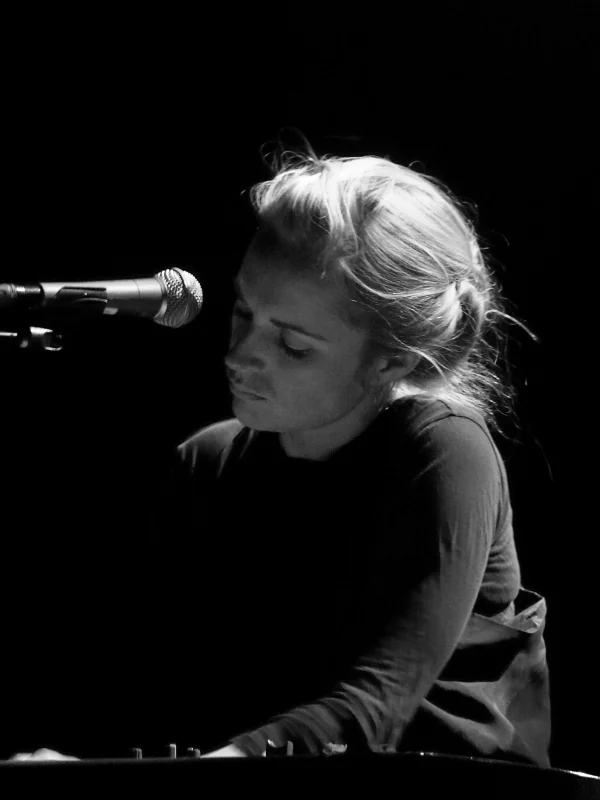
Image from Wikipedia
Image from Wikipedia
Agnes Obel – The Poetic Architect of Modern Chamber Pop
An Artist Between Intimacy, Sound Art, and Quiet Grandeur
Agnes Obel has established herself as one of the most distinctive voices in European art pop. The Danish singer-songwriter and pianist blends chamber pop, neoclassicism, and jazzy nuances into a unique soundscape that feels both fragile and archaic. Born in 1980 in Gentofte near Copenhagen and later based in Berlin, she has shaped a music career based on control, atmosphere, and emotional precision. (en.wikipedia.org)
Biography: Early Influences and Musical Independence
Obel's musical development began early in an unusually creative family environment. Her mother played Bartók and Chopin on the piano, while her father collected instruments and quirky objects—an atmosphere that fostered curiosity and sonic openness. As a child, she learned piano and did not follow a strict educational path, instead guided by her own inner logic: she played what truly moved her. This early self-determination still shapes her artistic signature today. (en.wikipedia.org)
As a teenager, she gained her first stage experience, performing as a singer and bassist in a small band and soon sought a path to the studio. At 17, she abandoned formal musical training in favor of sound engineering, a step that foreshadowed her later role as a producer and arranger. This decision explains much of her subsequent working style: Agnes Obel thinks not just in melodies, but in production, space, and sound architecture. (en.wikipedia.org)
The Breakthrough with Philharmonics
Her debut album Philharmonics was released in 2010 under PIAS Recordings and quickly became an international success. In Belgium, it achieved gold status, in Denmark, it dominated the album charts, and at the Danish Music Awards 2011, Obel won five awards, including Best Album and Best Debut Artist. The song Riverside became internationally recognized through film and TV placements, even winning the Robert Award in Denmark for Best Song. (en.wikipedia.org)
The success of Philharmonics was not only commercially significant but also aesthetically noteworthy. Critics described her music as melancholic, clear, and possessing a peculiar beauty that creates vast emotional spaces from minimal means. Obel has repeatedly emphasized the equality of voice and piano, and therein lies the core of her style: vocals and harmony do not compete with each other but merge into a single, breathing form. (en.wikipedia.org)
Aventine: Chamber Pop with Greater Emotional Depth
With her second album Aventine, Agnes Obel solidified her reputation as a precisely working sound artist. The 2013 release brought her top-40 placements in nine countries, including peak positions in Denmark and Belgium. The tone became even more intimate, with instrumentation finely balanced. Obel described how she recorded much in close-mic settings and small rooms to create an almost landscape-like vastness despite a sparse arrangement. (en.wikipedia.org)
Reception was once again very positive. Music journalism praised the elegant arrangements, dense atmosphere, and Obel's delicate yet assertive voice. Especially Aventine demonstrates her deftness with dynamics, silence, and repetition: from a few instruments, she creates ethereal soundscapes that are perceived more as spaces than traditional pop songs. (en.wikipedia.org)
Citizen of Glass: Concept, Experiment, and Sonic Expansion
In 2016, Citizen of Glass followed, an album that visibly expanded Obel's aesthetic horizons. The work won the IMPALA Album of the Year Award and was particularly praised for its conceptual coherence. For this album, Obel experimented with vocal fragmentation, electronically manipulated her voice, and integrated unusual instruments such as the Trautonium, glass harps, Mellotron, vibraphone, and historical keyboard instruments. (lpr.com)
The idea of transparency, fragility, and self-expression runs throughout the album. Obel explained that glass as a material is both strong, fragile, and transparent—a symbol that captures both the zeitgeist and her own art. The result is an album of rare consistency: contemporary chamber music in a pop context, reduced to the essentials yet rich in textural details. (lpr.com)
Myopia and the Art of Self-Observation
With Myopia, Obel continued her development as a producer, composer, and sound director in 2020. The album was recorded in Berlin and created under consciously sheltered conditions, imparting an inward-looking, nocturnal aura to the music. Critics highlighted the contemplative mood, the floating soundscape, and the underlying tension. Obel works here even more with slowness, resonance, and the psychology of listening. (en.wikipedia.org)
Even in this phase, her signature remains unmistakable: dark harmonies, sparse chords, weighty pauses, and a voice that tells rather than demonstrates. Her songs feel like inner monologues that transform into orchestral miniatures. In this way, Agnes Obel sets herself apart from many singer-songwriters of her generation—she doesn't just write songs but rather creates acoustic spaces with dramatic depth. (en.wikipedia.org)
Discography and Artistic Collaboration
Agnes Obel's discography is compact but exceptionally cohesive: Philharmonics (2010), Aventine (2013), Citizen of Glass (2016), and Myopia (2020). This core work was supplemented by her curated compilation Late Night Tales: Agnes Obel, which encompasses influences from Nina Simone to Alfred Schnittke. This selection underscores her position as a style-conscious curator with a historical ear and a sure instinct for sonic drama. (en.wikipedia.org)
Obel's composition and production work remains central. It has been emphasized that she largely writes, arranges, produces, and mixes her music herself. This autonomy creates authority: her works do not sound like a trend but rather a strictly controlled artistic vision. In a pop landscape that often prioritizes speed and formatting, her work feels almost classical in the best sense. (universal-music.co.jp)
Critical Reception, Awards, and Cultural Influence
The recognition for Agnes Obel extends far beyond the niche of sophisticated pop. Important awards include the European Border Breakers Award, the IMPALA Album of the Year Award, and five Danish Music Awards for Philharmonics. At the same time, her songs have found their way into films and series, making tracks like Riverside and Familiar emotional markers in pop culture. (en.wikipedia.org)
Her cultural influence is also evident in the way she reaches listeners. Her music appears in TV productions, curations, and discussions about melancholic contemporary music time and again. Obel represents a form of artistic credibility that does not rely on volume but on depth, texture, and emotional endurance. (universal-music.co.jp)
Voices of the Fans
The resonance around Agnes Obel is particularly evident in the public reactions surrounding her official channels and in the ongoing discussions about her songs. Fans often describe her music as intense, comforting, and atmospherically dense; particularly, Riverside and Familiar are frequently mentioned as entry points. The impact of her art rests on this blend of intimacy and expansiveness, which deepens with repeated listening. (facebook.com)
Current Projects and Releases
The official website announces tour dates for 2026, confirming Agnes Obel's live presence as an important part of her music career. Her website also lists her four studio albums as the core of her discography and refers to ongoing activities surrounding concerts, gigography, and store offers. Thus, she remains an active, internationally present artist with sustainable audience engagement even years after Myopia. (agnesobel.com)
Additionally, her official presence on the website shows that her releases and concerts continue to be curated and professionally managed. For music lovers, this is an important signal: Obel is not a nostalgic name from the 2010s but a living artist with ongoing relevance. (agnesobel.com)
Conclusion: Why Agnes Obel Remains Exciting Today
Agnes Obel combines artistic autonomy with a rare emotional clarity. Her music career tells a story of discipline, a willingness to reduce, and the desire to build an entire world from few elements. This blend of composition, production, and stage presence makes her one of the most fascinating voices in modern chamber pop. (en.wikipedia.org)
Those who experience Agnes Obel live do not encounter routine but finely calibrated sound art with strong physical presence. Her songs unfold in concert that quiet magnetic pull which already captivates on record but feels even more intense on stage. That is why her work is not only worth listening to but absolutely worth seeing. (agnesobel.com)
Official Channels of Agnes Obel:
- Instagram: https://agnesobel.ffm.to/instagram
- Facebook: https://www.facebook.com/agnesobelofficial/
- YouTube: https://agnesobel.ffm.to/youtube.owe
- Spotify: No official profile found
- TikTok: No official profile found
Sources:
Upcoming Events
Golden Leaves Festival 2026