
Anton Pawlowitsch Tschechow
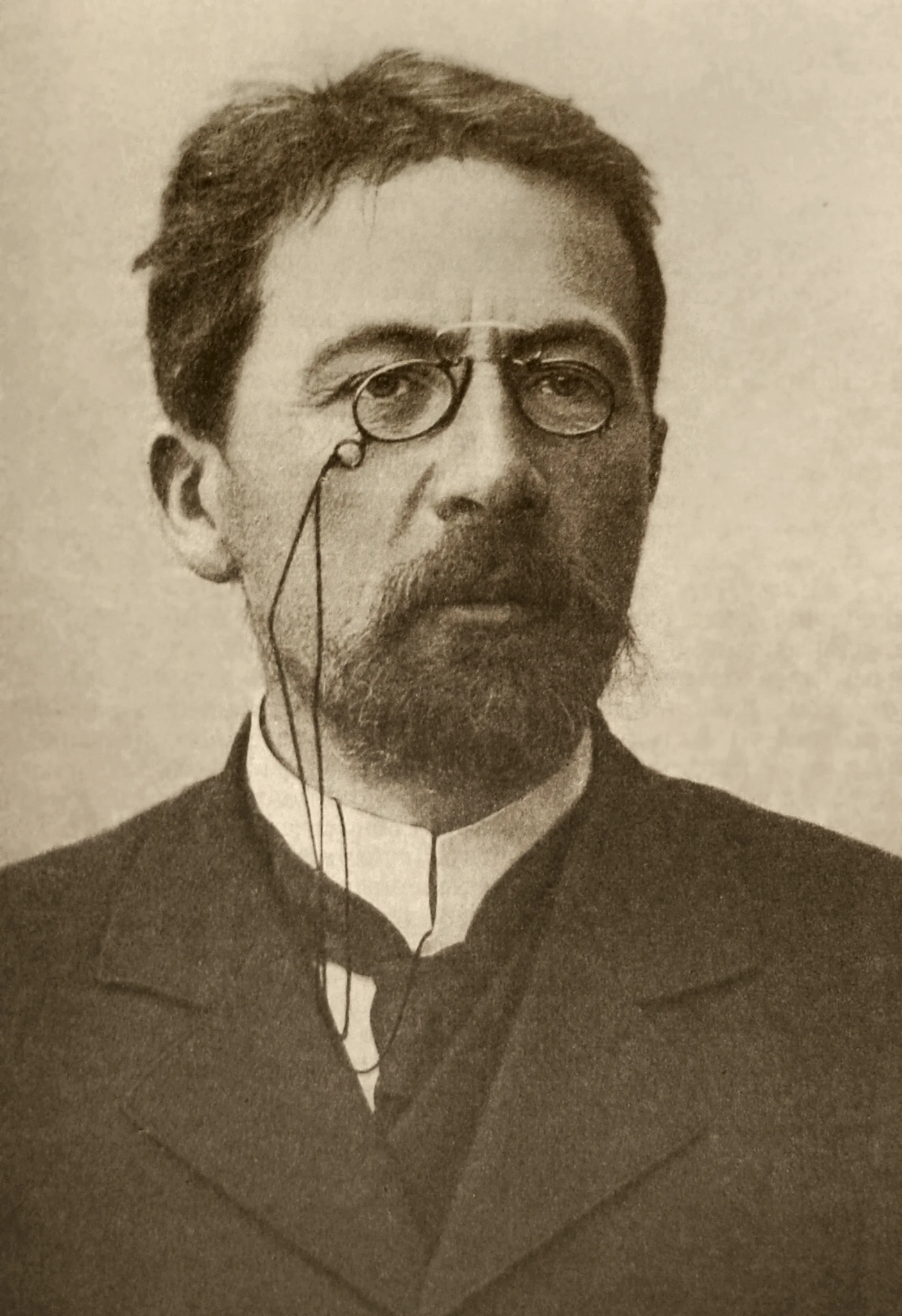
Image from Wikipedia
Image from Wikipedia
Anton Pavlovich Chekhov – The Master of Quiet Drama and Modern Narrative Art
An Author Who Elevated the Everyday to Great Art
Anton Pavlovich Chekhov is one of the defining voices in world literature: born in 1860 in Taganrog and dying in 1904 in Badenweiler, he uniquely combined medical practice, journalistic work, and literary creation into an exceptional artistic biography. As a Russian writer, short story author, and playwright, he wrote more than 600 literary works between 1880 and 1903, forming an oeuvre of remarkable density and impact. His perspective on the people of the Russian provinces remains unmistakable to this day: sober, precise, warm, and often imbued with a quiet tragicomedy. ([de.wikipedia.org](https://de.wikipedia.org/wiki/Anton_Pawlowitsch_Tschechow?utm_source=openai))
Biographical Roots: Taganrog, Studies, Medicine, and Literature
Chekhov came from a petty bourgeois family in southern Russia and encountered social tensions, material constraints, and the reality of everyday life at an early age. After moving to Moscow, he worked as a medical student and later as a doctor, practicing medicine rarely for profit, often more in a volunteer capacity. This dual role as a doctor and writer sharpened his insight into people in crisis, into silent suffering, and into those nuances that often get lost in grand narratives. ([de.wikipedia.org](https://de.wikipedia.org/wiki/Anton_Pawlowitsch_Tschechow?utm_source=openai))
A journey to Sakhalin Island in 1890 marked a significant turning point in his life and work. From his encounters with convicts, administration, and social hardship arose a profound interest in social conditions, which is also reflected in his later texts. Chekhov did not portray himself as a pathos-filled moralist, but as an attentive observer who does not smooth over reality but makes visible its contradictions. ([deutsche-tschechow-gesellschaft.de](https://www.deutsche-tschechow-gesellschaft.de/Anton-P.-Tschechow/Leben-und-Werk/Anton-Pawlowitsch-Tschechow-aus-dem-Leben-und-Werk-des-Schriftstellers?utm_source=openai))
Literary Breakthrough: From Early Short Forms to a Mature Tone
Chekhov developed a writing style early on that distinguished itself from conventional dramaturgies and overloaded effects. The British Encyclopaedia Britannica describes him as a master of the modern short story; especially after 1888, his style condensed into an art of omission, open form, and psychological precision. Works such as “The Steppe,” “A Boring Story,” “The Black Monk,” and “Peasants” illustrate how he develops significant existential questions from casual scenes and unspectacular situations. ([britannica.com](https://www.britannica.com/biography/Anton-Chekhov?utm_source=openai))
During his mature phase, he created prose that takes the seemingly small seriously: conversations, moods, social rituals, and unfulfilled longings become carriers of an entire worldview. His texts never come across as overtly clear but rather unfold their power in suggestion, rhythm, and structure. Therefore, he is not only regarded as an author with enormous productivity but also as a stylistic innovator of literary modernism. ([de.wikipedia.org](https://de.wikipedia.org/wiki/Anton_Pawlowitsch_Tschechow?utm_source=openai))
The Great Dramas: When Silence Speaks Louder Than Action
Chekhov is internationally best known as a playwright. His four major plays “The Seagull,” “Uncle Vanya,” “Three Sisters,” and “The Cherry Orchard” rank among the most important dramas in world literature and have profoundly changed modern theater. The German Chekhov Society emphasizes that his dramatic mastery blossomed especially in Melikhovo, where central works such as “The Seagull” were created. ([deutsche-tschechow-gesellschaft.de](https://www.deutsche-tschechow-gesellschaft.de/Anton-P.-Tschechow/Leben-und-Werk/Anton-Pawlowitsch-Tschechow-aus-dem-Leben-und-Werk-des-Schriftstellers?utm_source=openai))
Chekhov's theater is a theater of undercurrents. Britannica describes his plays as works without complex plots and without smooth solutions; instead of outward action, a “undramatic drama” predominates, revealing life in ordinary moments. This retreat from spectacle made Chekhov a pioneer of modern stage realism and an author who continues to challenge directors today. ([britannica.com](https://www.britannica.com/biography/Anton-Chekhov?utm_source=openai))
Style and Poetics: Irony, Empathy, and the Principle of Openness
Chekhov's style combines dry humor, precise milieu descriptions, and a deeply humane perspective. His famous reputation as a storyteller of the provinces is based not on folklore but on meticulous observation of language, gesture, and social atmosphere. In his texts, people are rarely heroes or villains; they appear as contradictory beings living between hope, self-deception, fatigue, and longing. ([de.wikipedia.org](https://de.wikipedia.org/wiki/Anton_Pawlowitsch_Tschechow?utm_source=openai))
Critics particularly appreciate Chekhov for his literary restraint that does not flaunt emotion but carries it in the subtext. His art of reduction creates tension precisely by leaving much unsaid. In theater history, this attitude is often read as a revolution of quiet means: no pathos for its own sake, but a precise composition of conversation, silence, and inner movement. ([britannica.com](https://www.britannica.com/biography/Anton-Chekhov?utm_source=openai))
Scope of Work and Cultural Influence
With over 600 texts, Chekhov left behind a body of work that seems unusually cohesive in its breadth and quality. His stories and dramas have been received internationally, translated, and continually re-staged; they still shape the image of modern psychological realism today. The reception spans from literary studies and theater practice to ongoing museum education and cultural activities in places of his life and work. ([de.wikipedia.org](https://de.wikipedia.org/wiki/Anton_Pawlowitsch_Tschechow?utm_source=openai))
His influence on world literature is immense: Chekhov represents an aesthetics of precision, empathy, and open form. Particularly writers and playwrights of the 20th century have learned from his technique of suggestion, character development, and his avoidance of melodramatic heightening. The history of theater cannot be fully understood without Chekhov because he shifted dramatic action inward and established a new sensitivity. ([britannica.com](https://www.britannica.com/art/Russian-literature/Ivan-Turgenev?utm_source=openai))
Current Projects, Publications, and Presence
As an author who passed away in 1904, Chekhov naturally does not have new albums, singles, or ongoing personal projects in the contemporary sense. Nevertheless, his work remains highly relevant: museums, theaters, scientific societies, and new editions keep his texts present in the cultural discourse. The ongoing engagement with his work shows that Chekhov is less a completed classic than a lasting contemporary conversation partner. ([chekhovmuseum.com](https://chekhovmuseum.com/museum/about/history?utm_source=openai))
Discography and Critical Reception
No discography in the musical sense exists for Chekhov; rather, his stories, dramas, and prose texts are central. Among his most important and most discussed works are “The Seagull,” “Uncle Vanya,” “Three Sisters,” “The Cherry Orchard,” “The Steppe,” “The Black Monk,” and “The Lady with the Dog.” Critical reception particularly highlights his mastery in short forms, his tragicomedy, and his lasting impact on modern theater. ([britannica.com](https://www.britannica.com/art/Russian-literature/Ivan-Turgenev?utm_source=openai))
The cultural esteem is also extraordinary: Chekhov is regularly mentioned alongside the great names in Russian and international literature in literary criticism. German and international reviews emphasize his ability to transform the seemingly insignificant into existential meaning, and his plays are considered benchmarks for acting and directing. His greatness lies particularly in his reduction: Chekhov does not write for effect, but for the truth of the moment. ([petersburg-info.de](https://www.petersburg-info.de/kultur/literatur/persoenlichkeiten/anton-tschechow/?utm_source=openai))
Voices of the Fans
Since no verifiable official social media channels for Anton Pavlovich Chekhov were found in web searches, this section is intentionally not supplemented with fan quotes. For an author of this historical significance, lively reception and public appreciation are primarily found in literary criticism, theater practice, and academic engagement. ([de.wikipedia.org](https://de.wikipedia.org/wiki/Anton_Pawlowitsch_Tschechow?utm_source=openai))
Conclusion: Why Chekhov Captivates to This Day
Anton Pavlovich Chekhov fascinates because he reveals the human condition without pathos but with unflinching accuracy. His texts possess the rare power to be both quietly overwhelming: they tell of missed opportunities, social fatigue, tender hopes, and a life that can never be fully explained. Anyone who reads Chekhov or experiences him on stage encounters an author who helped shape modernity and whose work feels fresh, insightful, and painfully relevant today. ([de.wikipedia.org](https://de.wikipedia.org/wiki/Anton_Pawlowitsch_Tschechow?utm_source=openai))
For this reason, Chekhov remains a must-see for lovers of literature and theater: his dramas reach their full impact live, where great emotional tensions emerge from silence, glances, and small gestures. Those who have the chance to see a staging of his plays experience art in its finest form: precise, human, and timeless. ([britannica.com](https://www.britannica.com/biography/Anton-Chekhov?utm_source=openai))
Official Channels of Anton Pavlovich Chekhov:
- Instagram: No official profile found
- Facebook: No official profile found
- YouTube: No official profile found
- Spotify: No official profile found
- TikTok: No official profile found
Sources:
- Wikipedia – Anton Pavlovich Chekhov
- Britannica – Anton Chekhov
- Britannica – Anton Chekhov Summary
- Britannica – Melikhovo period
- Deutsche Tschechow Gesellschaft e.V. – Life and Work
- Deutsche Tschechow Gesellschaft e.V. – Chronology Badenweiler
- Anton Chekhov Museum-Reserve Melikhovo – History
- RusslandJournal – Anton Chekhov
- Wissen.de – Between Comedy and Tragedy