
Karlheinz Böhm
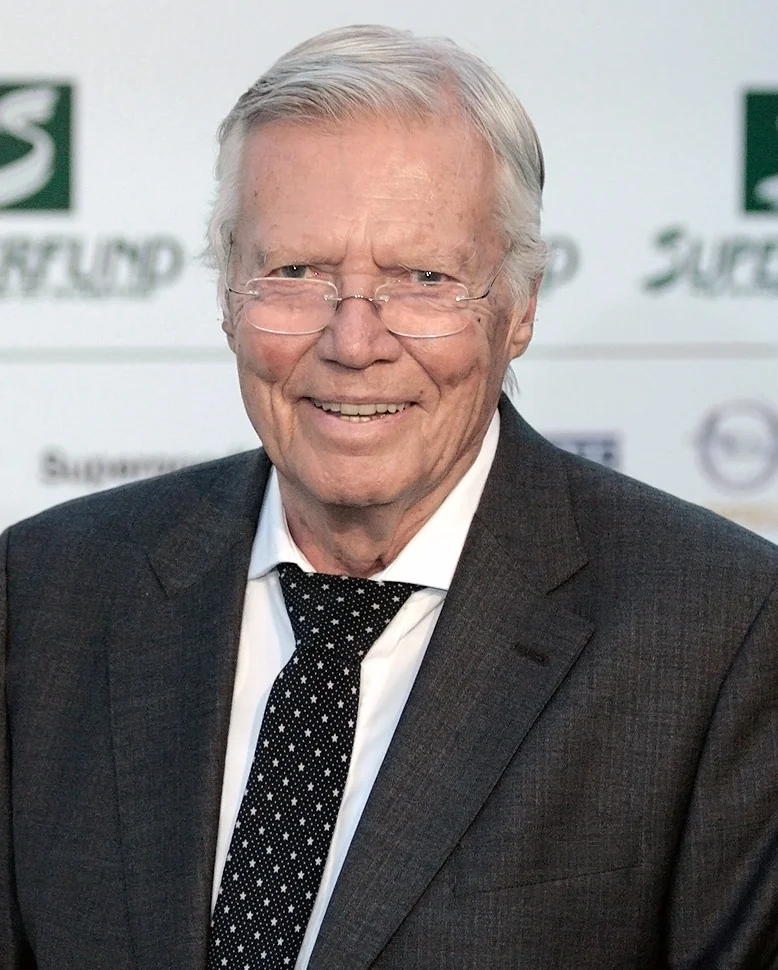
Image from Wikipedia
Image from Wikipedia
Karlheinz Böhm: The Actor Who Turned Fame into Responsibility
A Life Between the Screen, Adoration, and Humanitarian Legacy
Karlheinz Böhm was born on March 16, 1928, in Darmstadt and died on May 29, 2014, in Grödig. He became well-known primarily as Emperor Franz Joseph in the Sissi trilogy alongside Romy Schneider, but his biography does not end with cinema legend: after his acting career, he founded the organization Menschen für Menschen and dedicated decades to humanitarian projects in Ethiopia. This unique blend of popular fame and consistently lived responsibility makes him an extraordinary figure in European cultural history to this day. ([de.wikipedia.org](https://de.wikipedia.org/wiki/Karlheinz_B%C3%B6hm?utm_source=openai))
Origins, Education, and Early Influences
Böhm grew up in an artistically influenced environment: his father was the conductor Karl Böhm, and his mother was the opera singer Thea Linhard. After World War II, the family moved to Graz, where Böhm graduated in 1946 and subsequently studied philosophy, English studies, and art history, albeit without a strong commitment to this academic path. Even this early life path reflects a typical tension in his later work: on one hand, the legacy of a highly cultured parental home, and on the other hand, the desire to find his own place in public life beyond predetermined paths. ([en.wikipedia.org](https://en.wikipedia.org/wiki/Karlheinz_B%C3%B6hm?utm_source=openai))
The Breakthrough as Emperor Franz Joseph
Böhm experienced his significant breakthrough in popularity in the mid-1950s with the Sissi trilogy, which was produced between 1955 and 1957. Alongside Romy Schneider, he embodied the young Emperor Franz Joseph, becoming the face of one of those Austrian-German post-war fantasies that intertwined romance, nostalgia, and historical elegance. Contemporary and later reports describe this role as a career booster, unlocking a million-strong audience for Böhm and permanently anchoring him in collective memory. ([spiegel.de](https://www.spiegel.de/kultur/gesellschaft/karlheinz-boehm-ist-tot-sissi-darsteller-und-aethiopien-helfer-a-811378.html?utm_source=openai))
More than a Handsome Face: Ambivalence and Artistic Versatility
Those who reduce Böhm to the courtly charm of the Sissi films underestimate the breadth of his acting. In Michael Powell's Peeping Tom from 1960, he took on a disturbing lead role that initially received sharp rejection upon release but was later recognized as a masterpiece of psychological thrillers. This turn showcases an actor who did not settle for the safe image of a crowd favorite but consciously sharpens his stage and screen presence by moving into artistically riskier, darker roles. ([theguardian.com](https://www.theguardian.com/film/2014/may/30/karlheinz-bohm?utm_source=openai))
Return, Tension, and Later Roles
After international successes, Böhm returned to Europe in the mid-1960s and continued working in films that were less glamorous but often characterized by deeper and more complex portrayals. Critical retrospectives emphasize that in the 1970s, he also collaborated with directors like Rainer Werner Fassbinder, placing him in an artistic environment far removed from the polished imagery of his early years. It is precisely this later phase that makes his career interesting: it reveals an actor searching for his own voice amid fleeting fame, self-correction, and repositioning. ([theguardian.com](https://www.theguardian.com/film/2014/may/30/karlheinz-bohm?utm_source=openai))
People for People: From Star to Philanthropist
In 1981, Böhm founded the organization Menschen für Menschen after being moved by reports of famine in the Sahel. The initiative evolved into a foundation and other organizations in Germany, Austria, and Switzerland; its guiding principle was "help for self-development." Official pages of the foundation emphasize that Böhm initiated sustainable improvements in living conditions in rural regions of Ethiopia and served for decades as a prominent figure in developmental aid. ([en.menschenfuermenschen.de](https://en.menschenfuermenschen.de/success-model/our-basis/?utm_source=openai))
Impact, Reputation, and Public Authority
His humanitarian engagement provided Böhm with a second, equally important public identity. The foundation describes his work as long-lasting and refers to millions of people reached; contemporary reports also highlighted how his celebrity status increased attention for Ethiopian aid. Crucially, it is not just the reach but the credibility: Böhm remained true to the idea of self-help and combined his fame with a concretely verifiable, institutionally anchored commitment. ([en.menschenfuermenschen.at](https://en.menschenfuermenschen.at/ueber-uns/?utm_source=openai))
Discography, Music Press, and Current Projects
There is no verifiable discography for Karlheinz Böhm, no chart career, and no current music releases or tour projects. Web research clearly confirms him as an actor and philanthropist, not a musician; inquiries for new albums, singles, or music projects yielded no relevant evidence. Thus, in critical reception, it is not a musical work that stands in the foreground, but his screen career and humanitarian legacy. ([de.wikipedia.org](https://de.wikipedia.org/wiki/Karlheinz_B%C3%B6hm?utm_source=openai))
Cultural Influence and Lasting Significance
Karlheinz Böhm remains a figure of rare dual impact: as an actor, he shaped an iconic image of Austrian film romance, while as a philanthropist, he shifted the view of celebrity as a social responsibility. His name represents a life path that was not blinded by star status but transformed it into sustainable aid. In the cultural history of the German-speaking world, he is therefore not only a popular performer but also a symbol of how public visibility can be translated into practical solidarity. ([spiegel.de](https://www.spiegel.de/kultur/gesellschaft/karlheinz-boehm-ist-tot-sissi-darsteller-und-aethiopien-helfer-a-811378.html?utm_source=openai))
Conclusion: What is fascinating about Karlheinz Böhm is the rare consistency between artistic fame and moral stance. He became world-famous as Emperor Franz Joseph but later sought the greater role of his life in humanitarian engagement. Those who want to understand him should not only consider his films but also appreciate the magnitude of his commitment—and read his story as an invitation to prioritize impact over success. ([spiegel.de](https://www.spiegel.de/kultur/gesellschaft/karlheinz-boehm-ist-tot-sissi-darsteller-und-aethiopien-helfer-a-811378.html?utm_source=openai))
Official Channels of Karlheinz Böhm:
- Instagram: No official profile found
- Facebook: No official profile found
- YouTube: No official profile found
- Spotify: No official profile found
- TikTok: No official profile found