
Lizz Wright
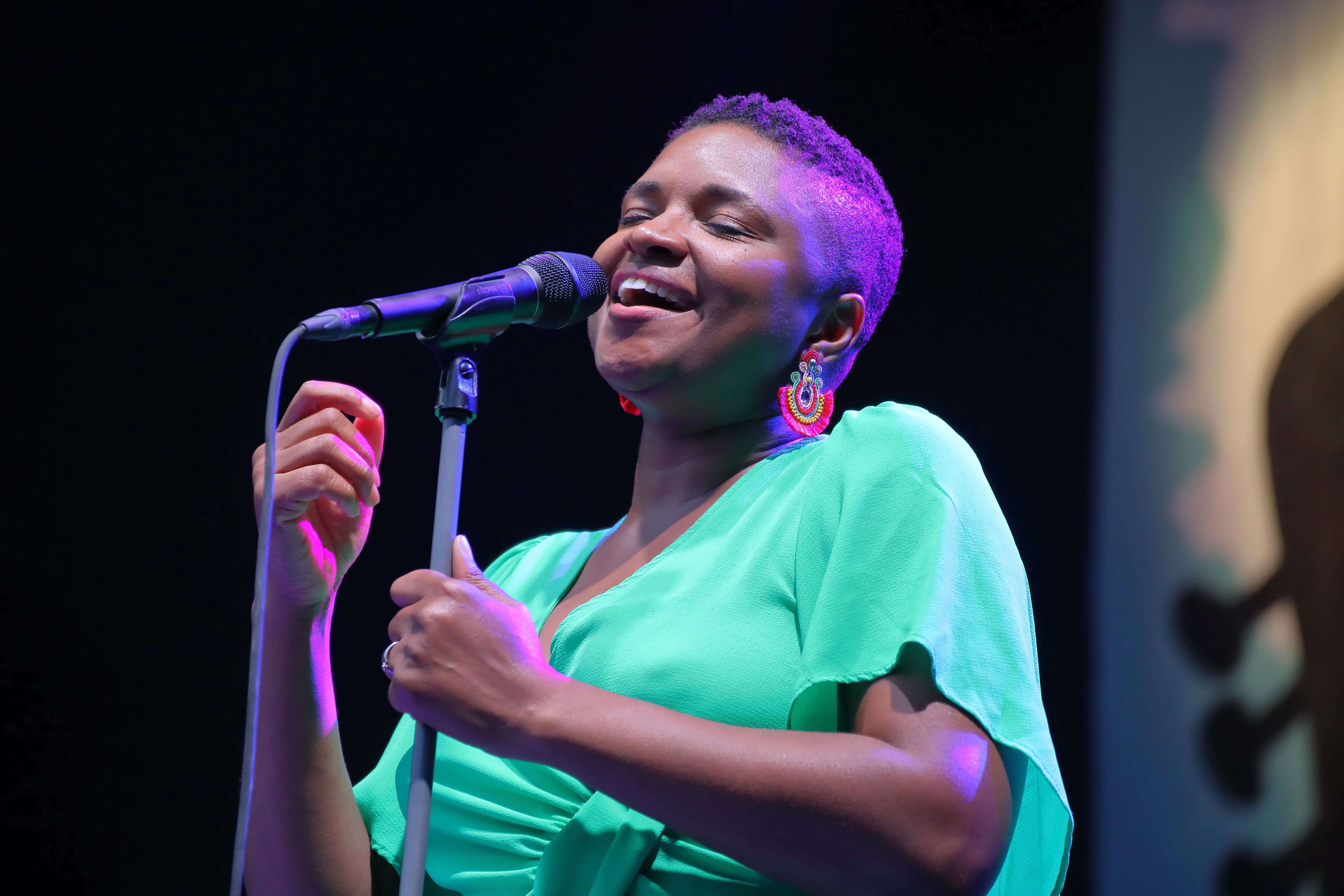
Image from Wikipedia
Image from Wikipedia
Lizz Wright: The Warm, Deep Voice Between Jazz, Gospel, Blues, and Soul
An Exceptional American Singer with Artistic Depth and Radiant Stage Presence
Lizz Wright, born on January 22, 1980, in Hahira, Georgia, is one of the most distinctive voices in contemporary American music. Her career blends jazz, gospel, blues, folk, and soul into an expression that is never merely stylistic but always also biographical. The church in Georgia played a fundamental role in shaping her musical identity from a young age; from this origin, she developed a career that took her from the regional choir scene to international stages. ([de.wikipedia.org](https://de.wikipedia.org/wiki/Lizz_Wright?utm_source=openai))
Roots in Georgia: Church, Choir, and Early Musical Influence
Wright's artistic development began in an environment where music was not decoration but a way of life. As the daughter of a preacher, she sang in her father's church choir as a child and took piano lessons; at the age of 14, she deepened her interest in gospel, jazz, and blues. This early multi-voice experience continues to shape her repertoire today and explains why her interpretations always seem layered: religiously charged, but never narrowly defined. ([de.wikipedia.org](https://de.wikipedia.org/wiki/Lizz_Wright?utm_source=openai))
After graduating from high school, she studied voice at Georgia State University in Atlanta and later continued her education in New York and Vancouver. Concurrently, she gained her first professional experience as a member of the vocal ensemble In the Spirit, which quickly earned her a loyal fan base and positive early reviews. These years sharpened her sensitivity for arrangement, ensemble sound, and the balance between technical control and emotional openness. ([de.wikipedia.org](https://de.wikipedia.org/wiki/Lizz_Wright?utm_source=openai))
The Breakthrough: Billie Holiday Tribute and the Path to Verve
Lizz Wright became nationally recognized in 2002 at the age of 22 through a tribute to Billie Holiday, which showcased her immense vocal authority early on. Shortly thereafter, she signed a record deal with Verve Music Group, and in 2003 her debut album Salt was released. This album combined her own songs with reinterpretations and set the tone for her entire discography: high musical care, stylistic openness, and a timbre that remained instantly recognizable. ([de.wikipedia.org](https://de.wikipedia.org/wiki/Lizz_Wright?utm_source=openai))
Salt brought her a breakthrough and placed her in the upper regions of the Contemporary Jazz charts; later representations even mention a top position on the Billboard Contemporary Jazz field. The press response was remarkable early on: reviews described her voice as extraordinarily warm, dark, and technically adept, while being profoundly rooted in the African American singing tradition. This balance between refinement and grounding quickly made Wright a favorite among jazz audiences and critics alike. ([de.wikipedia.org](https://de.wikipedia.org/wiki/Lizz_Wright?utm_source=openai))
Musical Development: Between Interpretation and Songwriting
Already on Salt, a core feature of Wright's art emerged: she is not only an interpreter but also a compelling songwriter. On her follow-up album Dreaming Wide Awake, she further enhanced this line by combining her own compositions with confident cover versions. AllMusic highlighted that she makes classic songs shine anew and even imbues well-known tracks with immediate emotional urgency. ([allmusic.com](https://www.allmusic.com/album/dreaming-wide-awake-mw0000210797?utm_source=openai))
In 2008, The Orchard was released, followed by Fellowship in 2010, an album that particularly uncovered her gospel roots. AllMusic describes Wright's style as a synthesis of jazz, gospel, folk, blues, and soul, and it is this mixture that explains her unique position in contemporary vocal jazz. She does not sing within genre boundaries but transcends them; her career thrives on her ability to connect spirituality, pop sensibility, and improvisational elegance in a single line. ([allmusic.com](https://www.allmusic.com/artist/lizz-wright-mn0000225607?utm_source=openai))
Discography and Chart-Relevant Milestones
Wright's discography reflects a consistent artistic evolution: Salt (2003), Dreaming Wide Awake (2005), The Orchard (2008), Fellowship (2010), Freedom & Surrender (2015), Grace (2017), Holding Space (2022), and Shadow (2024). The official charts document relevant placements in jazz, Americana, and jazz & blues categories for several of these releases, including a strong run for Dreaming Wide Awake and good positions for Grace and Shadow. This demonstrates that Wright has achieved not only critical acclaim but also sustainable market presence. ([officialcharts.com](https://www.officialcharts.com/artist/13826/lizz-wright/))
Particularly significant is that she gradually transitioned her catalog to an independent structure. In 2022, she released her first live album Holding Space under her own label Blues & Greens Records; according to her official biography, this marked the first ownership of her master recordings after two decades in the major label system. With Shadow, she continued this path in 2024, showcasing a studio work that emphasizes her autonomy as an artist. ([lizzwright.net](https://www.lizzwright.net/about))
Style: A Voice with Bourbon Depth and Great Emotional Control
Several sources describe Wright's voice as a dark, rich alto with enormous texture and calm authority. The New York Times compares the color of her sound to aged bourbon or soft leather; The Guardian highlighted her "calm authority" and technical elegance. These descriptions are not journalist clichés but point to a rare combination of timbre, breath control, and phrased understatement. ([lizzwright.net](https://www.lizzwright.net/about))
Her stage presence exhibits the same discipline. Wright does not seek effects but focuses on building tension, dynamic calm, and on how a song breathes in a space. Reviews from London and Berlin repeatedly emphasize that her concerts create an almost intimate atmosphere, even in large halls. This is a crucial part of her influence: she guides the audience not into a show but into concentration. ([theguardian.com](https://www.theguardian.com/music/2008/jul/17/jazz.reviews?utm_source=openai))
Cultural Influence: Gospel Heritage, American Song Tradition, and Modern Relevance
Lizz Wright stands in a lineage of great African American female singers, without ever becoming merely a custodian of tradition. Her music draws from the Great American Songbook tradition as well as from spirituals, blues, and contemporary songwriting. Official texts repeatedly emphasize that she bridges social divides with an attitude of love, humanity, and collective connectedness. This is exactly what makes her art culturally relevant. ([lizzwright.net](https://www.lizzwright.net/about))
The press has also credited her with a clear status of authority: the Los Angeles Times praised her potential as a new jazz voice early on, and international critics have accompanied her development with great respect over the years. That she simultaneously toured continuously in Europe and built strong fan connections there points to a transatlantic resonance that is not a given in jazz. Thus, Wright is not just an American singer but a globally relatable storyteller of identity, memory, and healing. ([universal-music.de](https://www.universal-music.de/lizzwright/biografie?utm_source=openai))
Current Projects: Shadow, New Singles, and Upcoming Release Nearness
Among her major current projects is the album Shadow, released in 2024, which, according to the press release, marks Wright's "career-defining" studio work. The album features original songs, collaborations with Angelique Kidjo and Meshell Ndegeocello, and combines acoustic guitars with string arrangements, harp, Carnatic elements, and gospel coloring. With this, Wright expands her sound spectrum without abandoning her core identity. ([howpeculiar.de](https://howpeculiar.de/wp-content/uploads/2023/12/Lizz-Wright-Shadow-Press-Release-English.pdf))
Another release is already scheduled for 2026: On Spotify, the album Nearness with Lizz Wright and Kenny Banks is announced for September 25, 2026; it will also feature new titles like "The Nearness Of You," "Jazz Ain't Nothing," "Amazing Grace," and "Hold On." Additionally, the platform lists the singles "Soon I Will Be Done" and "The Nearness Of You" for 2026. For an artist with such a distinct signature, this is a strong sign of ongoing productivity and relevance. ([open.spotify.com](https://open.spotify.com/prerelease/2EkyqLWnu04Pg7rfiXjiUm?go=1&utm_source=openai))
Conclusion: Why Lizz Wright Remains So Exciting Today
Lizz Wright fascinates because she combines artistic sovereignty with emotional authenticity. Her music career tells a story of roots, transformation, and self-determination: from church choir in Georgia to breakthrough at Verve to her own label work and new studio and live projects. Anyone wanting to experience a singer who does not see jazz as a stylistic boundary but as an open language should see Lizz Wright live. Her stage is not merely a place for performance, but a space for presence, depth, and great musical authenticity. ([de.wikipedia.org](https://de.wikipedia.org/wiki/Lizz_Wright?utm_source=openai))
Official Channels of Lizz Wright:
- Instagram: no official profile found
- Facebook: no official profile found
- YouTube: no official profile found
- Spotify: https://open.spotify.com/artist/3K0BfjMh2dS8WITuiMuGGW
- TikTok: no official profile found
Sources:
- Lizz Wright - Official Website: About
- Lizz Wright - Official Website
- Wikipedia - Lizz Wright (German Version)
- Universal Music - Lizz Wright | Biography
- AllMusic - Lizz Wright Biography
- Spotify - Lizz Wright Artist Page
- Official Charts Company - Lizz Wright
- Shadow Press Release - Blues & Greens Records
- Wikipedia: Image and text source