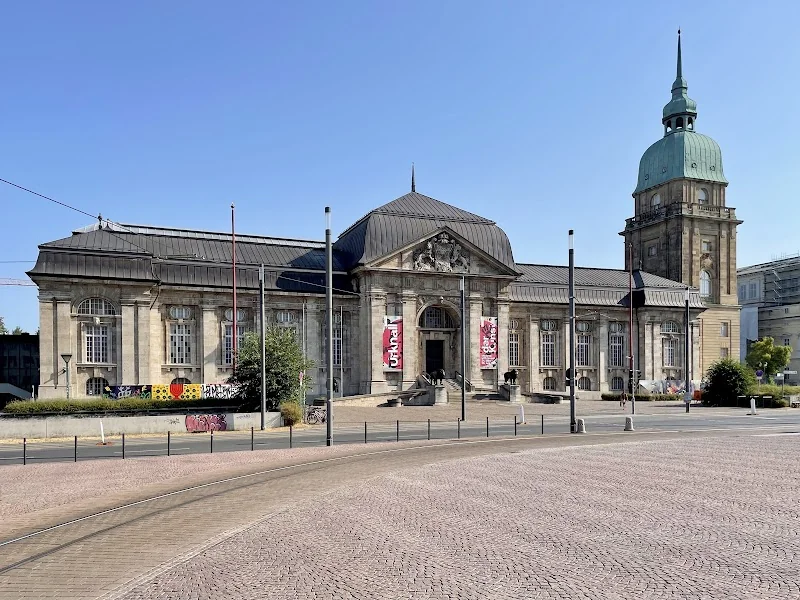
Friedenspl. 1, Darmstadt-Nord
Friedenspl. 1, 64283 Darmstadt, Germany
Hessian State Museum Darmstadt | Admission & Parking
The Hessian State Museum Darmstadt is much more than a classic regional museum. It is one of the major institutions in Germany and unites art, culture, and natural history under one roof, allowing very different interests to intersect in a single location. Those searching for admission, online collections, or Beuys will find here an address that ranges from medieval altars to Art Nouveau and paintings to fossils, minerals, and taxidermy. Its roots trace back to the collecting passion of Landgravine Karoline and the early acquisitions of Ludwig X., the later Grand Duke Ludwig I. The current museum building was designed by Alfred Messel, completed in 1906, and reopened in 2014 after a major renovation from 2007 to 2013. Today, the museum operates with a digital collection that makes a steadily growing part of more than one million objects accessible online. This connects the museum's historical depth, current communication, and digital visibility in an unusually consistent manner. ([hlmd.de](https://www.hlmd.de/de/entdecken?utm_source=openai))
The location at Friedensplatz in Darmstadt is as practical as it is central for visitors. Stops, parking garage, accessibility, and museum café are so close together that the visit works well as a family outing, a focus on a special exhibition, or a spontaneous stop in the city center. The museum is also a museum of comparison: here, nature and art are not separated but made visible in their intersections. This makes the collection particularly exciting for people looking for photos, backgrounds, and orientation. In the museum, the armory, princely treasury, graphic collection, painting gallery, archaeology, zoology, and Beuys come together; even specialized areas like typecasting, typesetting, and printing processes are part of the thematic breadth. Once you have experienced the diversity, it quickly becomes clear why the HLMD has become a solid tip for many in Darmstadt. ([hlmd.de](https://www.hlmd.de/de/entdecken/kunst-und-kulturgeschichte/waffensaal?utm_source=openai))
Admission, Tickets, and Free Admission for Children
Admission, tickets, and free visits are among the most sought-after topics because they make planning immediately tangible. For the permanent exhibition, the regular admission fee since April 1, 2025, is eight euros, reduced five euros, and six euros for group prices. Children and teenagers up to 18 years have free admission; special exhibitions have their own prices. Tickets can be purchased in the online shop or at the museum ticket office, allowing for both advance planning and spontaneous visits. Those coming with a group of ten or more people should register in advance by email or phone. This keeps the visit not only transparent but also well manageable organizationally. It is also particularly important to note the connection between price and opening hours: The museum is open on Tuesdays, Thursdays, and Fridays from 11 am to 6 pm, Wednesdays from 11 am to 8 pm, and Saturdays, Sundays, and public holidays from 11 am to 6 pm; it is closed on Mondays as well as on Good Friday, Christmas Eve, and New Year's Eve. Therefore, those who plan their time well can experience the collection without time pressure. ([hlmd.de](https://www.hlmd.de/en/information/cafe.html))
For families, the FamilyApp Hessen also plays a visible role. The museum participates in this offer and allows users to have free admission for the whole family when visiting the permanent exhibition, as well as a discount on holiday offers for children. Especially for recurring visits, this is a strong argument, as the museum visit does not feel like an expensive one-time event but rather as a regularly usable leisure and educational offer. In everyday life, this reflects the museum's attitude: culture should remain affordable and appeal to as many people as possible, not just a specialized audience. It also fits that special exhibitions often work with their own clearly communicated rates and that visitors can check the most important information online in advance. So, those searching for free admission, entrance, or tickets will find no vague hints at the HLMD, but rather a very concrete structure for their visit. ([hlmd.de](https://www.hlmd.de/de/news/2025/preisanpassungen-und-geaenderte-oeffnungszeiten-ab-1-4-2025?utm_source=openai))
Parking and Getting to Friedensplatz
Getting to the Hessian State Museum Darmstadt is relatively easy, as the museum is located in the city center and is easily accessible from several stops. The stops mentioned are Schloss, Luisenplatz, and Willy-Brandt-Platz, which are connected by tram and bus lines of public transport. Those coming by car will find the Q-Park-Schlossgaragen parking garage directly under Friedensplatz; buses can even stop in front of the main entrance for boarding and alighting. This is a practical advantage for groups, families, and travelers with luggage or strollers, as arrival and admission are very close together spatially. This is often a decisive factor for central city museums, and here the solution for visitor flow is described very clearly. This way, the museum visit can be easily combined with a walk through the city center, a detour into the gastronomy, or another cultural appointment. ([hlmd.de](https://www.hlmd.de/de/besuchen))
Even for those with limited mobility, the pathways in the museum are clearly planned. Accessible parking is available in the Q-Park-Schlossgarage area, specifically via the Cityring access and the right path to the Karolinenplatz/Welcome Hotel area. There are marked parking spaces available, and elevators lead to the museum. The accessible entrance is through the museum shop on the west side, right next to the museum café. Inside, the exhibition levels are accessible via wheelchair-friendly elevators; at the same time, the museum openly points out that some historical areas could not be made fully accessible. It is also important that visitors with strollers can also enter through the museum shop. Therefore, for the search terms parking, access, and barrier-free access, the HLMD provides concrete, practical answers instead of general hints. ([hlmd.de](https://www.hlmd.de/en/visit/accessibility))
Guided Tours, Children's Offers, and Visitor Services
Guided tours, visitor services, and children's offers are closely linked at the HLMD. The visitor service is reachable by phone at fixed times, and the museum offers workshops and guided tours in German, English, and other languages. Among the adult formats is the Highlight Tour, which gives an overview of the collections. Also important is the format Get to Know the Landesmuseum, which describes the museum as a treasure chamber of natural, historical, and artistic rarities and is particularly designed for school classes, excursions, and groups with little time. This is particularly relevant for search queries like guided tours or teams because here one not only understands the appointment but also the mediation logic of the museum: knowledge should be presented vividly, quickly accessible, and conveyed differently depending on the target group. The calendar also indicates that the majority of public events take place in German, which is also useful for planning visits and group trips. ([hlmd.de](https://www.hlmd.de/en/take-part))
For children and families, there are also special paths through the museum. For school classes and supervised children's groups, a visit during the week is possible from 10 am onwards if registered in advance; registration should occur at least ten days before the planned date. The education department also offers formats that promote drawing, careful observation, and joint exploration, and the website explicitly addresses families, children, and teenagers. A special plus is the family area in the lower foyer, which invites you to linger and relax. Additionally, there are family-friendly guided tours, such as through the fossil collection, where the uniqueness of the find location and the natural historical contexts are explained in an easily understandable way. So, those searching for children, guided tours, or free admission will find not only price advantages here but a truly well-thought-out family offer. ([hlmd.de](https://www.hlmd.de/de/besuchen?utm_source=openai))
Digital Collection, Team, and Research Behind the Scenes
The digital collection is interesting for anyone wanting to research objects in advance or discover specific collections online. The Hessian State Museum Darmstadt is gradually making its collections accessible online and emphasizes that more than one million objects belong to the collection. The website has been rethought as a digital showcase and works with meaningful photos and videos to show restoration, preparation, research, and collection diversity. Those searching for online collections or photos will find exactly the type of material that is helpful for a preliminary impression or in-depth research. At the same time, the museum signals that digital accessibility is not a by-product but part of its mediation strategy: the diversity of the house should not only be visible in the building but also online. The research page also benefits from this, as the museum presents its collections, current topics, and mediation offers within a common digital framework. ([hlmd.de](https://www.hlmd.de/de/entdecken/digitale-sammlung?utm_source=openai))
Behind these contents is a clearly structured team. The team page names the museum director Dr. Martin Faass, along with the commercial management, press and public relations, education and mediation, as well as several collection areas. The scientific museum library is also part of the infrastructure and collects specialized literature on art, cultural, and natural history. Additionally, the remarkable breadth of the museum is evident even in specialized areas such as the department for typecasting, typesetting, and printing processes. For users searching for the director, team, or specific contacts, this transparency is helpful as it shows the museum as a collaborative, research-oriented institution and not just as an exhibition space. Those wanting to delve deeper can also better assess what expertise is available in the museum and how many different collection and research areas work together here. ([hlmd.de](https://www.hlmd.de/de/hlmd/team?utm_source=openai))
Block Beuys, Art Collection, and Major Highlights
Block Beuys is perhaps the most famous highlight of the museum and for many the actual reason to specifically target the HLMD. The museum possesses the world's largest authentic work complex by Joseph Beuys. In seven rooms, nearly 300 works from the years 1949 to 1972 are arranged, supplemented by 23 display cases with objects from actions and numerous editions. Notable works include Chair with Fat, Felt Suit, Eurasian Staff, Scene from the Deer Hunt, as well as large installations like Trans-Siberian Railway, FOND II, and FOND III. The presentation deliberately breaks with traditional exhibition forms and turns the tour into a spatial experience where material, pathway, and artistic idea closely intertwine. This is also relevant for accessible planning, as the museum openly points out that the tour through the seven rooms contains narrow passages and is not fully suitable for all mobility needs. So, those searching for Beuys will find not just a name here but one of the most significant work complexes of post-war art. ([hlmd.de](https://www.hlmd.de/de/entdecken/kunst-und-kulturgeschichte/block-beuys?utm_source=openai))
The other collection areas are hardly inferior in their diversity. The armory is set up as a late Gothic hall in the style of English castles and is one of the striking style rooms of Alfred Messel. In the princely treasury, gold and silver works, table centerpieces, and precious vessels made of gemstones or exotic materials shine; the graphic collection shows art on paper in great breadth and also preserves specialized collections such as historical portraits and topographical views. The Art Nouveau area with over 250 pieces of jewelry is considered one of the most esteemed collections of its kind, and the painting gallery includes, among other things, the largest Böcklin collection outside Switzerland. Archaeology and natural history go even further back: the archaeological collections are among the oldest in Germany, while zoology, paleontology, and geology make the transformation of nature visible. Even specialized areas like typecasting, typesetting, and printing processes indicate how broadly the museum is organized. This creates a museum that not only offers much but also very precisely sorted diversity. ([hlmd.de](https://www.hlmd.de/de/entdecken/kunst-und-kulturgeschichte/waffensaal?utm_source=openai))
Special Exhibitions, Clouds, and the Museum Café
The special exhibitions make it clear that the museum takes current topics as seriously as historical collections. A particularly impressive example was Clouds. Experience and Understand, which was on display from August 22, 2025, to January 11, 2026, in the Great Hall. There, up to eight-meter-high cloud models, multimedia weather presentations, a VR station, scientific backgrounds on cloud types, climate, and animal rain, as well as exhibits from its own collections came together. The goal was clear: visitors should not only look but also experience themselves as cloud researchers and better understand the processes above their heads. For search queries like clouds and special exhibitions, this example is ideal as it shows how the HLMD translates natural science into a strong experience. Complementary programs such as lectures, participatory offers, and the cloud disco have also extended the exhibition into the urban space and opened the topic to different target groups. ([hlmd.de](https://www.hlmd.de/de/entdecken/sonderausstellungen/2025/wolken?utm_source=openai))
Finally, the visit experience includes the museum café Dialog & Genuss, which welcomes visitors during opening hours and thus allows for a conscious break between the collection, special exhibition, and city visit. Coffee, cake, savory snacks, and a daily dish are offered; the café can also be booked for celebrations. The place itself is particularly beautiful: the Rodensteiner Hof was designed by Alfred Messel in reference to Romanesque, Gothic, and Renaissance styles and creates an atmosphere that clearly differs from an ordinary museum foyer. The courtyard and the café make the visit not only functional but also atmospherically pleasant, especially when one is out with family or wants to sit down after a longer tour. So, those searching for café will find here not just an additional service but a real part of the museum's character. ([hlmd.de](https://www.hlmd.de/en/visit/cafe?utm_source=openai))
All in all, the Hessian State Museum Darmstadt is a place for very different interests: for people who simply want to know where to park and how much admission costs, for families with children, for groups needing guided tours, for Beuys fans, for lovers of fossils, jewelry, weapons, or paintings, and for all those who want to take a first look at the collection online. The special charm lies in the fact that no single discipline dominates here, but art, nature, and history tell together how a museum has developed over generations. This is precisely why the visit in Darmstadt is not only informative but also surprising and very versatile. ([hlmd.de](https://www.hlmd.de/de/entdecken?utm_source=openai))
Sources:
Show moreShow less
Hessian State Museum Darmstadt | Admission & Parking
The Hessian State Museum Darmstadt is much more than a classic regional museum. It is one of the major institutions in Germany and unites art, culture, and natural history under one roof, allowing very different interests to intersect in a single location. Those searching for admission, online collections, or Beuys will find here an address that ranges from medieval altars to Art Nouveau and paintings to fossils, minerals, and taxidermy. Its roots trace back to the collecting passion of Landgravine Karoline and the early acquisitions of Ludwig X., the later Grand Duke Ludwig I. The current museum building was designed by Alfred Messel, completed in 1906, and reopened in 2014 after a major renovation from 2007 to 2013. Today, the museum operates with a digital collection that makes a steadily growing part of more than one million objects accessible online. This connects the museum's historical depth, current communication, and digital visibility in an unusually consistent manner. ([hlmd.de](https://www.hlmd.de/de/entdecken?utm_source=openai))
The location at Friedensplatz in Darmstadt is as practical as it is central for visitors. Stops, parking garage, accessibility, and museum café are so close together that the visit works well as a family outing, a focus on a special exhibition, or a spontaneous stop in the city center. The museum is also a museum of comparison: here, nature and art are not separated but made visible in their intersections. This makes the collection particularly exciting for people looking for photos, backgrounds, and orientation. In the museum, the armory, princely treasury, graphic collection, painting gallery, archaeology, zoology, and Beuys come together; even specialized areas like typecasting, typesetting, and printing processes are part of the thematic breadth. Once you have experienced the diversity, it quickly becomes clear why the HLMD has become a solid tip for many in Darmstadt. ([hlmd.de](https://www.hlmd.de/de/entdecken/kunst-und-kulturgeschichte/waffensaal?utm_source=openai))
Admission, Tickets, and Free Admission for Children
Admission, tickets, and free visits are among the most sought-after topics because they make planning immediately tangible. For the permanent exhibition, the regular admission fee since April 1, 2025, is eight euros, reduced five euros, and six euros for group prices. Children and teenagers up to 18 years have free admission; special exhibitions have their own prices. Tickets can be purchased in the online shop or at the museum ticket office, allowing for both advance planning and spontaneous visits. Those coming with a group of ten or more people should register in advance by email or phone. This keeps the visit not only transparent but also well manageable organizationally. It is also particularly important to note the connection between price and opening hours: The museum is open on Tuesdays, Thursdays, and Fridays from 11 am to 6 pm, Wednesdays from 11 am to 8 pm, and Saturdays, Sundays, and public holidays from 11 am to 6 pm; it is closed on Mondays as well as on Good Friday, Christmas Eve, and New Year's Eve. Therefore, those who plan their time well can experience the collection without time pressure. ([hlmd.de](https://www.hlmd.de/en/information/cafe.html))
For families, the FamilyApp Hessen also plays a visible role. The museum participates in this offer and allows users to have free admission for the whole family when visiting the permanent exhibition, as well as a discount on holiday offers for children. Especially for recurring visits, this is a strong argument, as the museum visit does not feel like an expensive one-time event but rather as a regularly usable leisure and educational offer. In everyday life, this reflects the museum's attitude: culture should remain affordable and appeal to as many people as possible, not just a specialized audience. It also fits that special exhibitions often work with their own clearly communicated rates and that visitors can check the most important information online in advance. So, those searching for free admission, entrance, or tickets will find no vague hints at the HLMD, but rather a very concrete structure for their visit. ([hlmd.de](https://www.hlmd.de/de/news/2025/preisanpassungen-und-geaenderte-oeffnungszeiten-ab-1-4-2025?utm_source=openai))
Parking and Getting to Friedensplatz
Getting to the Hessian State Museum Darmstadt is relatively easy, as the museum is located in the city center and is easily accessible from several stops. The stops mentioned are Schloss, Luisenplatz, and Willy-Brandt-Platz, which are connected by tram and bus lines of public transport. Those coming by car will find the Q-Park-Schlossgaragen parking garage directly under Friedensplatz; buses can even stop in front of the main entrance for boarding and alighting. This is a practical advantage for groups, families, and travelers with luggage or strollers, as arrival and admission are very close together spatially. This is often a decisive factor for central city museums, and here the solution for visitor flow is described very clearly. This way, the museum visit can be easily combined with a walk through the city center, a detour into the gastronomy, or another cultural appointment. ([hlmd.de](https://www.hlmd.de/de/besuchen))
Even for those with limited mobility, the pathways in the museum are clearly planned. Accessible parking is available in the Q-Park-Schlossgarage area, specifically via the Cityring access and the right path to the Karolinenplatz/Welcome Hotel area. There are marked parking spaces available, and elevators lead to the museum. The accessible entrance is through the museum shop on the west side, right next to the museum café. Inside, the exhibition levels are accessible via wheelchair-friendly elevators; at the same time, the museum openly points out that some historical areas could not be made fully accessible. It is also important that visitors with strollers can also enter through the museum shop. Therefore, for the search terms parking, access, and barrier-free access, the HLMD provides concrete, practical answers instead of general hints. ([hlmd.de](https://www.hlmd.de/en/visit/accessibility))
Guided Tours, Children's Offers, and Visitor Services
Guided tours, visitor services, and children's offers are closely linked at the HLMD. The visitor service is reachable by phone at fixed times, and the museum offers workshops and guided tours in German, English, and other languages. Among the adult formats is the Highlight Tour, which gives an overview of the collections. Also important is the format Get to Know the Landesmuseum, which describes the museum as a treasure chamber of natural, historical, and artistic rarities and is particularly designed for school classes, excursions, and groups with little time. This is particularly relevant for search queries like guided tours or teams because here one not only understands the appointment but also the mediation logic of the museum: knowledge should be presented vividly, quickly accessible, and conveyed differently depending on the target group. The calendar also indicates that the majority of public events take place in German, which is also useful for planning visits and group trips. ([hlmd.de](https://www.hlmd.de/en/take-part))
For children and families, there are also special paths through the museum. For school classes and supervised children's groups, a visit during the week is possible from 10 am onwards if registered in advance; registration should occur at least ten days before the planned date. The education department also offers formats that promote drawing, careful observation, and joint exploration, and the website explicitly addresses families, children, and teenagers. A special plus is the family area in the lower foyer, which invites you to linger and relax. Additionally, there are family-friendly guided tours, such as through the fossil collection, where the uniqueness of the find location and the natural historical contexts are explained in an easily understandable way. So, those searching for children, guided tours, or free admission will find not only price advantages here but a truly well-thought-out family offer. ([hlmd.de](https://www.hlmd.de/de/besuchen?utm_source=openai))
Digital Collection, Team, and Research Behind the Scenes
The digital collection is interesting for anyone wanting to research objects in advance or discover specific collections online. The Hessian State Museum Darmstadt is gradually making its collections accessible online and emphasizes that more than one million objects belong to the collection. The website has been rethought as a digital showcase and works with meaningful photos and videos to show restoration, preparation, research, and collection diversity. Those searching for online collections or photos will find exactly the type of material that is helpful for a preliminary impression or in-depth research. At the same time, the museum signals that digital accessibility is not a by-product but part of its mediation strategy: the diversity of the house should not only be visible in the building but also online. The research page also benefits from this, as the museum presents its collections, current topics, and mediation offers within a common digital framework. ([hlmd.de](https://www.hlmd.de/de/entdecken/digitale-sammlung?utm_source=openai))
Behind these contents is a clearly structured team. The team page names the museum director Dr. Martin Faass, along with the commercial management, press and public relations, education and mediation, as well as several collection areas. The scientific museum library is also part of the infrastructure and collects specialized literature on art, cultural, and natural history. Additionally, the remarkable breadth of the museum is evident even in specialized areas such as the department for typecasting, typesetting, and printing processes. For users searching for the director, team, or specific contacts, this transparency is helpful as it shows the museum as a collaborative, research-oriented institution and not just as an exhibition space. Those wanting to delve deeper can also better assess what expertise is available in the museum and how many different collection and research areas work together here. ([hlmd.de](https://www.hlmd.de/de/hlmd/team?utm_source=openai))
Block Beuys, Art Collection, and Major Highlights
Block Beuys is perhaps the most famous highlight of the museum and for many the actual reason to specifically target the HLMD. The museum possesses the world's largest authentic work complex by Joseph Beuys. In seven rooms, nearly 300 works from the years 1949 to 1972 are arranged, supplemented by 23 display cases with objects from actions and numerous editions. Notable works include Chair with Fat, Felt Suit, Eurasian Staff, Scene from the Deer Hunt, as well as large installations like Trans-Siberian Railway, FOND II, and FOND III. The presentation deliberately breaks with traditional exhibition forms and turns the tour into a spatial experience where material, pathway, and artistic idea closely intertwine. This is also relevant for accessible planning, as the museum openly points out that the tour through the seven rooms contains narrow passages and is not fully suitable for all mobility needs. So, those searching for Beuys will find not just a name here but one of the most significant work complexes of post-war art. ([hlmd.de](https://www.hlmd.de/de/entdecken/kunst-und-kulturgeschichte/block-beuys?utm_source=openai))
The other collection areas are hardly inferior in their diversity. The armory is set up as a late Gothic hall in the style of English castles and is one of the striking style rooms of Alfred Messel. In the princely treasury, gold and silver works, table centerpieces, and precious vessels made of gemstones or exotic materials shine; the graphic collection shows art on paper in great breadth and also preserves specialized collections such as historical portraits and topographical views. The Art Nouveau area with over 250 pieces of jewelry is considered one of the most esteemed collections of its kind, and the painting gallery includes, among other things, the largest Böcklin collection outside Switzerland. Archaeology and natural history go even further back: the archaeological collections are among the oldest in Germany, while zoology, paleontology, and geology make the transformation of nature visible. Even specialized areas like typecasting, typesetting, and printing processes indicate how broadly the museum is organized. This creates a museum that not only offers much but also very precisely sorted diversity. ([hlmd.de](https://www.hlmd.de/de/entdecken/kunst-und-kulturgeschichte/waffensaal?utm_source=openai))
Special Exhibitions, Clouds, and the Museum Café
The special exhibitions make it clear that the museum takes current topics as seriously as historical collections. A particularly impressive example was Clouds. Experience and Understand, which was on display from August 22, 2025, to January 11, 2026, in the Great Hall. There, up to eight-meter-high cloud models, multimedia weather presentations, a VR station, scientific backgrounds on cloud types, climate, and animal rain, as well as exhibits from its own collections came together. The goal was clear: visitors should not only look but also experience themselves as cloud researchers and better understand the processes above their heads. For search queries like clouds and special exhibitions, this example is ideal as it shows how the HLMD translates natural science into a strong experience. Complementary programs such as lectures, participatory offers, and the cloud disco have also extended the exhibition into the urban space and opened the topic to different target groups. ([hlmd.de](https://www.hlmd.de/de/entdecken/sonderausstellungen/2025/wolken?utm_source=openai))
Finally, the visit experience includes the museum café Dialog & Genuss, which welcomes visitors during opening hours and thus allows for a conscious break between the collection, special exhibition, and city visit. Coffee, cake, savory snacks, and a daily dish are offered; the café can also be booked for celebrations. The place itself is particularly beautiful: the Rodensteiner Hof was designed by Alfred Messel in reference to Romanesque, Gothic, and Renaissance styles and creates an atmosphere that clearly differs from an ordinary museum foyer. The courtyard and the café make the visit not only functional but also atmospherically pleasant, especially when one is out with family or wants to sit down after a longer tour. So, those searching for café will find here not just an additional service but a real part of the museum's character. ([hlmd.de](https://www.hlmd.de/en/visit/cafe?utm_source=openai))
All in all, the Hessian State Museum Darmstadt is a place for very different interests: for people who simply want to know where to park and how much admission costs, for families with children, for groups needing guided tours, for Beuys fans, for lovers of fossils, jewelry, weapons, or paintings, and for all those who want to take a first look at the collection online. The special charm lies in the fact that no single discipline dominates here, but art, nature, and history tell together how a museum has developed over generations. This is precisely why the visit in Darmstadt is not only informative but also surprising and very versatile. ([hlmd.de](https://www.hlmd.de/de/entdecken?utm_source=openai))
Sources:
Hessian State Museum Darmstadt | Admission & Parking
The Hessian State Museum Darmstadt is much more than a classic regional museum. It is one of the major institutions in Germany and unites art, culture, and natural history under one roof, allowing very different interests to intersect in a single location. Those searching for admission, online collections, or Beuys will find here an address that ranges from medieval altars to Art Nouveau and paintings to fossils, minerals, and taxidermy. Its roots trace back to the collecting passion of Landgravine Karoline and the early acquisitions of Ludwig X., the later Grand Duke Ludwig I. The current museum building was designed by Alfred Messel, completed in 1906, and reopened in 2014 after a major renovation from 2007 to 2013. Today, the museum operates with a digital collection that makes a steadily growing part of more than one million objects accessible online. This connects the museum's historical depth, current communication, and digital visibility in an unusually consistent manner. ([hlmd.de](https://www.hlmd.de/de/entdecken?utm_source=openai))
The location at Friedensplatz in Darmstadt is as practical as it is central for visitors. Stops, parking garage, accessibility, and museum café are so close together that the visit works well as a family outing, a focus on a special exhibition, or a spontaneous stop in the city center. The museum is also a museum of comparison: here, nature and art are not separated but made visible in their intersections. This makes the collection particularly exciting for people looking for photos, backgrounds, and orientation. In the museum, the armory, princely treasury, graphic collection, painting gallery, archaeology, zoology, and Beuys come together; even specialized areas like typecasting, typesetting, and printing processes are part of the thematic breadth. Once you have experienced the diversity, it quickly becomes clear why the HLMD has become a solid tip for many in Darmstadt. ([hlmd.de](https://www.hlmd.de/de/entdecken/kunst-und-kulturgeschichte/waffensaal?utm_source=openai))
Admission, Tickets, and Free Admission for Children
Admission, tickets, and free visits are among the most sought-after topics because they make planning immediately tangible. For the permanent exhibition, the regular admission fee since April 1, 2025, is eight euros, reduced five euros, and six euros for group prices. Children and teenagers up to 18 years have free admission; special exhibitions have their own prices. Tickets can be purchased in the online shop or at the museum ticket office, allowing for both advance planning and spontaneous visits. Those coming with a group of ten or more people should register in advance by email or phone. This keeps the visit not only transparent but also well manageable organizationally. It is also particularly important to note the connection between price and opening hours: The museum is open on Tuesdays, Thursdays, and Fridays from 11 am to 6 pm, Wednesdays from 11 am to 8 pm, and Saturdays, Sundays, and public holidays from 11 am to 6 pm; it is closed on Mondays as well as on Good Friday, Christmas Eve, and New Year's Eve. Therefore, those who plan their time well can experience the collection without time pressure. ([hlmd.de](https://www.hlmd.de/en/information/cafe.html))
For families, the FamilyApp Hessen also plays a visible role. The museum participates in this offer and allows users to have free admission for the whole family when visiting the permanent exhibition, as well as a discount on holiday offers for children. Especially for recurring visits, this is a strong argument, as the museum visit does not feel like an expensive one-time event but rather as a regularly usable leisure and educational offer. In everyday life, this reflects the museum's attitude: culture should remain affordable and appeal to as many people as possible, not just a specialized audience. It also fits that special exhibitions often work with their own clearly communicated rates and that visitors can check the most important information online in advance. So, those searching for free admission, entrance, or tickets will find no vague hints at the HLMD, but rather a very concrete structure for their visit. ([hlmd.de](https://www.hlmd.de/de/news/2025/preisanpassungen-und-geaenderte-oeffnungszeiten-ab-1-4-2025?utm_source=openai))
Parking and Getting to Friedensplatz
Getting to the Hessian State Museum Darmstadt is relatively easy, as the museum is located in the city center and is easily accessible from several stops. The stops mentioned are Schloss, Luisenplatz, and Willy-Brandt-Platz, which are connected by tram and bus lines of public transport. Those coming by car will find the Q-Park-Schlossgaragen parking garage directly under Friedensplatz; buses can even stop in front of the main entrance for boarding and alighting. This is a practical advantage for groups, families, and travelers with luggage or strollers, as arrival and admission are very close together spatially. This is often a decisive factor for central city museums, and here the solution for visitor flow is described very clearly. This way, the museum visit can be easily combined with a walk through the city center, a detour into the gastronomy, or another cultural appointment. ([hlmd.de](https://www.hlmd.de/de/besuchen))
Even for those with limited mobility, the pathways in the museum are clearly planned. Accessible parking is available in the Q-Park-Schlossgarage area, specifically via the Cityring access and the right path to the Karolinenplatz/Welcome Hotel area. There are marked parking spaces available, and elevators lead to the museum. The accessible entrance is through the museum shop on the west side, right next to the museum café. Inside, the exhibition levels are accessible via wheelchair-friendly elevators; at the same time, the museum openly points out that some historical areas could not be made fully accessible. It is also important that visitors with strollers can also enter through the museum shop. Therefore, for the search terms parking, access, and barrier-free access, the HLMD provides concrete, practical answers instead of general hints. ([hlmd.de](https://www.hlmd.de/en/visit/accessibility))
Guided Tours, Children's Offers, and Visitor Services
Guided tours, visitor services, and children's offers are closely linked at the HLMD. The visitor service is reachable by phone at fixed times, and the museum offers workshops and guided tours in German, English, and other languages. Among the adult formats is the Highlight Tour, which gives an overview of the collections. Also important is the format Get to Know the Landesmuseum, which describes the museum as a treasure chamber of natural, historical, and artistic rarities and is particularly designed for school classes, excursions, and groups with little time. This is particularly relevant for search queries like guided tours or teams because here one not only understands the appointment but also the mediation logic of the museum: knowledge should be presented vividly, quickly accessible, and conveyed differently depending on the target group. The calendar also indicates that the majority of public events take place in German, which is also useful for planning visits and group trips. ([hlmd.de](https://www.hlmd.de/en/take-part))
For children and families, there are also special paths through the museum. For school classes and supervised children's groups, a visit during the week is possible from 10 am onwards if registered in advance; registration should occur at least ten days before the planned date. The education department also offers formats that promote drawing, careful observation, and joint exploration, and the website explicitly addresses families, children, and teenagers. A special plus is the family area in the lower foyer, which invites you to linger and relax. Additionally, there are family-friendly guided tours, such as through the fossil collection, where the uniqueness of the find location and the natural historical contexts are explained in an easily understandable way. So, those searching for children, guided tours, or free admission will find not only price advantages here but a truly well-thought-out family offer. ([hlmd.de](https://www.hlmd.de/de/besuchen?utm_source=openai))
Digital Collection, Team, and Research Behind the Scenes
The digital collection is interesting for anyone wanting to research objects in advance or discover specific collections online. The Hessian State Museum Darmstadt is gradually making its collections accessible online and emphasizes that more than one million objects belong to the collection. The website has been rethought as a digital showcase and works with meaningful photos and videos to show restoration, preparation, research, and collection diversity. Those searching for online collections or photos will find exactly the type of material that is helpful for a preliminary impression or in-depth research. At the same time, the museum signals that digital accessibility is not a by-product but part of its mediation strategy: the diversity of the house should not only be visible in the building but also online. The research page also benefits from this, as the museum presents its collections, current topics, and mediation offers within a common digital framework. ([hlmd.de](https://www.hlmd.de/de/entdecken/digitale-sammlung?utm_source=openai))
Behind these contents is a clearly structured team. The team page names the museum director Dr. Martin Faass, along with the commercial management, press and public relations, education and mediation, as well as several collection areas. The scientific museum library is also part of the infrastructure and collects specialized literature on art, cultural, and natural history. Additionally, the remarkable breadth of the museum is evident even in specialized areas such as the department for typecasting, typesetting, and printing processes. For users searching for the director, team, or specific contacts, this transparency is helpful as it shows the museum as a collaborative, research-oriented institution and not just as an exhibition space. Those wanting to delve deeper can also better assess what expertise is available in the museum and how many different collection and research areas work together here. ([hlmd.de](https://www.hlmd.de/de/hlmd/team?utm_source=openai))
Block Beuys, Art Collection, and Major Highlights
Block Beuys is perhaps the most famous highlight of the museum and for many the actual reason to specifically target the HLMD. The museum possesses the world's largest authentic work complex by Joseph Beuys. In seven rooms, nearly 300 works from the years 1949 to 1972 are arranged, supplemented by 23 display cases with objects from actions and numerous editions. Notable works include Chair with Fat, Felt Suit, Eurasian Staff, Scene from the Deer Hunt, as well as large installations like Trans-Siberian Railway, FOND II, and FOND III. The presentation deliberately breaks with traditional exhibition forms and turns the tour into a spatial experience where material, pathway, and artistic idea closely intertwine. This is also relevant for accessible planning, as the museum openly points out that the tour through the seven rooms contains narrow passages and is not fully suitable for all mobility needs. So, those searching for Beuys will find not just a name here but one of the most significant work complexes of post-war art. ([hlmd.de](https://www.hlmd.de/de/entdecken/kunst-und-kulturgeschichte/block-beuys?utm_source=openai))
The other collection areas are hardly inferior in their diversity. The armory is set up as a late Gothic hall in the style of English castles and is one of the striking style rooms of Alfred Messel. In the princely treasury, gold and silver works, table centerpieces, and precious vessels made of gemstones or exotic materials shine; the graphic collection shows art on paper in great breadth and also preserves specialized collections such as historical portraits and topographical views. The Art Nouveau area with over 250 pieces of jewelry is considered one of the most esteemed collections of its kind, and the painting gallery includes, among other things, the largest Böcklin collection outside Switzerland. Archaeology and natural history go even further back: the archaeological collections are among the oldest in Germany, while zoology, paleontology, and geology make the transformation of nature visible. Even specialized areas like typecasting, typesetting, and printing processes indicate how broadly the museum is organized. This creates a museum that not only offers much but also very precisely sorted diversity. ([hlmd.de](https://www.hlmd.de/de/entdecken/kunst-und-kulturgeschichte/waffensaal?utm_source=openai))
Special Exhibitions, Clouds, and the Museum Café
The special exhibitions make it clear that the museum takes current topics as seriously as historical collections. A particularly impressive example was Clouds. Experience and Understand, which was on display from August 22, 2025, to January 11, 2026, in the Great Hall. There, up to eight-meter-high cloud models, multimedia weather presentations, a VR station, scientific backgrounds on cloud types, climate, and animal rain, as well as exhibits from its own collections came together. The goal was clear: visitors should not only look but also experience themselves as cloud researchers and better understand the processes above their heads. For search queries like clouds and special exhibitions, this example is ideal as it shows how the HLMD translates natural science into a strong experience. Complementary programs such as lectures, participatory offers, and the cloud disco have also extended the exhibition into the urban space and opened the topic to different target groups. ([hlmd.de](https://www.hlmd.de/de/entdecken/sonderausstellungen/2025/wolken?utm_source=openai))
Finally, the visit experience includes the museum café Dialog & Genuss, which welcomes visitors during opening hours and thus allows for a conscious break between the collection, special exhibition, and city visit. Coffee, cake, savory snacks, and a daily dish are offered; the café can also be booked for celebrations. The place itself is particularly beautiful: the Rodensteiner Hof was designed by Alfred Messel in reference to Romanesque, Gothic, and Renaissance styles and creates an atmosphere that clearly differs from an ordinary museum foyer. The courtyard and the café make the visit not only functional but also atmospherically pleasant, especially when one is out with family or wants to sit down after a longer tour. So, those searching for café will find here not just an additional service but a real part of the museum's character. ([hlmd.de](https://www.hlmd.de/en/visit/cafe?utm_source=openai))
All in all, the Hessian State Museum Darmstadt is a place for very different interests: for people who simply want to know where to park and how much admission costs, for families with children, for groups needing guided tours, for Beuys fans, for lovers of fossils, jewelry, weapons, or paintings, and for all those who want to take a first look at the collection online. The special charm lies in the fact that no single discipline dominates here, but art, nature, and history tell together how a museum has developed over generations. This is precisely why the visit in Darmstadt is not only informative but also surprising and very versatile. ([hlmd.de](https://www.hlmd.de/de/entdecken?utm_source=openai))
Sources:
Upcoming Events
Hedwig Kruse-Geibel. A Printmaker Lives Her Dream
Poetic color woodcuts, dense dream worlds: Experience Hedwig Kruse-Geibel at HLMD Darmstadt. From June 18, 2026, barrier-free, centrally located. Inspiring work review – plan now. #HLMD
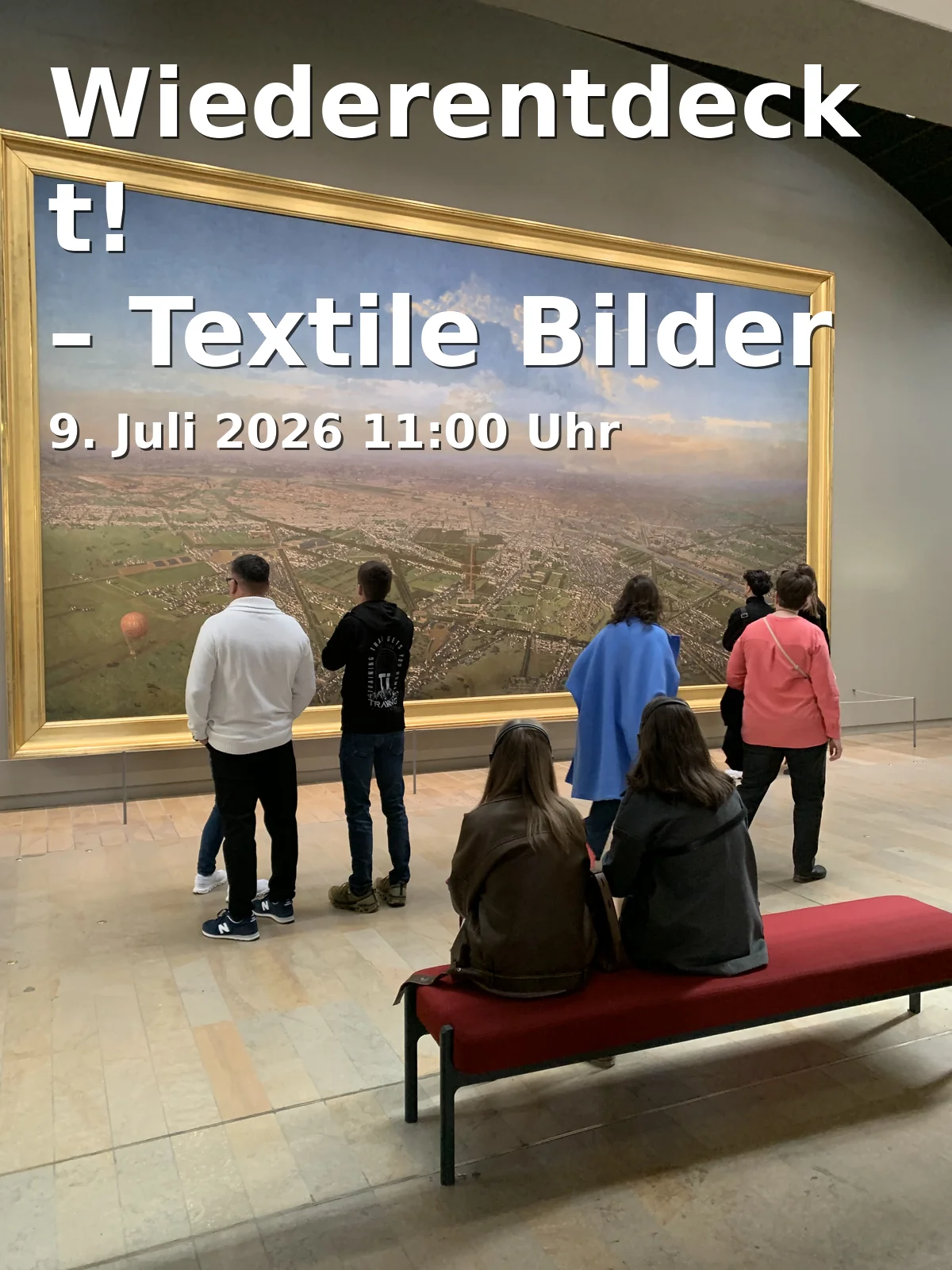
Rediscovered! – Textile Images for the Hessian State Museum Darmstadt
Experience textile modernism in the HLMD: four monumental tapestries, Bauhaus references, documenta-II-history. 09.07.–04.10.2026, children free. Genuine work examination on site. #HLMD
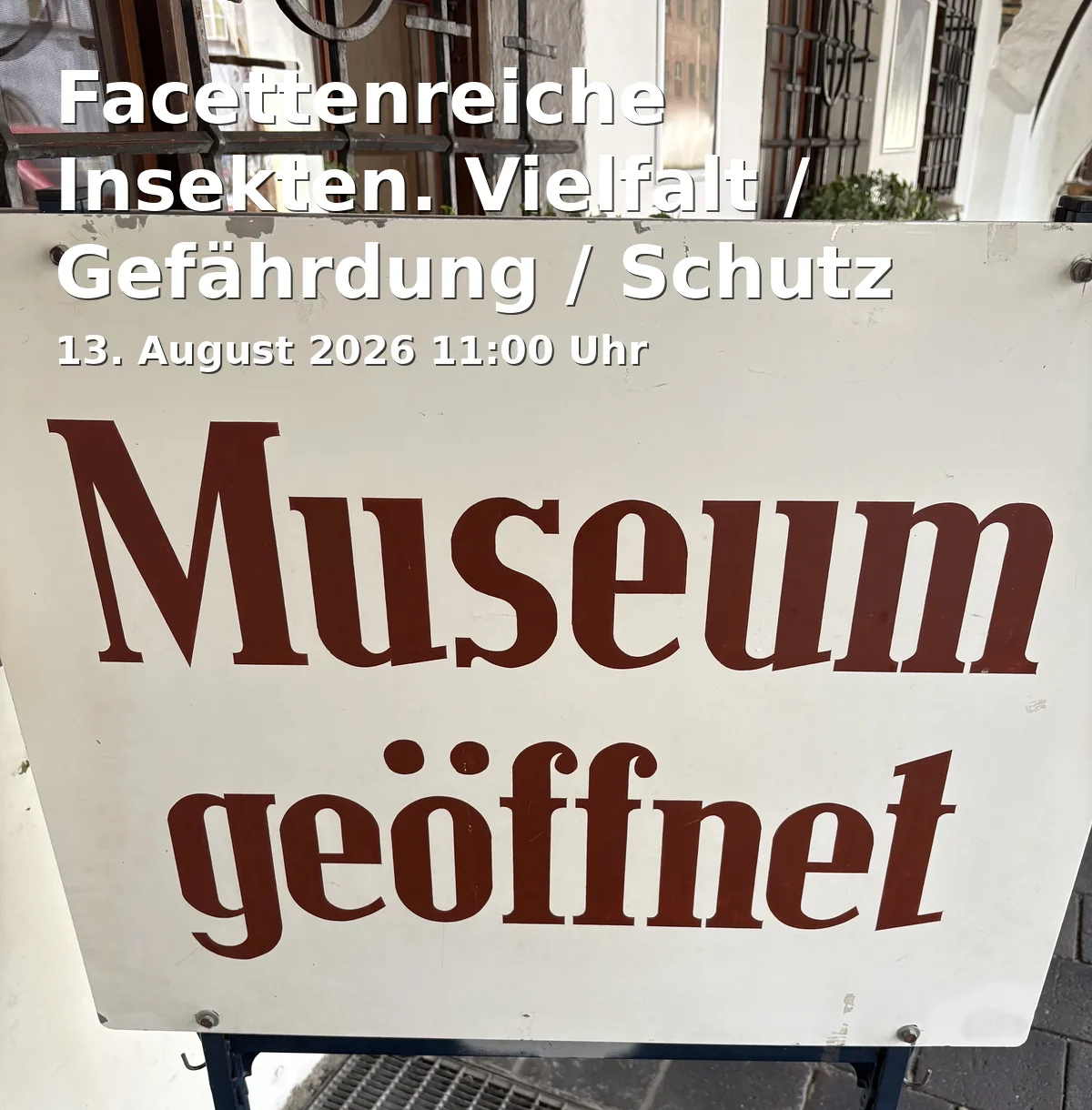
Diverse Insects. Diversity / Threat / Protection
Dive into the world of insects at HLMD Darmstadt: Macro photography, specimens, education. Starting 13.08.2026, admission included in museum ticket, kids free. See, marvel, protect. #DiverseInsects
Frequently Asked Questions
Reviews
TuraiPrakash J
29. January 2026
Hessisches Landesmuseum Darmstadt is a very nice and wonderful museum overall. As it is a natural arts and history museum it covers a very wonderful display of fossils, minerals, knight armours, ancient weapons. Though it's not a big museum, in three floors it contains almost everything about ancient history of Roman, Egypt, lovely ancient art & amazing enticing jewelleries, ancient musical instruments, ancient tools and equipment, evolution of human life, fossils of various species and its invaluable samples, geological descriptions with outstanding collection of minerals, stones and more. The human skull samples from prehistoric to modern times from almost all regions of the world are amazing. Also, the skeleton structures of various types of animals are arranged neatly in a single area, so that we can easily compare them with others. All these are arranged in a lovely way and maintained well. As it covers a variety of stuff, all kinds of people, kids, students with any kind of interest can explore the museum happily. The whole museum can be covered in 3 to 5 hours. The entry is very affordable for everyone. Thanks and wishes to the entire staff of the museum for their dedicated service to maintain the lovely museum. They are also very friendly and easy to inquire about everything related to the museum. Facilities like cafeteria, seating during the visit, lockers to keep things, and parking are also very nice. We can also come by public transport as it's just a 10 to 15 mins travel from Darmstadt Hbf. A must-visit museum for everyone who wants to explore history and nature and more under one roof.
Umut Küçükaslan
6. January 2025
We visited this museum just because it was midway on our long-distance drive that day and was the perfect spot to rest. It turned out to be one of the best museums we ever visited. It is not a big museum like the popular ones in the country. However, it has a nice collection of things, the variety of which was quite a lot to fascinate, but not too much as in the big museums to overwhelm. The natural history collection had many bird, mammal, and skeleton samples. There is also a collection of skulls of other human species like Neanderthals, etc. In addition, there is a nice minerals collection. The second floor was reserved for modern art exhibitions, but I cannot comment as we are not fond of modern art. Parking: there are two big underground parking just under the museum and under the square across the museum. Therefore, access by car is very easy. The price of parking was okay or as one would expect considering it was the most central location in the city. We bought the ticket when we arrived. There was no queue, however, it was a low season. Tickets can also be bought online. The price of the museum is 6 euros per person. Overall, it was quite a nice experience for the 3 hours that we spent.
Keatline Steph
9. October 2025
That was the best museum that I've ever seen. Fossils, ancient Egypt, knight armours, various minerals and stones, amazing stained glass examples, stunning old jewelleries, ancient Rome miniatures and more... It was absolutely amazing. 3 floors took my 3 hours and I could've stayed even more.
Shefali
10. December 2023
It is a huge museum having 7-8 sections ranging from science, arts to history. The hard work of workers in preserving the biological samples is admirable. You can come with kids to give them good insights into different subjects. It is a fantastic museum.
George
5. November 2021
A surprisingly fulfilling museum with interesting exhibits in all areas ranging from art and history to the natural world. Be sure to reserve a good three or more hours for this place if you want to get around everything, as it has a vast collection - especially of art. The Max Liebermann exhibition was on when I visited. This was one of the best parts and was a well put together exhibition with interesting pieces. Most of the descriptions of the pieces are in German but this didn't reduce any of the entertainment for me. One kind employee even had a nice chat with me about the permanent collection. Entry is cheap and discounted for students so I undoubtedly recommend a visit as I believe it's one of the most interesting places to visit in Darmstadt!