
Darmstadt
Bessunger Str. 88D, 64285 Darmstadt, Deutschland
Jazz Institute Darmstadt | Program & Guide Jazz
The Jazz Institute Darmstadt is much more than a place for connoisseurs of jazz. It is a cultural institute of the scientific city of Darmstadt and at the same time an international research and information center that connects archive, mediation, and vibrant concert practice. Those who visit the address on Bessunger Straße encounter an institution that, with its depth of collection, scientific work, and open access to the scene in Germany and beyond, plays a special role. The house contains books, magazines, sound recordings, and photos, along with information on the history and current developments of jazz. The historic vaulted cellar beneath the institute sets a clear accent: here, jazz is not only documented but also made tangible. For visitors who are getting to know the house for the first time, this mix of research, archive, and atmosphere is what makes it special. It makes the Jazz Institute a place where one can browse as well as listen, research, and discover. ([jazzinstitut.de](https://www.jazzinstitut.de/))
Program and Jazz Calendar in Darmstadt
The program of the Jazz Institute Darmstadt does not follow a rigid museum rhythm but a lively understanding of culture. The website regularly maintains concert tips and the Darmstadt Jazz Calendar, allowing visitors to quickly recognize which formats are currently in focus. The spectrum ranges from concerts to workshops and lectures to exhibitions; additionally, the institute often collaborates with partners and brings formats to various locations in Darmstadt and beyond. This is particularly important for the search intent behind the keyword program: those searching for the Jazz Institute Darmstadt program expect not only an overview of dates but also the assurance that continuously curated jazz culture is taking place here. The institute does not see itself as a closed ivory tower but as a mediator between science and the scene. Therefore, visitors do not find a pure archive but a house that translates content into events, thus making access to jazz very concrete. The combination of concert calendar, thematic evenings, and accompanying documentation creates added value that distinguishes the institute from many classical venues. This is especially helpful for people who want to experience jazz in its entirety: one can attend an event, then research in the collection, and if needed, uncover further backgrounds about artists, recordings, or local contexts. ([jazzinstitut.de](https://www.jazzinstitut.de/))
The atmosphere of the program is also remarkable. The Jazz Institute is not a place for mass operations but a venue for focused listening and formats close to the audience. The historic vaulted cellar beneath the institute is explicitly intended as a stage for intimate concerts, and this spatial situation shapes the perception of the program. Many visitors appreciate the combination of professional competence and personal atmosphere. Those who regularly use the website find not only individual concert announcements but also an ongoing insight into the activity of the house. This is relevant for the local scene as well as for guests traveling from other cities specifically looking for jazz in Darmstadt. From an SEO perspective, therefore, not only the word program is important but also the underlying content logic: the Jazz Institute Darmstadt presents jazz as a living culture that is documented, commented on, and performed. This triple role explains why the jazz calendar and concert tips on the website are so central. They consolidate access to current events and make it clear that the institute is still an active part of the jazz landscape today. ([jazzinstitut.de](https://www.jazzinstitut.de/))
Guide Jazz and Practical Services for Research
The term Guide Jazz at the Jazz Institute Darmstadt stands for one of the most important digital offerings of the house. It refers to a comprehensive database of the German jazz scene, which consolidates contact details for musicians, clubs, festivals, labels, workshops, periodicals, and other areas. For seekers, this is particularly valuable because the Guide Jazz is not just a directory but a real working tool. For example, those searching for a band, a festival location, a publication, or the structures of the scene receive a systematic entry point here. This fits perfectly with search queries around jazz institute darmstadt guide jazz or jazz institute de, as the official website is not just a business card but also a functioning research center. In addition, researchers, journalists, and students often use the Jazz Index, a database of published articles, books, and interviews about many past and current jazz musicians. This connection of service and science makes the house strong: it not only answers questions but also provides tools to continue working independently. This is a significant advantage for anyone wanting to delve deeper into jazz history, scene development, or specific biographies. ([jazzinstitut.de](https://www.jazzinstitut.de/en/dienste-service/))
For visitors, it is also important that the institute offers a very personal service. The official notes recommend briefly announcing a visit to the media library or archive by phone or email, especially if one has a longer journey. This is not a formal hook but a sign that the team works with a small, specialized operation where attendance and working phases play a role. Therefore, those who want to research specifically should plan their visit and not just drop by spontaneously. At the same time, the language of the house signals openness: visits are explicitly welcomed, and every question is taken seriously. This is exactly what makes the Guide Jazz and the service offerings so attractive. They are not only for professionals but also for curious music fans looking for more than just surface information. In a time when many jazz information pieces are scattered across the internet, the Jazz Institute creates orientation and reliability. The search interest behind terms like Guide Jazz or Jazz Institute Darmstadt archive thus meets an institution that is indeed structured, informed, and forward-looking. ([jazzinstitut.de](https://www.jazzinstitut.de/))
Photos, Sound Recordings, and the Great Jazz Archive
The archive is one of the strongest reasons why the Jazz Institute Darmstadt repeatedly appears in search queries. It houses Europe’s largest public jazz collection, providing a stock that is rarely found in this form. On-site and online, there are books, magazines, sound recordings, and photos, as well as information on the history and current developments of jazz. For researchers and fans, this is not just a nice addition but a real treasure trove that makes connections between recordings, people, places, and scenes visible. The collection is also not static. The institute systematically expands its databases and already provides various directories and overviews in the archive, such as those for periodicals, jazz-related books, and media stocks that are gradually being digitized. Particularly with the search terms jazz institute darmstadt photos and jazz institute darmstadt archive, it becomes clear how much users are interested in concrete holdings. The Jazz Institute responds with a collection depth that goes beyond mere public relations and enables genuine research. ([jazzinstitut.de](https://www.jazzinstitut.de/))
Especially impressive are the numbers and the diversity of the holdings. In the area of sound recordings, the institute has about 100,000 sound recordings, of which around 50,000 have been cataloged so far; the film collection is fully digitized and viewable at the institute. The photo collection includes nearly 50,000 prints, while the poster collection contains over 3,000 posters and focuses on Germany and Europe after 1945. Additionally, many holdings come from private collections and donations from record companies, distributors, and musicians. This makes the archive not only numerically impressive but also content-wise extremely diverse. For visitors interested in jazz institute darmstadt photos or jazz institute darmstadt collection, this means: here, visual, acoustic, and bibliographic traces can be brought together. This makes the institute interesting for exhibitions and publishing projects as well. It is also important to note that the institute does not see its collections as a distant special archive but as a usable resource. The combination of public accessibility, systematic documentation, and ongoing development is the reason why the Jazz Institute enjoys such a good reputation in Germany and internationally. It combines the value of preservation with the claim to make material truly accessible. ([jazzinstitut.de](https://www.jazzinstitut.de/records/?utm_source=openai))
History of the Jazz Institute in the Bessunger Kavaliershaus
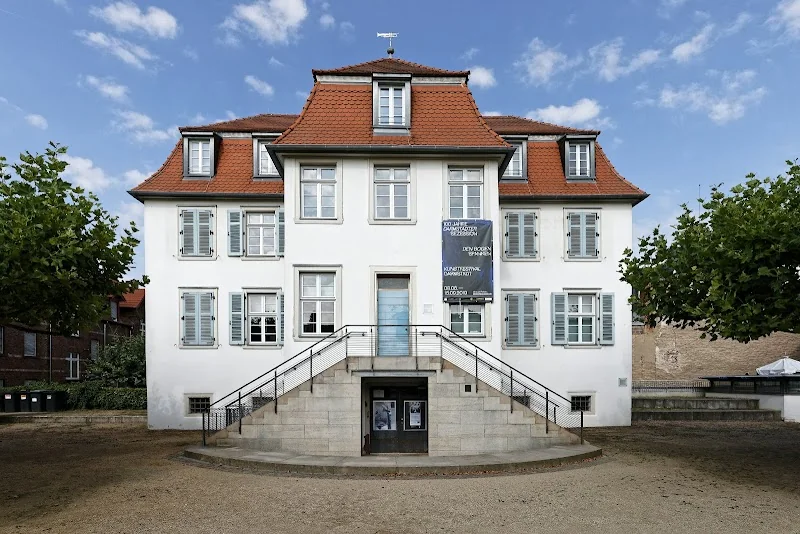
The history of the Jazz Institute Darmstadt is closely linked to its location. The institute was founded in September 1990, and since 1997 it has been located in the Bessunger Kavaliershaus, a baroque building within the historic hunting lodge complex in Darmstadt-Bessungen. The house itself was built between 1709 and 1725 as part of a hunting lodge facility that Landgrave Ernst Ludwig had erected for parforce hunting. Later, the complex was repurposed several times, including as a dragoon barracks, before the building was extensively renovated in the 1990s. Today, the Kavaliershaus is registered as a cultural monument, thus carrying not only institutional but also urban historical significance. This historical depth explains why the Jazz Institute is perceived by many visitors as more than just a specialized institution. It is located in a building that tells its own history, and this architectural environment enhances the impression of continuity, care, and cultural anchoring. Therefore, those searching for the German Jazz Institute Darmstadt do not only encounter a brand but a place with real historical context. ([jazzinstitut.de](https://www.jazzinstitut.de/))
The location in Bessungen is also symbolically and practically interesting. The district is urbanly connected but at the same time characterized by history and a rather quiet environment. This fits well with a house that brings together research, collection, and focused listening. The character of the Bessunger Kavaliershaus supports the work of the institute because architecture and use complement each other: a former manor house becomes a place where jazz is documented, discussed, and performed. In its official self-understanding, the institute describes its work as a bridge between science and practice, between regional cultural work and international discourse. This formulation is not just a sentence for the website but can actually be observed in the building, the archive, and the program. The connection of a historical place and modern cultural work is a strong differentiating factor. This is relevant for search engines and users alike because it positions the Jazz Institute Darmstadt content-wise precisely: not as a concert hall in the classical sense but as a lively research and documentation center with public outreach. The mixture of tradition, monument preservation, and the present creates the appeal and explains why many visitors perceive the location as particularly atmospheric. ([jazzinstitut.de](https://www.jazzinstitut.de/))
Directions, Parking, and Opening Hours Before Your Visit
For a smooth visit, directions and opening hours at the Jazz Institute Darmstadt are clearly described. The address is Bessunger Straße 88d, 64285 Darmstadt. Those coming by car from the A5 or A67 take the exit Darmstadt City Center; after Neckarstraße and Heidelberger Straße, turn onto Bessunger Straße. Just after two houses, the public, free underground parking garage Jagdhof is located on the right. The note about the parking garage is particularly useful as it shows that the institute is easily accessible not only by public transport but also by car. At the same time, there is an important limitation: the underground garage closes at 10 PM and opens again the next day at 10 AM. This is a practical point that concert visitors should definitely keep in mind. Those preferring to arrive by train and tram can reach the house from the main train station with line 1 towards Eberstadt to the Bessunger Straße stop or with line 3 to Orangerie. Transfers via Luisenplatz with lines 6, 7, or 8 are also possible. ([jazzinstitut.de](https://www.jazzinstitut.de/wegbeschreibung/))
The opening hours are also clearly regulated: Tuesday to Friday from 10 AM to 2 PM; closed on Mondays. Additionally, the helpful note suggests calling briefly or emailing to inquire about the team's presence before longer journeys. This is particularly sensible for a specialized archive and information center, as not all processes are the same as in a regular public operation. The reference to the public transport stop Bessunger Straße also shows that the house is integrated into the urban transport network. Therefore, those visiting the Jazz Institute for the first time benefit from a good mix of central location, clear directions, and realistic planning assistance. For the search intent around jazz institute darmstadt directions or jazz institute darmstadt parking, this is crucial: there is not only an address but a practical visit plan. This makes organizing the stay significantly easier, especially for research, archive appointments, or concert visits. The house openly communicates its visiting conditions, and this transparency is a plus for guests from Darmstadt as well as for visitors from afar. ([jazzinstitut.de](https://www.jazzinstitut.de/wegbeschreibung/))
Darmstadt Jazz Forum and JazzTalk in the Vaulted Cellar
A central format of the Jazz Institute Darmstadt is the Darmstadt Jazz Forum. This international conference has been held every two years since 1989 and combines expert lectures, discussions, concerts, workshops, and exhibitions into an unusually dense event format. This mix makes the forum so interesting: it is not only a scientific congress but also a lively meeting point for musicians, researchers, and an interested audience. The forum is traditionally documented in the book series Darmstadt Contributions to Jazz Research, which takes up and permanently records the respective thematic focus. For users searching for jazz institute darmstadt jazz forum, this is important information because it shows that the institute does not only organize individual dates but also accompanies and archives international discourses over a longer period. This creates a connection of event, reflection, and publication that is rarely implemented so consistently in the jazz landscape. ([jazzinstitut.de](https://www.jazzinstitut.de/en/darmstadter-jazzforum/?utm_source=openai))
Closely related is the concert series JazzTalk, which takes place in the historic vaulted cellar beneath the institute. The space is intentionally intimate and creates a setting where conversations, music, and audience are very close together. The institute's website also points out that many conversations and recordings have been created over many years for this series and are being published gradually. This ideally complements the profile of the house: JazzTalk stands for lived presence, while the archive and collection provide the historical depth. For visitors interested in jazz institute darmstadt jazztalk, it is therefore important that not only concerts take place here but also a format that connects dialogue, documentation, and musical practice. Together with the vaulted cellar, the concert tips on the website, and the international jazz forum, a very clear profile emerges. The Jazz Institute Darmstadt is not simply a place for jazz but a place where jazz is negotiated, preserved, and made tangible in the present. This makes the location attractive for culture enthusiasts, researchers, and event visitors. ([jazzinstitut.de](https://www.jazzinstitut.de/en/jazztalk-mitschnitte/?utm_source=openai))
Sources:
- Jazz Institute Darmstadt - Official Website
- Jazz Institute Darmstadt - Service and Guide Jazz
- Jazz Institute Darmstadt - Archive
- Jazz Institute Darmstadt - Directions, Arrival, and Parking
- Jazz Institute Darmstadt - Visiting Hours
- Scientific City Darmstadt - Jazz Institute
- Scientific City Darmstadt - Bessunger Hunting Lodge
- Jazz Institute Darmstadt - Darmstadt Jazz Forum
- Jazz Institute Darmstadt - JazzTalk Recordings
Show moreShow less
Jazz Institute Darmstadt | Program & Guide Jazz
The Jazz Institute Darmstadt is much more than a place for connoisseurs of jazz. It is a cultural institute of the scientific city of Darmstadt and at the same time an international research and information center that connects archive, mediation, and vibrant concert practice. Those who visit the address on Bessunger Straße encounter an institution that, with its depth of collection, scientific work, and open access to the scene in Germany and beyond, plays a special role. The house contains books, magazines, sound recordings, and photos, along with information on the history and current developments of jazz. The historic vaulted cellar beneath the institute sets a clear accent: here, jazz is not only documented but also made tangible. For visitors who are getting to know the house for the first time, this mix of research, archive, and atmosphere is what makes it special. It makes the Jazz Institute a place where one can browse as well as listen, research, and discover. ([jazzinstitut.de](https://www.jazzinstitut.de/))
Program and Jazz Calendar in Darmstadt
The program of the Jazz Institute Darmstadt does not follow a rigid museum rhythm but a lively understanding of culture. The website regularly maintains concert tips and the Darmstadt Jazz Calendar, allowing visitors to quickly recognize which formats are currently in focus. The spectrum ranges from concerts to workshops and lectures to exhibitions; additionally, the institute often collaborates with partners and brings formats to various locations in Darmstadt and beyond. This is particularly important for the search intent behind the keyword program: those searching for the Jazz Institute Darmstadt program expect not only an overview of dates but also the assurance that continuously curated jazz culture is taking place here. The institute does not see itself as a closed ivory tower but as a mediator between science and the scene. Therefore, visitors do not find a pure archive but a house that translates content into events, thus making access to jazz very concrete. The combination of concert calendar, thematic evenings, and accompanying documentation creates added value that distinguishes the institute from many classical venues. This is especially helpful for people who want to experience jazz in its entirety: one can attend an event, then research in the collection, and if needed, uncover further backgrounds about artists, recordings, or local contexts. ([jazzinstitut.de](https://www.jazzinstitut.de/))
The atmosphere of the program is also remarkable. The Jazz Institute is not a place for mass operations but a venue for focused listening and formats close to the audience. The historic vaulted cellar beneath the institute is explicitly intended as a stage for intimate concerts, and this spatial situation shapes the perception of the program. Many visitors appreciate the combination of professional competence and personal atmosphere. Those who regularly use the website find not only individual concert announcements but also an ongoing insight into the activity of the house. This is relevant for the local scene as well as for guests traveling from other cities specifically looking for jazz in Darmstadt. From an SEO perspective, therefore, not only the word program is important but also the underlying content logic: the Jazz Institute Darmstadt presents jazz as a living culture that is documented, commented on, and performed. This triple role explains why the jazz calendar and concert tips on the website are so central. They consolidate access to current events and make it clear that the institute is still an active part of the jazz landscape today. ([jazzinstitut.de](https://www.jazzinstitut.de/))
Guide Jazz and Practical Services for Research
The term Guide Jazz at the Jazz Institute Darmstadt stands for one of the most important digital offerings of the house. It refers to a comprehensive database of the German jazz scene, which consolidates contact details for musicians, clubs, festivals, labels, workshops, periodicals, and other areas. For seekers, this is particularly valuable because the Guide Jazz is not just a directory but a real working tool. For example, those searching for a band, a festival location, a publication, or the structures of the scene receive a systematic entry point here. This fits perfectly with search queries around jazz institute darmstadt guide jazz or jazz institute de, as the official website is not just a business card but also a functioning research center. In addition, researchers, journalists, and students often use the Jazz Index, a database of published articles, books, and interviews about many past and current jazz musicians. This connection of service and science makes the house strong: it not only answers questions but also provides tools to continue working independently. This is a significant advantage for anyone wanting to delve deeper into jazz history, scene development, or specific biographies. ([jazzinstitut.de](https://www.jazzinstitut.de/en/dienste-service/))
For visitors, it is also important that the institute offers a very personal service. The official notes recommend briefly announcing a visit to the media library or archive by phone or email, especially if one has a longer journey. This is not a formal hook but a sign that the team works with a small, specialized operation where attendance and working phases play a role. Therefore, those who want to research specifically should plan their visit and not just drop by spontaneously. At the same time, the language of the house signals openness: visits are explicitly welcomed, and every question is taken seriously. This is exactly what makes the Guide Jazz and the service offerings so attractive. They are not only for professionals but also for curious music fans looking for more than just surface information. In a time when many jazz information pieces are scattered across the internet, the Jazz Institute creates orientation and reliability. The search interest behind terms like Guide Jazz or Jazz Institute Darmstadt archive thus meets an institution that is indeed structured, informed, and forward-looking. ([jazzinstitut.de](https://www.jazzinstitut.de/))
Photos, Sound Recordings, and the Great Jazz Archive
The archive is one of the strongest reasons why the Jazz Institute Darmstadt repeatedly appears in search queries. It houses Europe’s largest public jazz collection, providing a stock that is rarely found in this form. On-site and online, there are books, magazines, sound recordings, and photos, as well as information on the history and current developments of jazz. For researchers and fans, this is not just a nice addition but a real treasure trove that makes connections between recordings, people, places, and scenes visible. The collection is also not static. The institute systematically expands its databases and already provides various directories and overviews in the archive, such as those for periodicals, jazz-related books, and media stocks that are gradually being digitized. Particularly with the search terms jazz institute darmstadt photos and jazz institute darmstadt archive, it becomes clear how much users are interested in concrete holdings. The Jazz Institute responds with a collection depth that goes beyond mere public relations and enables genuine research. ([jazzinstitut.de](https://www.jazzinstitut.de/))
Especially impressive are the numbers and the diversity of the holdings. In the area of sound recordings, the institute has about 100,000 sound recordings, of which around 50,000 have been cataloged so far; the film collection is fully digitized and viewable at the institute. The photo collection includes nearly 50,000 prints, while the poster collection contains over 3,000 posters and focuses on Germany and Europe after 1945. Additionally, many holdings come from private collections and donations from record companies, distributors, and musicians. This makes the archive not only numerically impressive but also content-wise extremely diverse. For visitors interested in jazz institute darmstadt photos or jazz institute darmstadt collection, this means: here, visual, acoustic, and bibliographic traces can be brought together. This makes the institute interesting for exhibitions and publishing projects as well. It is also important to note that the institute does not see its collections as a distant special archive but as a usable resource. The combination of public accessibility, systematic documentation, and ongoing development is the reason why the Jazz Institute enjoys such a good reputation in Germany and internationally. It combines the value of preservation with the claim to make material truly accessible. ([jazzinstitut.de](https://www.jazzinstitut.de/records/?utm_source=openai))
History of the Jazz Institute in the Bessunger Kavaliershaus
The history of the Jazz Institute Darmstadt is closely linked to its location. The institute was founded in September 1990, and since 1997 it has been located in the Bessunger Kavaliershaus, a baroque building within the historic hunting lodge complex in Darmstadt-Bessungen. The house itself was built between 1709 and 1725 as part of a hunting lodge facility that Landgrave Ernst Ludwig had erected for parforce hunting. Later, the complex was repurposed several times, including as a dragoon barracks, before the building was extensively renovated in the 1990s. Today, the Kavaliershaus is registered as a cultural monument, thus carrying not only institutional but also urban historical significance. This historical depth explains why the Jazz Institute is perceived by many visitors as more than just a specialized institution. It is located in a building that tells its own history, and this architectural environment enhances the impression of continuity, care, and cultural anchoring. Therefore, those searching for the German Jazz Institute Darmstadt do not only encounter a brand but a place with real historical context. ([jazzinstitut.de](https://www.jazzinstitut.de/))
The location in Bessungen is also symbolically and practically interesting. The district is urbanly connected but at the same time characterized by history and a rather quiet environment. This fits well with a house that brings together research, collection, and focused listening. The character of the Bessunger Kavaliershaus supports the work of the institute because architecture and use complement each other: a former manor house becomes a place where jazz is documented, discussed, and performed. In its official self-understanding, the institute describes its work as a bridge between science and practice, between regional cultural work and international discourse. This formulation is not just a sentence for the website but can actually be observed in the building, the archive, and the program. The connection of a historical place and modern cultural work is a strong differentiating factor. This is relevant for search engines and users alike because it positions the Jazz Institute Darmstadt content-wise precisely: not as a concert hall in the classical sense but as a lively research and documentation center with public outreach. The mixture of tradition, monument preservation, and the present creates the appeal and explains why many visitors perceive the location as particularly atmospheric. ([jazzinstitut.de](https://www.jazzinstitut.de/))
Directions, Parking, and Opening Hours Before Your Visit
For a smooth visit, directions and opening hours at the Jazz Institute Darmstadt are clearly described. The address is Bessunger Straße 88d, 64285 Darmstadt. Those coming by car from the A5 or A67 take the exit Darmstadt City Center; after Neckarstraße and Heidelberger Straße, turn onto Bessunger Straße. Just after two houses, the public, free underground parking garage Jagdhof is located on the right. The note about the parking garage is particularly useful as it shows that the institute is easily accessible not only by public transport but also by car. At the same time, there is an important limitation: the underground garage closes at 10 PM and opens again the next day at 10 AM. This is a practical point that concert visitors should definitely keep in mind. Those preferring to arrive by train and tram can reach the house from the main train station with line 1 towards Eberstadt to the Bessunger Straße stop or with line 3 to Orangerie. Transfers via Luisenplatz with lines 6, 7, or 8 are also possible. ([jazzinstitut.de](https://www.jazzinstitut.de/wegbeschreibung/))
The opening hours are also clearly regulated: Tuesday to Friday from 10 AM to 2 PM; closed on Mondays. Additionally, the helpful note suggests calling briefly or emailing to inquire about the team's presence before longer journeys. This is particularly sensible for a specialized archive and information center, as not all processes are the same as in a regular public operation. The reference to the public transport stop Bessunger Straße also shows that the house is integrated into the urban transport network. Therefore, those visiting the Jazz Institute for the first time benefit from a good mix of central location, clear directions, and realistic planning assistance. For the search intent around jazz institute darmstadt directions or jazz institute darmstadt parking, this is crucial: there is not only an address but a practical visit plan. This makes organizing the stay significantly easier, especially for research, archive appointments, or concert visits. The house openly communicates its visiting conditions, and this transparency is a plus for guests from Darmstadt as well as for visitors from afar. ([jazzinstitut.de](https://www.jazzinstitut.de/wegbeschreibung/))
Darmstadt Jazz Forum and JazzTalk in the Vaulted Cellar
A central format of the Jazz Institute Darmstadt is the Darmstadt Jazz Forum. This international conference has been held every two years since 1989 and combines expert lectures, discussions, concerts, workshops, and exhibitions into an unusually dense event format. This mix makes the forum so interesting: it is not only a scientific congress but also a lively meeting point for musicians, researchers, and an interested audience. The forum is traditionally documented in the book series Darmstadt Contributions to Jazz Research, which takes up and permanently records the respective thematic focus. For users searching for jazz institute darmstadt jazz forum, this is important information because it shows that the institute does not only organize individual dates but also accompanies and archives international discourses over a longer period. This creates a connection of event, reflection, and publication that is rarely implemented so consistently in the jazz landscape. ([jazzinstitut.de](https://www.jazzinstitut.de/en/darmstadter-jazzforum/?utm_source=openai))
Closely related is the concert series JazzTalk, which takes place in the historic vaulted cellar beneath the institute. The space is intentionally intimate and creates a setting where conversations, music, and audience are very close together. The institute's website also points out that many conversations and recordings have been created over many years for this series and are being published gradually. This ideally complements the profile of the house: JazzTalk stands for lived presence, while the archive and collection provide the historical depth. For visitors interested in jazz institute darmstadt jazztalk, it is therefore important that not only concerts take place here but also a format that connects dialogue, documentation, and musical practice. Together with the vaulted cellar, the concert tips on the website, and the international jazz forum, a very clear profile emerges. The Jazz Institute Darmstadt is not simply a place for jazz but a place where jazz is negotiated, preserved, and made tangible in the present. This makes the location attractive for culture enthusiasts, researchers, and event visitors. ([jazzinstitut.de](https://www.jazzinstitut.de/en/jazztalk-mitschnitte/?utm_source=openai))
Sources:
- Jazz Institute Darmstadt - Official Website
- Jazz Institute Darmstadt - Service and Guide Jazz
- Jazz Institute Darmstadt - Archive
- Jazz Institute Darmstadt - Directions, Arrival, and Parking
- Jazz Institute Darmstadt - Visiting Hours
- Scientific City Darmstadt - Jazz Institute
- Scientific City Darmstadt - Bessunger Hunting Lodge
- Jazz Institute Darmstadt - Darmstadt Jazz Forum
- Jazz Institute Darmstadt - JazzTalk Recordings
Jazz Institute Darmstadt | Program & Guide Jazz
The Jazz Institute Darmstadt is much more than a place for connoisseurs of jazz. It is a cultural institute of the scientific city of Darmstadt and at the same time an international research and information center that connects archive, mediation, and vibrant concert practice. Those who visit the address on Bessunger Straße encounter an institution that, with its depth of collection, scientific work, and open access to the scene in Germany and beyond, plays a special role. The house contains books, magazines, sound recordings, and photos, along with information on the history and current developments of jazz. The historic vaulted cellar beneath the institute sets a clear accent: here, jazz is not only documented but also made tangible. For visitors who are getting to know the house for the first time, this mix of research, archive, and atmosphere is what makes it special. It makes the Jazz Institute a place where one can browse as well as listen, research, and discover. ([jazzinstitut.de](https://www.jazzinstitut.de/))
Program and Jazz Calendar in Darmstadt
The program of the Jazz Institute Darmstadt does not follow a rigid museum rhythm but a lively understanding of culture. The website regularly maintains concert tips and the Darmstadt Jazz Calendar, allowing visitors to quickly recognize which formats are currently in focus. The spectrum ranges from concerts to workshops and lectures to exhibitions; additionally, the institute often collaborates with partners and brings formats to various locations in Darmstadt and beyond. This is particularly important for the search intent behind the keyword program: those searching for the Jazz Institute Darmstadt program expect not only an overview of dates but also the assurance that continuously curated jazz culture is taking place here. The institute does not see itself as a closed ivory tower but as a mediator between science and the scene. Therefore, visitors do not find a pure archive but a house that translates content into events, thus making access to jazz very concrete. The combination of concert calendar, thematic evenings, and accompanying documentation creates added value that distinguishes the institute from many classical venues. This is especially helpful for people who want to experience jazz in its entirety: one can attend an event, then research in the collection, and if needed, uncover further backgrounds about artists, recordings, or local contexts. ([jazzinstitut.de](https://www.jazzinstitut.de/))
The atmosphere of the program is also remarkable. The Jazz Institute is not a place for mass operations but a venue for focused listening and formats close to the audience. The historic vaulted cellar beneath the institute is explicitly intended as a stage for intimate concerts, and this spatial situation shapes the perception of the program. Many visitors appreciate the combination of professional competence and personal atmosphere. Those who regularly use the website find not only individual concert announcements but also an ongoing insight into the activity of the house. This is relevant for the local scene as well as for guests traveling from other cities specifically looking for jazz in Darmstadt. From an SEO perspective, therefore, not only the word program is important but also the underlying content logic: the Jazz Institute Darmstadt presents jazz as a living culture that is documented, commented on, and performed. This triple role explains why the jazz calendar and concert tips on the website are so central. They consolidate access to current events and make it clear that the institute is still an active part of the jazz landscape today. ([jazzinstitut.de](https://www.jazzinstitut.de/))
Guide Jazz and Practical Services for Research
The term Guide Jazz at the Jazz Institute Darmstadt stands for one of the most important digital offerings of the house. It refers to a comprehensive database of the German jazz scene, which consolidates contact details for musicians, clubs, festivals, labels, workshops, periodicals, and other areas. For seekers, this is particularly valuable because the Guide Jazz is not just a directory but a real working tool. For example, those searching for a band, a festival location, a publication, or the structures of the scene receive a systematic entry point here. This fits perfectly with search queries around jazz institute darmstadt guide jazz or jazz institute de, as the official website is not just a business card but also a functioning research center. In addition, researchers, journalists, and students often use the Jazz Index, a database of published articles, books, and interviews about many past and current jazz musicians. This connection of service and science makes the house strong: it not only answers questions but also provides tools to continue working independently. This is a significant advantage for anyone wanting to delve deeper into jazz history, scene development, or specific biographies. ([jazzinstitut.de](https://www.jazzinstitut.de/en/dienste-service/))
For visitors, it is also important that the institute offers a very personal service. The official notes recommend briefly announcing a visit to the media library or archive by phone or email, especially if one has a longer journey. This is not a formal hook but a sign that the team works with a small, specialized operation where attendance and working phases play a role. Therefore, those who want to research specifically should plan their visit and not just drop by spontaneously. At the same time, the language of the house signals openness: visits are explicitly welcomed, and every question is taken seriously. This is exactly what makes the Guide Jazz and the service offerings so attractive. They are not only for professionals but also for curious music fans looking for more than just surface information. In a time when many jazz information pieces are scattered across the internet, the Jazz Institute creates orientation and reliability. The search interest behind terms like Guide Jazz or Jazz Institute Darmstadt archive thus meets an institution that is indeed structured, informed, and forward-looking. ([jazzinstitut.de](https://www.jazzinstitut.de/))
Photos, Sound Recordings, and the Great Jazz Archive
The archive is one of the strongest reasons why the Jazz Institute Darmstadt repeatedly appears in search queries. It houses Europe’s largest public jazz collection, providing a stock that is rarely found in this form. On-site and online, there are books, magazines, sound recordings, and photos, as well as information on the history and current developments of jazz. For researchers and fans, this is not just a nice addition but a real treasure trove that makes connections between recordings, people, places, and scenes visible. The collection is also not static. The institute systematically expands its databases and already provides various directories and overviews in the archive, such as those for periodicals, jazz-related books, and media stocks that are gradually being digitized. Particularly with the search terms jazz institute darmstadt photos and jazz institute darmstadt archive, it becomes clear how much users are interested in concrete holdings. The Jazz Institute responds with a collection depth that goes beyond mere public relations and enables genuine research. ([jazzinstitut.de](https://www.jazzinstitut.de/))
Especially impressive are the numbers and the diversity of the holdings. In the area of sound recordings, the institute has about 100,000 sound recordings, of which around 50,000 have been cataloged so far; the film collection is fully digitized and viewable at the institute. The photo collection includes nearly 50,000 prints, while the poster collection contains over 3,000 posters and focuses on Germany and Europe after 1945. Additionally, many holdings come from private collections and donations from record companies, distributors, and musicians. This makes the archive not only numerically impressive but also content-wise extremely diverse. For visitors interested in jazz institute darmstadt photos or jazz institute darmstadt collection, this means: here, visual, acoustic, and bibliographic traces can be brought together. This makes the institute interesting for exhibitions and publishing projects as well. It is also important to note that the institute does not see its collections as a distant special archive but as a usable resource. The combination of public accessibility, systematic documentation, and ongoing development is the reason why the Jazz Institute enjoys such a good reputation in Germany and internationally. It combines the value of preservation with the claim to make material truly accessible. ([jazzinstitut.de](https://www.jazzinstitut.de/records/?utm_source=openai))
History of the Jazz Institute in the Bessunger Kavaliershaus
The history of the Jazz Institute Darmstadt is closely linked to its location. The institute was founded in September 1990, and since 1997 it has been located in the Bessunger Kavaliershaus, a baroque building within the historic hunting lodge complex in Darmstadt-Bessungen. The house itself was built between 1709 and 1725 as part of a hunting lodge facility that Landgrave Ernst Ludwig had erected for parforce hunting. Later, the complex was repurposed several times, including as a dragoon barracks, before the building was extensively renovated in the 1990s. Today, the Kavaliershaus is registered as a cultural monument, thus carrying not only institutional but also urban historical significance. This historical depth explains why the Jazz Institute is perceived by many visitors as more than just a specialized institution. It is located in a building that tells its own history, and this architectural environment enhances the impression of continuity, care, and cultural anchoring. Therefore, those searching for the German Jazz Institute Darmstadt do not only encounter a brand but a place with real historical context. ([jazzinstitut.de](https://www.jazzinstitut.de/))
The location in Bessungen is also symbolically and practically interesting. The district is urbanly connected but at the same time characterized by history and a rather quiet environment. This fits well with a house that brings together research, collection, and focused listening. The character of the Bessunger Kavaliershaus supports the work of the institute because architecture and use complement each other: a former manor house becomes a place where jazz is documented, discussed, and performed. In its official self-understanding, the institute describes its work as a bridge between science and practice, between regional cultural work and international discourse. This formulation is not just a sentence for the website but can actually be observed in the building, the archive, and the program. The connection of a historical place and modern cultural work is a strong differentiating factor. This is relevant for search engines and users alike because it positions the Jazz Institute Darmstadt content-wise precisely: not as a concert hall in the classical sense but as a lively research and documentation center with public outreach. The mixture of tradition, monument preservation, and the present creates the appeal and explains why many visitors perceive the location as particularly atmospheric. ([jazzinstitut.de](https://www.jazzinstitut.de/))
Directions, Parking, and Opening Hours Before Your Visit
For a smooth visit, directions and opening hours at the Jazz Institute Darmstadt are clearly described. The address is Bessunger Straße 88d, 64285 Darmstadt. Those coming by car from the A5 or A67 take the exit Darmstadt City Center; after Neckarstraße and Heidelberger Straße, turn onto Bessunger Straße. Just after two houses, the public, free underground parking garage Jagdhof is located on the right. The note about the parking garage is particularly useful as it shows that the institute is easily accessible not only by public transport but also by car. At the same time, there is an important limitation: the underground garage closes at 10 PM and opens again the next day at 10 AM. This is a practical point that concert visitors should definitely keep in mind. Those preferring to arrive by train and tram can reach the house from the main train station with line 1 towards Eberstadt to the Bessunger Straße stop or with line 3 to Orangerie. Transfers via Luisenplatz with lines 6, 7, or 8 are also possible. ([jazzinstitut.de](https://www.jazzinstitut.de/wegbeschreibung/))
The opening hours are also clearly regulated: Tuesday to Friday from 10 AM to 2 PM; closed on Mondays. Additionally, the helpful note suggests calling briefly or emailing to inquire about the team's presence before longer journeys. This is particularly sensible for a specialized archive and information center, as not all processes are the same as in a regular public operation. The reference to the public transport stop Bessunger Straße also shows that the house is integrated into the urban transport network. Therefore, those visiting the Jazz Institute for the first time benefit from a good mix of central location, clear directions, and realistic planning assistance. For the search intent around jazz institute darmstadt directions or jazz institute darmstadt parking, this is crucial: there is not only an address but a practical visit plan. This makes organizing the stay significantly easier, especially for research, archive appointments, or concert visits. The house openly communicates its visiting conditions, and this transparency is a plus for guests from Darmstadt as well as for visitors from afar. ([jazzinstitut.de](https://www.jazzinstitut.de/wegbeschreibung/))
Darmstadt Jazz Forum and JazzTalk in the Vaulted Cellar
A central format of the Jazz Institute Darmstadt is the Darmstadt Jazz Forum. This international conference has been held every two years since 1989 and combines expert lectures, discussions, concerts, workshops, and exhibitions into an unusually dense event format. This mix makes the forum so interesting: it is not only a scientific congress but also a lively meeting point for musicians, researchers, and an interested audience. The forum is traditionally documented in the book series Darmstadt Contributions to Jazz Research, which takes up and permanently records the respective thematic focus. For users searching for jazz institute darmstadt jazz forum, this is important information because it shows that the institute does not only organize individual dates but also accompanies and archives international discourses over a longer period. This creates a connection of event, reflection, and publication that is rarely implemented so consistently in the jazz landscape. ([jazzinstitut.de](https://www.jazzinstitut.de/en/darmstadter-jazzforum/?utm_source=openai))
Closely related is the concert series JazzTalk, which takes place in the historic vaulted cellar beneath the institute. The space is intentionally intimate and creates a setting where conversations, music, and audience are very close together. The institute's website also points out that many conversations and recordings have been created over many years for this series and are being published gradually. This ideally complements the profile of the house: JazzTalk stands for lived presence, while the archive and collection provide the historical depth. For visitors interested in jazz institute darmstadt jazztalk, it is therefore important that not only concerts take place here but also a format that connects dialogue, documentation, and musical practice. Together with the vaulted cellar, the concert tips on the website, and the international jazz forum, a very clear profile emerges. The Jazz Institute Darmstadt is not simply a place for jazz but a place where jazz is negotiated, preserved, and made tangible in the present. This makes the location attractive for culture enthusiasts, researchers, and event visitors. ([jazzinstitut.de](https://www.jazzinstitut.de/en/jazztalk-mitschnitte/?utm_source=openai))
Sources:
- Jazz Institute Darmstadt - Official Website
- Jazz Institute Darmstadt - Service and Guide Jazz
- Jazz Institute Darmstadt - Archive
- Jazz Institute Darmstadt - Directions, Arrival, and Parking
- Jazz Institute Darmstadt - Visiting Hours
- Scientific City Darmstadt - Jazz Institute
- Scientific City Darmstadt - Bessunger Hunting Lodge
- Jazz Institute Darmstadt - Darmstadt Jazz Forum
- Jazz Institute Darmstadt - JazzTalk Recordings
Upcoming Events
No events found
Frequently Asked Questions
Reviews
No reviews found