
Darmstadt
Mitte, 64283 Darmstadt, Germany
Science Castle Darmstadt | Address & Events
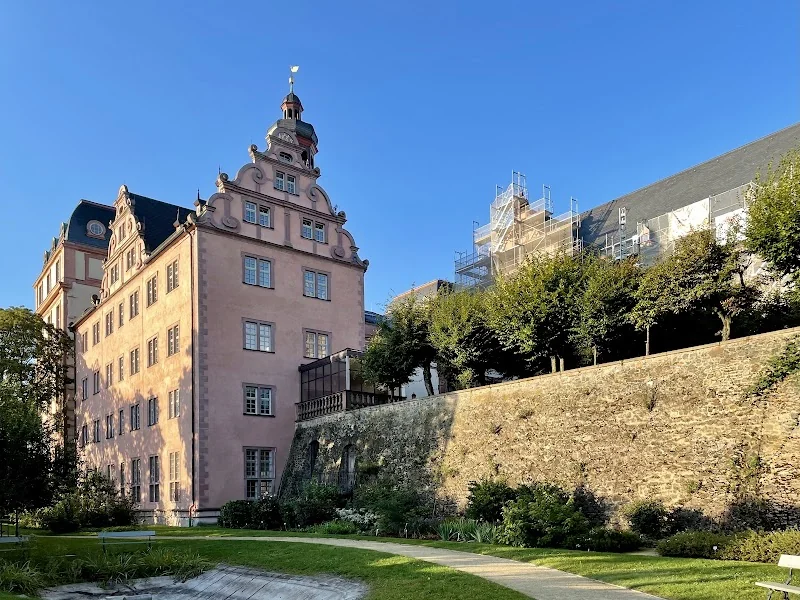
Located in the heart of Darmstadt's city center, the Science Castle – known to many as Darmstadt's Residenzschloss – impressively combines tradition and future. Behind historic walls, today the university, museum, and city society come together: The Castle Museum invites discoveries of court culture, the Technical University of Darmstadt uses the ensemble as a place for research, teaching, and exchange, and concerts once again resonate in the organ hall. After extensive renovation, the castle was ceremoniously reopened on September 16, 2023 – a day on which around 10,000 guests celebrated the return of this landmark as an open cultural and knowledge space. The location is hardly more central: at the marketplace, just steps away from Karolinenplatz and darmstadtium, surrounded by courtyards that are also animated for urban festivals throughout the year. Visitors to the Residenzschloss will find a clear address, convenient access by bus and train, and parking options in close proximity – ideal conditions for events, tours, or an inspiring walk through history and the present.
Address and Directions to the Residenzschloss Darmstadt (Science Castle 1)
Orientation is easy: The official address is Residenzschloss 1, 64283 Darmstadt. At this address, you can reach the Castle Museum as well as central facilities of the TU Darmstadt in the castle ensemble. For public transport, the route via Darmstadt Central Station is recommended. From there, several lines head towards the city center; particularly convenient are bus lines F (direction Oberwaldhaus) and H (direction Alfred-Messel-Weg), which serve the Alexanderstraße/TU stop. From this stop, a short walk leads to the castle area and the courtyards. If you are coming by car, follow the signs from the A5 or A67 towards Darmstadt-Center via Rheinstraße. From the City Ring, signs direct you to the city center and the castle; a tried-and-true route is the B26 with a turn-off at Alexanderstraße. This connection allows for a good combination of museum visits, concerts in the organ hall, appointments at the university, or a city stroll – the distances between Residenzschloss, marketplace, Karolinenplatz, and darmstadtium are short. For groups, arrival by coach is also possible; designated pick-up and drop-off points in the city center are marked. Please note when planning that the central location can be associated with increased visitor traffic during lively times – such as during large city festivals around the castle moat. Therefore, public transport is even more sensible, as it serves the most important destinations within walking distance. Those arriving from Frankfurt Airport can reach Darmstadt by Airliner bus or train and transfer at the main station to the mentioned bus lines – thus, even external guests can quickly reach the Science Castle without a car.
Parking at the Residenzschloss Darmstadt: Castle Garage Karolinenplatz and Q-Park at darmstadtium
The central location of the Residenzschloss goes hand in hand with comfortable parking options. Two parking garages that have proven to be convenient for visitors to the Science Castle are particularly close: the Castle Garage at Karolinenplatz and the Q-Park at the darmstadtium congress center. Both are open around the clock, within walking distance to the castle, and well signposted. The Castle Garage at Karolinenplatz is just a few minutes' walk from the city center; here you park close to the center and reach the Castle Museum, the organ hall, or the courtyards via short paths. The Q-Park at darmstadtium is located directly at the congress center in immediate proximity to the castle area; from there, it is also only a few minutes to the courtyards and the marketplace. Additional parking garages in the city center – such as at Luisencenter, Grafenstraße, or the State Theatre – are alternative options if certain garages are full during large events. For guests visiting Darmstadt, it is worthwhile to check the 24-hour opening hours and rates of the mentioned parking garages in advance. Those traveling environmentally friendly or wishing to avoid waiting times at entrances can park at the main station (P+R) and conveniently switch to buses and trains into the city. Visitor groups with buses use the designated stops for pick-up and drop-off. This way, a concert evening in the organ hall, a guided tour of the Castle Museum, or an evening visit to the castle cellar can begin relaxed – without long searches for parking and with short, well-lit walking paths.
History and Features of the Darmstadt Residenzschloss
The Residenzschloss Darmstadt has a construction and usage history that spans centuries. Its origins date back to the time of the medieval water castle, from which the complex developed into the residence of the landgraves and later the grand dukes of Hesse. After being destroyed in wars, the castle was repeatedly rebuilt and expanded; baroque plans by architect Louis Remy de la Fosse significantly shaped the four-wing complex, but remained partially unfinished. During the Darmstadt fire night of 1944, the castle was largely destroyed by fire; the reconstruction was oriented towards the pre-war condition and was a top urban planning task until the 1960s. Since then, the ensemble has understood itself not only as a monument of courtly representation but also as a publicly accessible educational and cultural space. This is exemplified in the Castle Museum with its collections on the history of the court and the state, in the German-Polish Institute, and in the intensive use by the Technical University of Darmstadt. A decisive step towards today's orientation was the decision in 2005 to develop the castle as a Science Castle. In the following years, the university and state library moved into a new building, the Castle Museum was fundamentally redesigned, and in 2016, the renowned German-Polish Institute returned to the castle. In 2022, the space of the former castle church was opened as an organ hall for concerts and cultural events. In the castle moat, which is oriented towards historical design, park areas were made accessible again; the redesign was completed in 2023, and in 2024, urban gardening beds and new fruit trees were added. The reopening on September 16, 2023, marked the conclusion of a renovation phase lasting around 15 years: Since then, the Science Castle has served as a lively meeting point between the university and the city, as a stage for discourses, concerts, and exhibitions – and as an architectural ensemble that exemplarily connects courtly history and contemporary use.
Events at the Science Castle: Organ Hall, Castle Museum, and Castle Cellar
The program in and around the Residenzschloss covers a wide range – from chamber concerts in the organ hall to tours in the Castle Museum to club nights and readings in the castle cellar. The heart of the musical use is the organ hall in the former castle church: After renovation and with a restored Goll organ, the hall offers special acoustics and is predestined for chamber music, organ, and vocal concerts. In addition, the Castle Museum, with regular and thematic tours, is a fixed feature for culture enthusiasts. The tours knowledgeably guide through the rooms, stories, and collections of the house; public tours take place Fridays to Sundays at 90-minute intervals, along with special themed tours and bookable offers for groups or families. Another vibrant place is the castle cellar: The traditional event space of the AStA of TU Darmstadt in the Parforcehof is used for concerts, readings, film evenings, and club formats, thus complementing the more museum-musical offerings of the rest of the castle with student and subcultural perspectives. Throughout the year, the ensemble is also integrated into the city's festival culture: Courtyards and the castle moat are used as a backdrop and meeting space; this ranges from the summer opening act of a large city festival to open-air formats in the vicinity of the castle area. The diversity of the institutions housed in the castle – presidency, departments, library, institute, museum, artistic spaces – creates short paths for collaborations and public series, such as lectures, discussion evenings, or science events in exchange with the city society. Therefore, those planning their visit will almost always find a suitable offer: a concert in the organ hall, a journey through the collections of the Castle Museum, or an evening in the castle cellar – all within walking distance, all in the historic backdrop of the Residenzschloss.
Rooms, Seating, and Use: Organ Hall (Castle Church) and Courtyards
For events, the Science Castle offers clearly described possibilities. The organ hall – the room of the former castle church repurposed for concerts – has up to 130 seats for concerts, depending on the seating arrangement. In total, around 200 people can gather in the hall, depending on the type of use, on approximately 192 square meters, making the hall interesting for readings, small conferences, ceremonial acts, or chamber music series. The monument-compliant renovation restored the geometry of the room and is acoustically tuned to the Goll organ; bright color finishes and a revised sandstone floor create a friendly, festive atmosphere. For formats that desire an outdoor character or paths through the architecture, the courtyards of the castle are suitable: Glockenhof, Parforcehof, and other courtyard areas form transformable backdrops that are included in guided tours and serve as experiential spaces during city festivals. The Castle Museum complements the spatial options with tours through historical halls and collection rooms. For student culture, club events, and small arts, the castle cellar is available with its own program. The combination of organ hall, museum, courtyards, and student spaces creates a usage mix that brings together science communication, music, cultural mediation, and city experience. Convenient for organizers and guests: Due to the central location, public transport and the mentioned parking garages are quickly accessible. Those selecting seats in the organ hall orient themselves according to central rows for balanced acoustics or to edge seats with a view of the console and ensemble – the measure is personal preference, as the hall size ensures fundamentally good hearing and visibility conditions. For barrier-free access and service information, prior coordination with the respective contacts at TU Darmstadt or the Castle Museum is recommended, especially for group bookings or special events.
Tips for Visiting: Opening Hours, Tours, and Neighborhood in the Center
A visit to the Science Castle can be well planned if you know a few key points. If you want to explore the Castle Museum, public tours are available Fridays to Sundays at 90-minute intervals starting in the morning; in addition, the museum offers varied thematic tours, bookable group formats, and child-friendly tours. For music lovers, it is worth taking a look at the announcements for organ and chamber concerts in the organ hall: The program items vary throughout the year, from organ evenings to ensemble concerts or special theme days. The castle cellar independently informs about concerts, readings, and club evenings – ideal for a student-oriented cultural program after the museum visit. Around the castle are central destinations of the city: the marketplace with the town hall, Karolinenplatz with museums and memorial sites, and the darmstadtium congress center. This proximity creates short distances, for example, for switching between afternoon tours, evening concerts, and subsequent exchanges in one of the gastronomic offerings in the city center. Parking guests use the Castle Garage at Karolinenplatz or the Q-Park at darmstadtium; those arriving by public transport switch at the main station to lines F or H to the Alexanderstraße/TU stop. Pay attention when choosing dates to whether larger city events are taking place in parallel – during festival weekends, the surroundings can become livelier, which, however, increases the appeal of a visit: The courtyards, the designed castle moat, and the city center then appear particularly lively. For groups, early contact with the Castle Museum or the responsible departments of TU Darmstadt is recommended, for example, for special insights, thematic focuses, or the reservation of time slots. This way, a visit to the Science Castle becomes a rounded experience between history, science, and music – centrally located, easily accessible, and rich in facets.
Institutions at a Glance: Science, Library, Museum, and Exchange
The profile of the Science Castle arises from the diversity of the institutions located there. The TU Darmstadt uses the castle as the seat of the presidency as well as parts of the central administration and the Department of Social and Historical Sciences. Thus, institutes with the disciplines of history, philosophy, political science, linguistics and literary studies, sociology, as well as theology and social ethics are represented at this historic site – a clear signal that the castle is opened as a place of interdisciplinary thinking and teaching. The university and state library operates an additional location in the castle with relevant collections, providing short paths for research, study, and archival work. Culturally, the Castle Museum as an independent institution and the German-Polish Institute shape the thematic breadth – both places make history understandable and stimulate discourses on the present. Close to citizens and vibrant, the AStA Schlossgarten, the Künstlerkeller/Keller-Klub, and other spaces present student engagement, art, and culture in the courtyards. The opening towards the city society is visible through events that the castle has regularly hosted since its reopening in 2023: public lectures and discussion series, exhibitions, and participatory formats that use the historical ensemble as a stage for a present of ideas. The fact that the castle moat, as a park, makes the stay attractive according to historical models and is additionally enlivened by urban gardening beds and newly planted fruit trees underscores this approach. Thus, at the Residenzschloss, in the middle of Darmstadt's center, a place emerges where the past, present, and future of the city speak to each other – a science and culture campus in the guise of a residential building.
Sources:
Show moreShow less
Science Castle Darmstadt | Address & Events
Located in the heart of Darmstadt's city center, the Science Castle – known to many as Darmstadt's Residenzschloss – impressively combines tradition and future. Behind historic walls, today the university, museum, and city society come together: The Castle Museum invites discoveries of court culture, the Technical University of Darmstadt uses the ensemble as a place for research, teaching, and exchange, and concerts once again resonate in the organ hall. After extensive renovation, the castle was ceremoniously reopened on September 16, 2023 – a day on which around 10,000 guests celebrated the return of this landmark as an open cultural and knowledge space. The location is hardly more central: at the marketplace, just steps away from Karolinenplatz and darmstadtium, surrounded by courtyards that are also animated for urban festivals throughout the year. Visitors to the Residenzschloss will find a clear address, convenient access by bus and train, and parking options in close proximity – ideal conditions for events, tours, or an inspiring walk through history and the present.
Address and Directions to the Residenzschloss Darmstadt (Science Castle 1)
Orientation is easy: The official address is Residenzschloss 1, 64283 Darmstadt. At this address, you can reach the Castle Museum as well as central facilities of the TU Darmstadt in the castle ensemble. For public transport, the route via Darmstadt Central Station is recommended. From there, several lines head towards the city center; particularly convenient are bus lines F (direction Oberwaldhaus) and H (direction Alfred-Messel-Weg), which serve the Alexanderstraße/TU stop. From this stop, a short walk leads to the castle area and the courtyards. If you are coming by car, follow the signs from the A5 or A67 towards Darmstadt-Center via Rheinstraße. From the City Ring, signs direct you to the city center and the castle; a tried-and-true route is the B26 with a turn-off at Alexanderstraße. This connection allows for a good combination of museum visits, concerts in the organ hall, appointments at the university, or a city stroll – the distances between Residenzschloss, marketplace, Karolinenplatz, and darmstadtium are short. For groups, arrival by coach is also possible; designated pick-up and drop-off points in the city center are marked. Please note when planning that the central location can be associated with increased visitor traffic during lively times – such as during large city festivals around the castle moat. Therefore, public transport is even more sensible, as it serves the most important destinations within walking distance. Those arriving from Frankfurt Airport can reach Darmstadt by Airliner bus or train and transfer at the main station to the mentioned bus lines – thus, even external guests can quickly reach the Science Castle without a car.
Parking at the Residenzschloss Darmstadt: Castle Garage Karolinenplatz and Q-Park at darmstadtium
The central location of the Residenzschloss goes hand in hand with comfortable parking options. Two parking garages that have proven to be convenient for visitors to the Science Castle are particularly close: the Castle Garage at Karolinenplatz and the Q-Park at the darmstadtium congress center. Both are open around the clock, within walking distance to the castle, and well signposted. The Castle Garage at Karolinenplatz is just a few minutes' walk from the city center; here you park close to the center and reach the Castle Museum, the organ hall, or the courtyards via short paths. The Q-Park at darmstadtium is located directly at the congress center in immediate proximity to the castle area; from there, it is also only a few minutes to the courtyards and the marketplace. Additional parking garages in the city center – such as at Luisencenter, Grafenstraße, or the State Theatre – are alternative options if certain garages are full during large events. For guests visiting Darmstadt, it is worthwhile to check the 24-hour opening hours and rates of the mentioned parking garages in advance. Those traveling environmentally friendly or wishing to avoid waiting times at entrances can park at the main station (P+R) and conveniently switch to buses and trains into the city. Visitor groups with buses use the designated stops for pick-up and drop-off. This way, a concert evening in the organ hall, a guided tour of the Castle Museum, or an evening visit to the castle cellar can begin relaxed – without long searches for parking and with short, well-lit walking paths.
History and Features of the Darmstadt Residenzschloss
The Residenzschloss Darmstadt has a construction and usage history that spans centuries. Its origins date back to the time of the medieval water castle, from which the complex developed into the residence of the landgraves and later the grand dukes of Hesse. After being destroyed in wars, the castle was repeatedly rebuilt and expanded; baroque plans by architect Louis Remy de la Fosse significantly shaped the four-wing complex, but remained partially unfinished. During the Darmstadt fire night of 1944, the castle was largely destroyed by fire; the reconstruction was oriented towards the pre-war condition and was a top urban planning task until the 1960s. Since then, the ensemble has understood itself not only as a monument of courtly representation but also as a publicly accessible educational and cultural space. This is exemplified in the Castle Museum with its collections on the history of the court and the state, in the German-Polish Institute, and in the intensive use by the Technical University of Darmstadt. A decisive step towards today's orientation was the decision in 2005 to develop the castle as a Science Castle. In the following years, the university and state library moved into a new building, the Castle Museum was fundamentally redesigned, and in 2016, the renowned German-Polish Institute returned to the castle. In 2022, the space of the former castle church was opened as an organ hall for concerts and cultural events. In the castle moat, which is oriented towards historical design, park areas were made accessible again; the redesign was completed in 2023, and in 2024, urban gardening beds and new fruit trees were added. The reopening on September 16, 2023, marked the conclusion of a renovation phase lasting around 15 years: Since then, the Science Castle has served as a lively meeting point between the university and the city, as a stage for discourses, concerts, and exhibitions – and as an architectural ensemble that exemplarily connects courtly history and contemporary use.
Events at the Science Castle: Organ Hall, Castle Museum, and Castle Cellar
The program in and around the Residenzschloss covers a wide range – from chamber concerts in the organ hall to tours in the Castle Museum to club nights and readings in the castle cellar. The heart of the musical use is the organ hall in the former castle church: After renovation and with a restored Goll organ, the hall offers special acoustics and is predestined for chamber music, organ, and vocal concerts. In addition, the Castle Museum, with regular and thematic tours, is a fixed feature for culture enthusiasts. The tours knowledgeably guide through the rooms, stories, and collections of the house; public tours take place Fridays to Sundays at 90-minute intervals, along with special themed tours and bookable offers for groups or families. Another vibrant place is the castle cellar: The traditional event space of the AStA of TU Darmstadt in the Parforcehof is used for concerts, readings, film evenings, and club formats, thus complementing the more museum-musical offerings of the rest of the castle with student and subcultural perspectives. Throughout the year, the ensemble is also integrated into the city's festival culture: Courtyards and the castle moat are used as a backdrop and meeting space; this ranges from the summer opening act of a large city festival to open-air formats in the vicinity of the castle area. The diversity of the institutions housed in the castle – presidency, departments, library, institute, museum, artistic spaces – creates short paths for collaborations and public series, such as lectures, discussion evenings, or science events in exchange with the city society. Therefore, those planning their visit will almost always find a suitable offer: a concert in the organ hall, a journey through the collections of the Castle Museum, or an evening in the castle cellar – all within walking distance, all in the historic backdrop of the Residenzschloss.
Rooms, Seating, and Use: Organ Hall (Castle Church) and Courtyards
For events, the Science Castle offers clearly described possibilities. The organ hall – the room of the former castle church repurposed for concerts – has up to 130 seats for concerts, depending on the seating arrangement. In total, around 200 people can gather in the hall, depending on the type of use, on approximately 192 square meters, making the hall interesting for readings, small conferences, ceremonial acts, or chamber music series. The monument-compliant renovation restored the geometry of the room and is acoustically tuned to the Goll organ; bright color finishes and a revised sandstone floor create a friendly, festive atmosphere. For formats that desire an outdoor character or paths through the architecture, the courtyards of the castle are suitable: Glockenhof, Parforcehof, and other courtyard areas form transformable backdrops that are included in guided tours and serve as experiential spaces during city festivals. The Castle Museum complements the spatial options with tours through historical halls and collection rooms. For student culture, club events, and small arts, the castle cellar is available with its own program. The combination of organ hall, museum, courtyards, and student spaces creates a usage mix that brings together science communication, music, cultural mediation, and city experience. Convenient for organizers and guests: Due to the central location, public transport and the mentioned parking garages are quickly accessible. Those selecting seats in the organ hall orient themselves according to central rows for balanced acoustics or to edge seats with a view of the console and ensemble – the measure is personal preference, as the hall size ensures fundamentally good hearing and visibility conditions. For barrier-free access and service information, prior coordination with the respective contacts at TU Darmstadt or the Castle Museum is recommended, especially for group bookings or special events.
Tips for Visiting: Opening Hours, Tours, and Neighborhood in the Center
A visit to the Science Castle can be well planned if you know a few key points. If you want to explore the Castle Museum, public tours are available Fridays to Sundays at 90-minute intervals starting in the morning; in addition, the museum offers varied thematic tours, bookable group formats, and child-friendly tours. For music lovers, it is worth taking a look at the announcements for organ and chamber concerts in the organ hall: The program items vary throughout the year, from organ evenings to ensemble concerts or special theme days. The castle cellar independently informs about concerts, readings, and club evenings – ideal for a student-oriented cultural program after the museum visit. Around the castle are central destinations of the city: the marketplace with the town hall, Karolinenplatz with museums and memorial sites, and the darmstadtium congress center. This proximity creates short distances, for example, for switching between afternoon tours, evening concerts, and subsequent exchanges in one of the gastronomic offerings in the city center. Parking guests use the Castle Garage at Karolinenplatz or the Q-Park at darmstadtium; those arriving by public transport switch at the main station to lines F or H to the Alexanderstraße/TU stop. Pay attention when choosing dates to whether larger city events are taking place in parallel – during festival weekends, the surroundings can become livelier, which, however, increases the appeal of a visit: The courtyards, the designed castle moat, and the city center then appear particularly lively. For groups, early contact with the Castle Museum or the responsible departments of TU Darmstadt is recommended, for example, for special insights, thematic focuses, or the reservation of time slots. This way, a visit to the Science Castle becomes a rounded experience between history, science, and music – centrally located, easily accessible, and rich in facets.
Institutions at a Glance: Science, Library, Museum, and Exchange
The profile of the Science Castle arises from the diversity of the institutions located there. The TU Darmstadt uses the castle as the seat of the presidency as well as parts of the central administration and the Department of Social and Historical Sciences. Thus, institutes with the disciplines of history, philosophy, political science, linguistics and literary studies, sociology, as well as theology and social ethics are represented at this historic site – a clear signal that the castle is opened as a place of interdisciplinary thinking and teaching. The university and state library operates an additional location in the castle with relevant collections, providing short paths for research, study, and archival work. Culturally, the Castle Museum as an independent institution and the German-Polish Institute shape the thematic breadth – both places make history understandable and stimulate discourses on the present. Close to citizens and vibrant, the AStA Schlossgarten, the Künstlerkeller/Keller-Klub, and other spaces present student engagement, art, and culture in the courtyards. The opening towards the city society is visible through events that the castle has regularly hosted since its reopening in 2023: public lectures and discussion series, exhibitions, and participatory formats that use the historical ensemble as a stage for a present of ideas. The fact that the castle moat, as a park, makes the stay attractive according to historical models and is additionally enlivened by urban gardening beds and newly planted fruit trees underscores this approach. Thus, at the Residenzschloss, in the middle of Darmstadt's center, a place emerges where the past, present, and future of the city speak to each other – a science and culture campus in the guise of a residential building.
Sources:
Science Castle Darmstadt | Address & Events
Located in the heart of Darmstadt's city center, the Science Castle – known to many as Darmstadt's Residenzschloss – impressively combines tradition and future. Behind historic walls, today the university, museum, and city society come together: The Castle Museum invites discoveries of court culture, the Technical University of Darmstadt uses the ensemble as a place for research, teaching, and exchange, and concerts once again resonate in the organ hall. After extensive renovation, the castle was ceremoniously reopened on September 16, 2023 – a day on which around 10,000 guests celebrated the return of this landmark as an open cultural and knowledge space. The location is hardly more central: at the marketplace, just steps away from Karolinenplatz and darmstadtium, surrounded by courtyards that are also animated for urban festivals throughout the year. Visitors to the Residenzschloss will find a clear address, convenient access by bus and train, and parking options in close proximity – ideal conditions for events, tours, or an inspiring walk through history and the present.
Address and Directions to the Residenzschloss Darmstadt (Science Castle 1)
Orientation is easy: The official address is Residenzschloss 1, 64283 Darmstadt. At this address, you can reach the Castle Museum as well as central facilities of the TU Darmstadt in the castle ensemble. For public transport, the route via Darmstadt Central Station is recommended. From there, several lines head towards the city center; particularly convenient are bus lines F (direction Oberwaldhaus) and H (direction Alfred-Messel-Weg), which serve the Alexanderstraße/TU stop. From this stop, a short walk leads to the castle area and the courtyards. If you are coming by car, follow the signs from the A5 or A67 towards Darmstadt-Center via Rheinstraße. From the City Ring, signs direct you to the city center and the castle; a tried-and-true route is the B26 with a turn-off at Alexanderstraße. This connection allows for a good combination of museum visits, concerts in the organ hall, appointments at the university, or a city stroll – the distances between Residenzschloss, marketplace, Karolinenplatz, and darmstadtium are short. For groups, arrival by coach is also possible; designated pick-up and drop-off points in the city center are marked. Please note when planning that the central location can be associated with increased visitor traffic during lively times – such as during large city festivals around the castle moat. Therefore, public transport is even more sensible, as it serves the most important destinations within walking distance. Those arriving from Frankfurt Airport can reach Darmstadt by Airliner bus or train and transfer at the main station to the mentioned bus lines – thus, even external guests can quickly reach the Science Castle without a car.
Parking at the Residenzschloss Darmstadt: Castle Garage Karolinenplatz and Q-Park at darmstadtium
The central location of the Residenzschloss goes hand in hand with comfortable parking options. Two parking garages that have proven to be convenient for visitors to the Science Castle are particularly close: the Castle Garage at Karolinenplatz and the Q-Park at the darmstadtium congress center. Both are open around the clock, within walking distance to the castle, and well signposted. The Castle Garage at Karolinenplatz is just a few minutes' walk from the city center; here you park close to the center and reach the Castle Museum, the organ hall, or the courtyards via short paths. The Q-Park at darmstadtium is located directly at the congress center in immediate proximity to the castle area; from there, it is also only a few minutes to the courtyards and the marketplace. Additional parking garages in the city center – such as at Luisencenter, Grafenstraße, or the State Theatre – are alternative options if certain garages are full during large events. For guests visiting Darmstadt, it is worthwhile to check the 24-hour opening hours and rates of the mentioned parking garages in advance. Those traveling environmentally friendly or wishing to avoid waiting times at entrances can park at the main station (P+R) and conveniently switch to buses and trains into the city. Visitor groups with buses use the designated stops for pick-up and drop-off. This way, a concert evening in the organ hall, a guided tour of the Castle Museum, or an evening visit to the castle cellar can begin relaxed – without long searches for parking and with short, well-lit walking paths.
History and Features of the Darmstadt Residenzschloss
The Residenzschloss Darmstadt has a construction and usage history that spans centuries. Its origins date back to the time of the medieval water castle, from which the complex developed into the residence of the landgraves and later the grand dukes of Hesse. After being destroyed in wars, the castle was repeatedly rebuilt and expanded; baroque plans by architect Louis Remy de la Fosse significantly shaped the four-wing complex, but remained partially unfinished. During the Darmstadt fire night of 1944, the castle was largely destroyed by fire; the reconstruction was oriented towards the pre-war condition and was a top urban planning task until the 1960s. Since then, the ensemble has understood itself not only as a monument of courtly representation but also as a publicly accessible educational and cultural space. This is exemplified in the Castle Museum with its collections on the history of the court and the state, in the German-Polish Institute, and in the intensive use by the Technical University of Darmstadt. A decisive step towards today's orientation was the decision in 2005 to develop the castle as a Science Castle. In the following years, the university and state library moved into a new building, the Castle Museum was fundamentally redesigned, and in 2016, the renowned German-Polish Institute returned to the castle. In 2022, the space of the former castle church was opened as an organ hall for concerts and cultural events. In the castle moat, which is oriented towards historical design, park areas were made accessible again; the redesign was completed in 2023, and in 2024, urban gardening beds and new fruit trees were added. The reopening on September 16, 2023, marked the conclusion of a renovation phase lasting around 15 years: Since then, the Science Castle has served as a lively meeting point between the university and the city, as a stage for discourses, concerts, and exhibitions – and as an architectural ensemble that exemplarily connects courtly history and contemporary use.
Events at the Science Castle: Organ Hall, Castle Museum, and Castle Cellar
The program in and around the Residenzschloss covers a wide range – from chamber concerts in the organ hall to tours in the Castle Museum to club nights and readings in the castle cellar. The heart of the musical use is the organ hall in the former castle church: After renovation and with a restored Goll organ, the hall offers special acoustics and is predestined for chamber music, organ, and vocal concerts. In addition, the Castle Museum, with regular and thematic tours, is a fixed feature for culture enthusiasts. The tours knowledgeably guide through the rooms, stories, and collections of the house; public tours take place Fridays to Sundays at 90-minute intervals, along with special themed tours and bookable offers for groups or families. Another vibrant place is the castle cellar: The traditional event space of the AStA of TU Darmstadt in the Parforcehof is used for concerts, readings, film evenings, and club formats, thus complementing the more museum-musical offerings of the rest of the castle with student and subcultural perspectives. Throughout the year, the ensemble is also integrated into the city's festival culture: Courtyards and the castle moat are used as a backdrop and meeting space; this ranges from the summer opening act of a large city festival to open-air formats in the vicinity of the castle area. The diversity of the institutions housed in the castle – presidency, departments, library, institute, museum, artistic spaces – creates short paths for collaborations and public series, such as lectures, discussion evenings, or science events in exchange with the city society. Therefore, those planning their visit will almost always find a suitable offer: a concert in the organ hall, a journey through the collections of the Castle Museum, or an evening in the castle cellar – all within walking distance, all in the historic backdrop of the Residenzschloss.
Rooms, Seating, and Use: Organ Hall (Castle Church) and Courtyards
For events, the Science Castle offers clearly described possibilities. The organ hall – the room of the former castle church repurposed for concerts – has up to 130 seats for concerts, depending on the seating arrangement. In total, around 200 people can gather in the hall, depending on the type of use, on approximately 192 square meters, making the hall interesting for readings, small conferences, ceremonial acts, or chamber music series. The monument-compliant renovation restored the geometry of the room and is acoustically tuned to the Goll organ; bright color finishes and a revised sandstone floor create a friendly, festive atmosphere. For formats that desire an outdoor character or paths through the architecture, the courtyards of the castle are suitable: Glockenhof, Parforcehof, and other courtyard areas form transformable backdrops that are included in guided tours and serve as experiential spaces during city festivals. The Castle Museum complements the spatial options with tours through historical halls and collection rooms. For student culture, club events, and small arts, the castle cellar is available with its own program. The combination of organ hall, museum, courtyards, and student spaces creates a usage mix that brings together science communication, music, cultural mediation, and city experience. Convenient for organizers and guests: Due to the central location, public transport and the mentioned parking garages are quickly accessible. Those selecting seats in the organ hall orient themselves according to central rows for balanced acoustics or to edge seats with a view of the console and ensemble – the measure is personal preference, as the hall size ensures fundamentally good hearing and visibility conditions. For barrier-free access and service information, prior coordination with the respective contacts at TU Darmstadt or the Castle Museum is recommended, especially for group bookings or special events.
Tips for Visiting: Opening Hours, Tours, and Neighborhood in the Center
A visit to the Science Castle can be well planned if you know a few key points. If you want to explore the Castle Museum, public tours are available Fridays to Sundays at 90-minute intervals starting in the morning; in addition, the museum offers varied thematic tours, bookable group formats, and child-friendly tours. For music lovers, it is worth taking a look at the announcements for organ and chamber concerts in the organ hall: The program items vary throughout the year, from organ evenings to ensemble concerts or special theme days. The castle cellar independently informs about concerts, readings, and club evenings – ideal for a student-oriented cultural program after the museum visit. Around the castle are central destinations of the city: the marketplace with the town hall, Karolinenplatz with museums and memorial sites, and the darmstadtium congress center. This proximity creates short distances, for example, for switching between afternoon tours, evening concerts, and subsequent exchanges in one of the gastronomic offerings in the city center. Parking guests use the Castle Garage at Karolinenplatz or the Q-Park at darmstadtium; those arriving by public transport switch at the main station to lines F or H to the Alexanderstraße/TU stop. Pay attention when choosing dates to whether larger city events are taking place in parallel – during festival weekends, the surroundings can become livelier, which, however, increases the appeal of a visit: The courtyards, the designed castle moat, and the city center then appear particularly lively. For groups, early contact with the Castle Museum or the responsible departments of TU Darmstadt is recommended, for example, for special insights, thematic focuses, or the reservation of time slots. This way, a visit to the Science Castle becomes a rounded experience between history, science, and music – centrally located, easily accessible, and rich in facets.
Institutions at a Glance: Science, Library, Museum, and Exchange
The profile of the Science Castle arises from the diversity of the institutions located there. The TU Darmstadt uses the castle as the seat of the presidency as well as parts of the central administration and the Department of Social and Historical Sciences. Thus, institutes with the disciplines of history, philosophy, political science, linguistics and literary studies, sociology, as well as theology and social ethics are represented at this historic site – a clear signal that the castle is opened as a place of interdisciplinary thinking and teaching. The university and state library operates an additional location in the castle with relevant collections, providing short paths for research, study, and archival work. Culturally, the Castle Museum as an independent institution and the German-Polish Institute shape the thematic breadth – both places make history understandable and stimulate discourses on the present. Close to citizens and vibrant, the AStA Schlossgarten, the Künstlerkeller/Keller-Klub, and other spaces present student engagement, art, and culture in the courtyards. The opening towards the city society is visible through events that the castle has regularly hosted since its reopening in 2023: public lectures and discussion series, exhibitions, and participatory formats that use the historical ensemble as a stage for a present of ideas. The fact that the castle moat, as a park, makes the stay attractive according to historical models and is additionally enlivened by urban gardening beds and newly planted fruit trees underscores this approach. Thus, at the Residenzschloss, in the middle of Darmstadt's center, a place emerges where the past, present, and future of the city speak to each other – a science and culture campus in the guise of a residential building.
Sources:
Frequently Asked Questions
Reviews
Lars Ltspp
22. December 2025
Great details to be discovered at this castle when you look closely.
Felix Kumme
23. June 2025
🟣 Darmstadt Palace (Residence Palace) – Where Renaissance Meets Science Darmstadt Palace, also known as the Palace of Science, is located right in the city center – and even if you're not currently studying at TU Darmstadt, it's well worth a visit. While only parts of the palace are open to the public, the courtyards offer a wonderful backdrop for a stroll through history. 🏰 The complex has undergone extensive renovations in recent years – and the effort is evident: the facades and courtyards gleam with renewed splendor. It's particularly worthwhile to take a look at the numerous architectural details – from old coats of arms and ornate doors to historical inscriptions. Even a peek inside the palace tower is worthwhile – at least from the outside. 🏰 🦒 Glorya, my curious stuffed giraffe with a penchant for old walls and hidden corners, was of course with me again and found the castle grounds truly fascinating: 💬 Glorya's comment: "A castle right in the middle of the city! I felt a bit like royalty – but don't worry, I only rule with my heart and my camera." 📷 Conclusion: A visit to the castle is a must when exploring Darmstadt's city center. Especially if you're looking to combine Renaissance flair with a modern university vibe.
Kristina Mutig
12. December 2025
It's truly a feast for the eyes!
F S
24. January 2026
Impressive building
Martin Lommel
21. November 2025
The palace mainly serves as a building for TU. But the palace museum, the palace cellar, and the artist/cellar club can also be found here.