
Arnold Böcklin
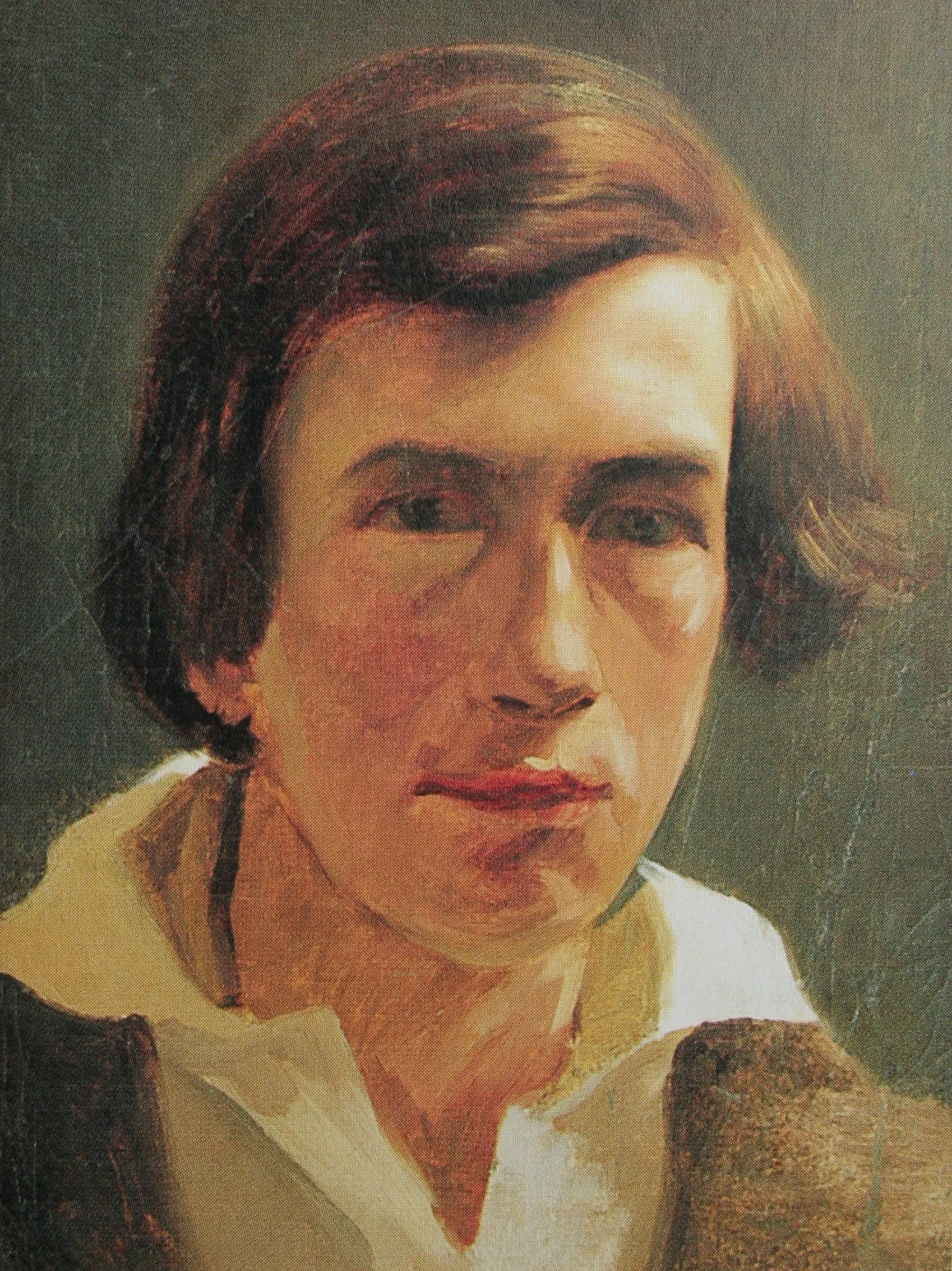
Image from Wikipedia
Image from Wikipedia
Arnold Böcklin: The Visionary Image Poet of Symbolism
An Artist Between Myth, Melancholy, and Visual Power
Arnold Böcklin is one of the defining Swiss artists of the 19th century and one of the most idiosyncratic creators in Europe. Born on October 16, 1827, in Basel and died on January 16, 1901, in San Domenico near Fiesole, he developed a visual language that intertwined landscape, mythology, and psychological tension into a distinctive unity. His works still resonate today as visual scores of silence, threat, and poetic exaltation. ([de.wikipedia.org](https://de.wikipedia.org/wiki/Arnold_B%C3%B6cklin))
Those who look at Böcklin do not encounter a mere landscape painter, but an artist who used nature as a stage for mythical figures, emotional states, and cultural projections. Particularly, his series The Isle of the Dead immortalized him; in five versions, he condensed an entire aesthetic of the threshold between life and death. Christian Klemm described Böcklin as the "most gifted and idiosyncratic among the Swiss artists of the last century," and this blend of formal discipline and visionary boldness continues to characterize his oeuvre today. ([de.wikipedia.org](https://de.wikipedia.org/wiki/Arnold_B%C3%B6cklin?utm_source=openai))
Biographical Beginnings Between Basel, Düsseldorf, and Rome
Böcklin came from a bourgeois family in Basel and initially received drawing lessons from Ludwig Adam Kelterborn before enrolling at the Kunstakademie Düsseldorf in 1845. There, Johann Wilhelm Schirmer had a significant influence on him, providing Böcklin with a technical foundation in landscape-oriented painting without stifling his later urge for distortion and symbolization. Travels to Antwerp, Brussels, Paris, and the Alps sharpened his eye early on for atmosphere, nature structure, and composition. ([hls-dhs-dss.ch](https://hls-dhs-dss.ch/de/articles/021878/))
The years in Rome between 1850 and 1857 became a decisive artistic training period. Böcklin engaged with the Old Masters and studied the Italian landscape, particularly influenced by Gaspard Dughet and Franz-Dreber. In 1853, he married Angela Pascucci, who became not only his life partner but also a recurring model; the marriage produced fourteen children, eight of whom died early. This personal experience of loss and fragility is reflected in many of his later thematic works. ([de.wikipedia.org](https://de.wikipedia.org/wiki/Arnold_B%C3%B6cklin))
The Breakthrough: From Landscape to Mythological Imagery
Böcklin achieved his first major success in 1859 with Pan in the Reed. The painting brought him widespread attention and marked the moment when his art diverged from pure landscape painting toward the symbolic, allegorical, and mythical. From then on, hybrid creatures, ancient figures, and archetypal nature images became the focus of his work. ([hls-dhs-dss.ch](https://hls-dhs-dss.ch/de/articles/021878/))
In 1860, Böcklin was appointed to the art school in Weimar, where he met Franz Lenbach and Reinhold Begas. There, he worked on commissioned projects like The Hunt of Diana before embarking on another journey to Italy, further refining his formal language. During this phase, his painting gained contour, brightness, and dramatic tension, while the mythological figures became the driving force of the image idea rather than mere embellishments. ([hls-dhs-dss.ch](https://hls-dhs-dss.ch/de/articles/021878/))
Florence, Basel, and Zurich: The Mature Years of a Symbolist
After further stops in Rome and Basel, Böcklin lived mainly in Florence from autumn 1874 until April 1885. During this time, he created the famous series The Isle of the Dead, which was developed in five versions between 1880 and 1886 and is still regarded as his most renowned work. The paintings combine architectural rigor with metaphysical tranquility, ultimately establishing Böcklin as a key figure of Symbolism. ([de.wikipedia.org](https://de.wikipedia.org/wiki/Arnold_B%C3%B6cklin))
In Basel, he received important fresco commissions, including the wall paintings in the garden hall of the Sarasin House. There, he collaborated with Rudolf Schick and completed the three compositions Rest on the Flight into Egypt, King David with the Harp, and The Road to Emmaus in a short time. These works demonstrate Böcklin's ability to fill monumental spaces with narrative density and transform religious themes into a modern, powerful visual form. ([de.wikipedia.org](https://de.wikipedia.org/wiki/Arnold_B%C3%B6cklin))
His years in Zurich brought about a stronger monumentality in his image worlds. Böcklin was awarded an honorary doctorate from the University of Zurich, received honorary citizenship of the city in 1890, and was a member of the Federal Art Commission. At the same time, in late works such as Paolo and Francesca, The War, and The Plague, he processed a dark, existential mood that makes his later work particularly compelling. ([hls-dhs-dss.ch](https://hls-dhs-dss.ch/de/articles/021878/))
Works, Technique, and Artistic Development
Böcklin's artistic evolution progressed from delicate, often silver-toned landscape painting to clearly contoured, color-intensive compositions featuring mythological fables. This transformation is what makes his oeuvre so fascinating: nature appears not as a realistic depiction but as a psychological resonance space. His visual language thrives on precise composition, symbolic elevation, and a color dramaturgy that transforms silence into tension. ([de.wikipedia.org](https://de.wikipedia.org/wiki/Arnold_B%C3%B6cklin))
Additionally, it is characteristic that Böcklin did not merely use the figures decoratively but connected them equally with the landscape. In Pan in the Reed, form and nature stand in immediate balance, while later works make the mythological figure the bearer of a whole interpretation of the world. This modernity of his work lies in the combination of composition, allegory, and emotional depth into a visual language that transcends academic naturalism. ([sammlung-online.lwl-museum-kunst-kultur.de](https://sammlung-online.lwl-museum-kunst-kultur.de/kuenstler-details/boecklin-arnold-1827-1901))
Cultural Influence and Enduring Impact
Böcklin's influence extended far beyond Swiss art history. Britannica highlights that his dark landscapes and eerie allegories shaped later German artists of the late 19th century, as well as the Symbolists, Metaphysical artists, and Surrealists of the 20th century. Particularly, The Isle of the Dead became an image that continually attracts new interpretations and has evolved into a visual myth of modernity. ([britannica.com](https://www.britannica.com/biography/Arnold-Bocklin))
His impact on print and art culture also remained remarkable: a 1904 Jugendstil graphic created by Otto Weisert bore the name "Arnold Böcklin," showing how much his legacy extended into other design areas. The fact that the Kunstmuseum Basel now possesses the largest collection of his oeuvre with over 90 works further underscores his status in the institutional memory of art history. ([arnoldbocklin.org](https://arnoldbocklin.org/biography.html?utm_source=openai))
Reception, Collection, and Museum Significance
During his lifetime, Böcklin was not merely a celebrated artist from the start. Early works were sometimes rejected by the public and were more appreciated in artistic circles, while the market- and collection-oriented art dealer Fritz Gurlitt later significantly contributed to securing the financial viability of his production. This tension between rejection, recognition, and subsequent canonization is a key part of the history of his fame. ([sammlung-online.lwl-museum-kunst-kultur.de](https://sammlung-online.lwl-museum-kunst-kultur.de/kuenstler-details/boecklin-arnold-1827-1901))
Today, Böcklin represents an art that combines emotional depth with iconic form. His themes revolve around nature, death, myth, solitude, and transformation, which is why his work feels so timeless. Anyone interested in Symbolism, European painting of the 19th century, and the birth of modern image worlds cannot overlook Böcklin. ([britannica.com](https://www.britannica.com/biography/Arnold-Bocklin))
Current Projects and Publications
Since Arnold Böcklin passed away in 1901, there are no current albums, singles, tours, or new music projects. The modern reception of his work continues through exhibitions, collections, scholarly catalogs, and museum presentations. For contemporary art observation, the ongoing presence of his images in public collections and art historical publications remains particularly relevant. ([hls-dhs-dss.ch](https://hls-dhs-dss.ch/de/articles/021878/))
Conclusion: Why Arnold Böcklin Continues to Fascinate Today
Arnold Böcklin is intriguing because he infused painting with a psychological depth that inseparably connects landscape, myth, and existential experience. His works feel like images from another sphere, yet remain firmly anchored in the cultural history of Europe. Those who wish to experience him should not only view his paintings in museums but read them as concentrated visual dramas that open new levels with each encounter. ([de.wikipedia.org](https://de.wikipedia.org/wiki/Arnold_B%C3%B6cklin))
Official Channels of Arnold Böcklin:
- Instagram: no official profile found
- Facebook: no official profile found
- YouTube: no official profile found
- Spotify: no official profile found
- TikTok: no official profile found