Gereon Krahforst
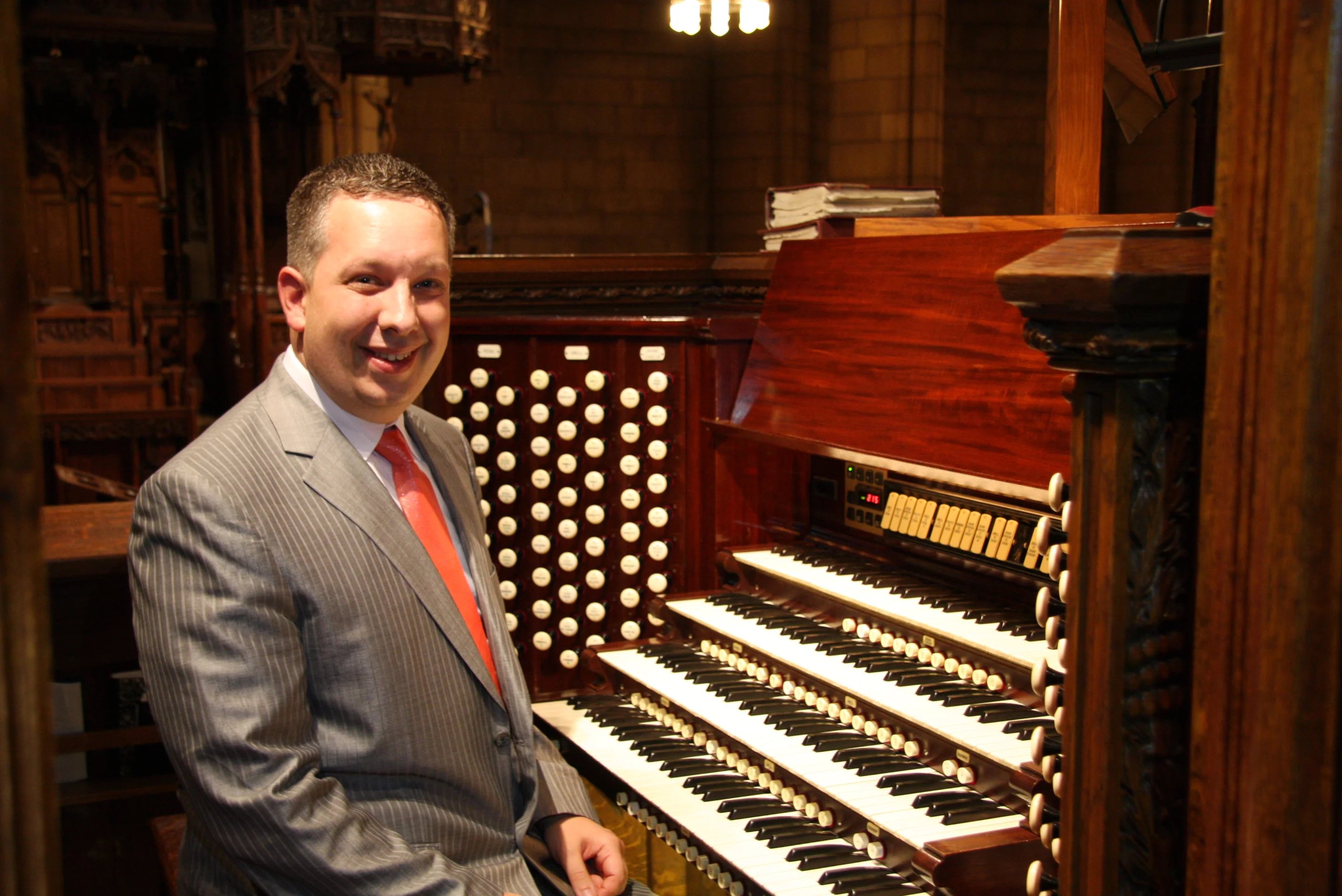
Image from Wikipedia
Image from Wikipedia
Gereon Krahforst – the German organist, composer, and musical boundary-crosser between tradition and contemporary
An artist portrait straddling church music, concert stages, and creative imagination
Gereon Krahforst, born in 1973 in Bonn, is among the most prominent German church musicians of his generation. As a concert organist, pianist, harpsichordist, composer, and author, he combines musical practice, historical depth, and creative independence into an exceptionally versatile profile. His career spans major church music institutions in Germany, as well as Spain and the USA, culminating in his role since 2015 as the abbey organist and artistic director at Maria Laach. ([gereonkrahforst.org](https://www.gereonkrahforst.org/de/bio/index.php?utm_source=openai))
Early influences and academic foundations
Gereon Krahforst's artistic development began in a musically enriched family environment in Bonn. After extensive early training, he studied composition, musicology, church music, piano, and organ from 1990 to 2000 in Cologne and Frankfurt. His influential teachers include Markus Karas, John Birley, Clemens Ganz, and Daniel Roth; masterclasses with Marie-Claire Alain, Jon Laukvik, Petr Eben, Wolfgang Seifen, Tomasz Adam Nowak, Guy Bovet, and Franz Lehrndorfer significantly broadened his musical language. This education firmly roots his music career in the European organ tradition without reducing it to historical reproduction. ([gereonkrahforst.org](https://www.gereonkrahforst.org/en/bio/))
Career path: from cathedrals to international concert activities
Krahforst took on responsible positions early in his career as an organist and music director, initially in Bonn and later in Mönchengladbach, Minden, and Paderborn. In 2004, he began an eight-year teaching position in organ repertoire and improvisation at the Hochschule für Musik, Theater und Medien Hannover, before leading him to Marbella, where he was active at the Church of the Immaculate Conception at the significant "Órgano del Sol mayor." Between 2012 and 2014, he worked at the Cathedral Basilica of Saint Louis in Missouri, for which he received a highly selective O-1B visa for artists with extraordinary abilities. ([gereonkrahforst.org](https://www.gereonkrahforst.org/en/bio/))
The stages of his career showcase a musician who not only performs but also shapes institutions. Krahforst returned to Germany in 2014 and took on the musical leadership of St. Lutwinus in Mettlach, where he was responsible for six choirs. Since April 2015, he has been the abbey organist and artistic director of the highly regarded international organ concert series in Maria Laach and is also in charge of concert series at historic organs in Boppard/Rhein and Niederehe. His work combines liturgical competence with programmatic foresight, making him a key figure in German organ culture. ([gereonkrahforst.org](https://www.gereonkrahforst.org/en/bio/))
Improvisation, repertoire, and stage presence
Krahforst is especially valued as an improviser. In his biography, his art is recognized for its "distinctive styles," fine registration, and well-curated programs, with peers such as Jean Guillou, Olivier Latry, Thierry Escaich, John Scott, Philipp Kloeckner, and Stephen Tharp being noted as appreciative voices. His repertoire includes the complete organ works of Scheidt, Pachelbel, Muffat, Couperin, Bruhns, Buxtehude, Bach, Mendelssohn, Schumann, Brahms, Franck, and Duruflé, as well as numerous works from different eras and countries. This positions him not as a specialist with a narrow scope but as a musician with historical breadth and stylistic sovereignty. ([gereonkrahforst.org](https://www.gereonkrahforst.org/en/bio/))
This versatility also shapes his stage presence. Krahforst has performed internationally in cathedrals, churches, and concert halls, including almost all European countries, South Korea, Japan, the USA, and Canada. Broadcast and television appearances, CD recordings, and jury duties at international competitions underscore his authority in the field. His artistic identity is based on precision, sound imagination, and a deep familiarity with the sacred space as a resonating body. ([gereonkrahforst.org](https://www.gereonkrahforst.org/en/bio/))
The composer: a body of work between liturgy, formal awareness, and sonority
As a composer, Gereon Krahforst has produced an extensive oeuvre that includes piano music, organ works, vocal compositions, choral pieces, chamber music, and orchestral works. Early pieces such as the "Concerto for Piano and Orchestra in B Minor" or the "Piano Sonata No. 1" demonstrate a serious compositional ambition, while works like the "Symphony in D Major 'Summer in the Eifel'" and "The Magic Lake" have been awarded by youth competitions. The fact that he wrote form-conscious large-scale works as well as characterful miniatures at an early stage points to remarkable compositional maturity. ([gereonkrahforst.org](https://www.gereonkrahforst.org/en/works/index.php))
A focal point of his output is organ music. The "24 Preludes and Fugues for organ," choral fantasies, partitas and variations, the "British Suite for Organ," the "2nd Organ Symphony," and the "Beethoven Anniversary Toccata" showcase a composer who does not treat historical material in a museum-like fashion but translates it into vibrant presence. Additionally, numerous transcriptions of Mozart, Bach, Handel, Mendelssohn, and Rachmaninoff make visible his dual competence as an interpreter and arranger. Krahforst thinks in forms, sound layers, and liturgical functions simultaneously. ([gereonkrahforst.org](https://www.gereonkrahforst.org/en/works/index.php))
Musical language: tradition, variation, and spiritual depth
Stylistically, Krahforst moves within a tension field of neoromanticism, choral art, counterpoint, and the practice of free improvisation. Many of his works draw on chorales, Marian hymns, Advent songs, or regional themes, developing dense yet accessible textures. This results in music that remains rooted in church music while simultaneously unfolding concert independence. His art of arrangement displays a fine sensitivity to colors, registers, and architectural development. ([gereonkrahforst.org](https://www.gereonkrahforst.org/en/works/index.php))
His programmatic connection to places and occasions is also noteworthy. Works such as the "Cologne Cathedral Festival Mass," the "Cantata Mariana," or the chorale and postludes written for Maria Laach and other churches connect composition with concrete performance situations. Krahforst does not write abstractly but from the space itself, for liturgy, concert, and spiritual condensation. A significant part of his artistic development lies therein: music as a resonant response to concrete architectural, liturgical, and historical contexts. ([gereonkrahforst.org](https://www.gereonkrahforst.org/en/works/index.php))
Critical reception, awards, and cultural influence
The reception of his work is marked by respect and professional recognition. His biography mentions numerous international awards in composition, piano, and organ; he has also been invited as a juror at international competitions and honored as a dedicatee of contemporary works. The fact that compositions from Germany, Belgium, Israel, and the USA are dedicated to him indicates his reach in the field. Recognition from colleagues and presence on major church music platforms attest to a lasting impact of this artist. ([gereonkrahforst.org](https://www.gereonkrahforst.org/en/bio/))
His cultural influence lies not only in individual works but in the connection of interpretation, teaching, improvisation, and composition. Krahforst represents a church music that is historically informed but does not come across as historicizing; an organ art that takes liturgical craftsmanship seriously while possessing concert worthiness. His activity in Maria Laach and on other historic instruments further makes him a custodian and mediator of vibrant organ landscapes. Thus, he belongs to a group of musicians who do not merely preserve musical heritage but also continue to develop it productively. ([gereonkrahforst.org](https://www.gereonkrahforst.org/en/bio/))
Current projects and musical presence
In 2026, Krahforst remains artistically active. His website documents current service and concert arrangements in Maria Laach, including postludes for the Feast of the Assumption of Mary with his own chorale preludes and improvisations in liturgical celebrations. The website's latest update is from August 24, 2026, listing additional dates like lunchtime concerts and organ recitals. This reflects a musician whose presence is not archived but part of an ongoing musical everyday life. ([gereonkrahforst.org](https://www.gereonkrahforst.org/en/index.php))
His current activities combine repertoire maintenance, improvisation, and lively work on historic instruments. This connection is central to his artistic identity: Krahforst uses the organ not as a mere representation object but as a narrating, breathing instrument. The current concert and liturgical practice confirms his role as an active shaper of a tradition-aware yet open church music. ([gereonkrahforst.org](https://www.gereonkrahforst.org/en/index.php))
Voices of fans
No official social media profiles have been verified; hence, this section is intentionally omitted.
Conclusion: Why Gereon Krahforst remains intriguing
Gereon Krahforst is intriguing because he integrates three roles at the highest level: interpreter, composer, and musical architect. His music career reflects solid training, international experience, stylistic breadth, and an unusually strong connection to sacred space. Those who listen to his work experience organ art as a living present, not as a museum tradition. Those who encounter him live meet an artist who imbues historical sound worlds with personal signature and transforms every concert into an event. ([gereonkrahforst.org](https://www.gereonkrahforst.org/en/bio/))
Official channels of Gereon Krahforst:
- Instagram: No official profile found
- Facebook: No official profile found
- YouTube: No official profile found
- Spotify: No official profile found
- TikTok: No official profile found