
Hugo Harrer
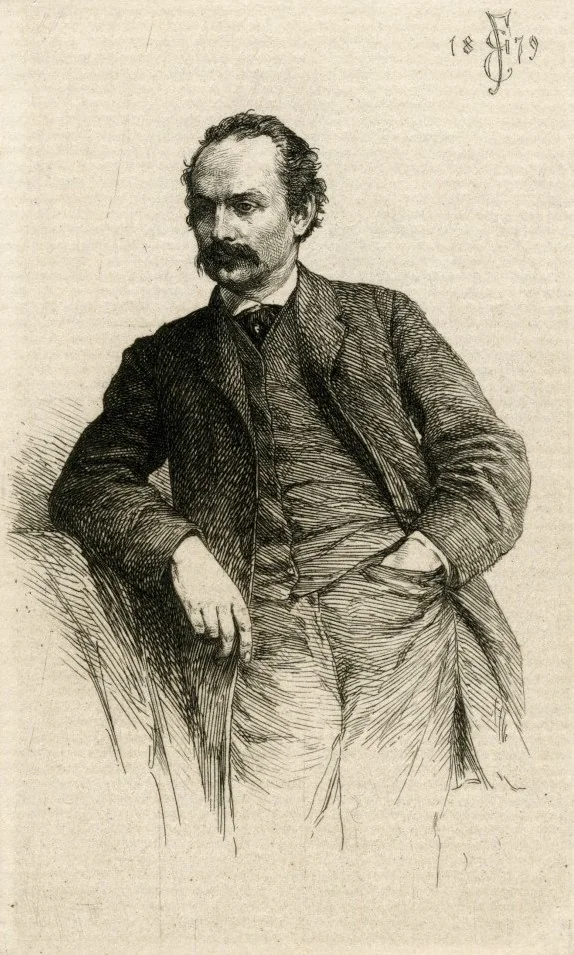
Image from Wikipedia
Image from Wikipedia
Hugo Harrer: The Quiet Realist of the Düsseldorf School Between Landscape and Architecture
A German painter who secured his place in art history through keen observation and his unique perspective
Hugo Paul Harrer was a German landscape and architectural painter of the Düsseldorf School, born on February 6, 1836, in Eberswalde and died on December 10, 1876, in Rome. His life path represents a biography of an artist that progressed not through academic ease, but through self-study, craftsmanship, and an intensive engagement with visible reality. The available sources describe him as a painter who initially began training in architecture but soon turned to painting, deepening his path through self-education. ([de.wikipedia.org](https://de.wikipedia.org/wiki/Hugo_Harrer?utm_source=openai))
Biography: From Aspiring Architect to Independent Painter
Harrer’s artistic career did not begin with a classical academic study but with a shift in perspective: the aspiring architect became a painter who shaped his education primarily through self-study, careful observation of nature, and visits to the studios of friends. This form of development gives his biography a special appeal, as it represents a generational search for artistic independence. The German Biography explicitly emphasizes that he did not attend an art academy and was nonetheless regarded as a competent painter. ([deutsche-biographie.de](https://www.deutsche-biographie.de/sfz26126.html?language=de&utm_source=openai))
In the art landscape of the 19th century, the Düsseldorf School was an important environment for painters who valued compositional clarity, careful execution, and often narrative imagery. Harrer positioned himself within this tension with a rather sober, observational approach. The sources characterize him as "a thoroughly modern realist" who sought to depict things as he truly saw them. This attitude forms the core of his artistic profile and explains why his works are particularly plausible in the realms of landscape and architecture. ([deutsche-biographie.de](https://www.deutsche-biographie.de/sfz26126.html?language=de&utm_source=openai))
Artistic Development: Observation, Fidelity to Nature, and Precise Representation
Harrer's stylistic profile can be described as a connection of realistic perception and careful image organization. Especially in landscape and architectural paintings, this precision gains particular significance, as line work, spatial effect, and materiality carry the image. Sources suggest that Harrer did not rely on spectacular effects but rather on reliable representation, that is, on a vision that takes the world’s details seriously. ([deutsche-biographie.de](https://www.deutsche-biographie.de/sfz26126.html?language=de&utm_source=openai))
His background in architecture is especially enlightening for understanding his art. Architectural thinking involves structure, proportion, and spatial order; in painting, Harrer evidently could productively apply this perspective. Particularly, the transition from architecture to painting explains why his work appears precise and disciplined within the tradition of the Düsseldorf School while still retaining sensitivity to mood and natural reference. ([deutsche-biographie.de](https://www.deutsche-biographie.de/sfz26126.html?language=de&utm_source=openai))
Career Path: A Short, Focused Life Journey with a Clear Artistic Profile
Harrer's career was temporally limited, as he died in 1876 in Rome. Nevertheless, the established categorization in art history indicates that he was perceived as an independent representative of a realistic vision. The biographical focus on self-study and observation reveals that his career was characterized less by public self-presentation than by quiet, continuous work. For an artist’s profile, this is particularly exciting: it is not the loud appearance, but the consistency of artistic development that defines this profile. ([deutsche-biographie.de](https://www.deutsche-biographie.de/sfz26126.html?language=de&utm_source=openai))
Rome as a place of death also signifies the international mobility of German artists in the 19th century, who often worked, studied, or sought out in the major art centers of Europe. Although the sources do not provide detailed elaboration on his time in Rome, the location marks a classical endpoint of a European artist's biography. Together with the Düsseldorf influence, this paints the picture of a painter positioned between German art school and Italian life. ([de.wikipedia.org](https://de.wikipedia.org/wiki/Hugo_Harrer?utm_source=openai))
Work and Categorization: Landscape, Architecture, and the Language of Realism
As a landscape and architectural painter, Harrer engaged with two genres that negotiated central questions of art in the 19th century: How can nature be depicted, and how can built order be translated into painting? His particular strength evidently lay in not pitting both areas against each other but rather combining them with realistic precision. Thus, he belongs to those artists whose work becomes understandable primarily through their attitude and method. ([de.wikipedia.org](https://de.wikipedia.org/wiki/Hugo_Harrer?utm_source=openai))
The designation as a modern realist in the German Biography is art-historically significant. It points to a painter who oriented himself less to ideal images than to the visible world and its factual representation. In an era when many artists navigated between Romanticism, historical painting, and realism, Harrer thus positions himself in a field of accuracy and fidelity to observation. ([deutsche-biographie.de](https://www.deutsche-biographie.de/sfz26126.html?language=de&utm_source=openai))
Discography and Current Projects: No musical discography available
Since Hugo Harrer was not a musician but a painter, there exists no discography, no chart career, and no musical releases for the years 2024 or 2025. Current projects, tours, or collaborations cannot be substantiated for him. The available information focuses entirely on his painting, his educational history, and the art-historical classification within the Düsseldorf School. ([de.wikipedia.org](https://de.wikipedia.org/wiki/Hugo_Harrer?utm_source=openai))
For a serious, trustworthy artist profile, this clarification is important: SEO must not overshadow biographical truth. Harrer's cultural value does not lie in music releases but in his standing as a realistic painter of the 19th century, whose work and biography can be traced through art-historical sources. This precise differentiation strengthens the credibility of the profile. ([deutsche-biographie.de](https://www.deutsche-biographie.de/sfz26126.html?language=de&utm_source=openai))
Cultural Influence: A Quiet Contribution to the Visual Language of the 19th Century
Harrer's cultural influence manifests less in public notoriety than in his affiliation with a significant art tradition. The Düsseldorf School profoundly shaped German-language painting, and within this framework, Harrer exemplifies an attitude that captures nature and architecture with methodical precision. Such artists secure the foundation of art history: they do not always expand the headlines, but they do enrich the visual language of their time. ([de.wikipedia.org](https://de.wikipedia.org/wiki/Hugo_Harrer?utm_source=openai))
Particularly noteworthy is his self-positioning through observation rather than institution. That a painter without permanent academic study and without the path of a classical master student still found recognition underscores the openness of some 19th-century art circles to talent, discipline, and independence. Harrer thus stands as an example of artistic authority that arises not from loudness but from consistency. ([deutsche-biographie.de](https://www.deutsche-biographie.de/sfz26126.html?language=de&utm_source=openai))
Conclusion: Why Hugo Harrer Remains Interesting Today
Hugo Harrer captivates as a painter with a focused, realistic gaze, navigating between landscape and architecture to shape a clear artistic signature from autodidactic work. His biography speaks of independence, observation, and creative discipline – qualities that make his profile worthy of study even today. Those who wish to understand the Düsseldorf School, German realism, and the development of independent artist biographies in the 19th century will find in Harrer a remarkable figure. ([deutsche-biographie.de](https://www.deutsche-biographie.de/sfz26126.html?language=de&utm_source=openai))
For this reason alone, engaging with his work and life journey is worthwhile: Hugo Harrer represents the quiet strength of painting, precision over pose, and artistic seriousness without academic brilliance. His name deserves attention because he embodies an important part of art history that makes seeing itself the subject. ([deutsche-biographie.de](https://www.deutsche-biographie.de/sfz26126.html?language=de&utm_source=openai))
Official Channels of Hugo Harrer:
- Instagram: No official profile found
- Facebook: No official profile found
- YouTube: No official profile found
- Spotify: No official profile found
- TikTok: No official profile found